
GeoNode Alternatives: Compare 8 Proxy Providers by Features and Fit

Nov 9, 2026 · Comparisons · 13 min read
TL;DR
The best GeoNode alternative depends on what your workflow needs to change: location availability, session behavior, network type, purchasing terms, or integration. This guide compares eight proxy providers: Rola IP, Decodo, Oxylabs, Bright Data, SOAX, IPRoyal, DataImpulse, and Webshare.
GeoNode already supports residential proxies, location targeting, and rotating or sticky sessions. It also sells ISP, datacenter, and unlimited residential products. Those features alone are not reasons to switch. Compare the particular product and plan your task needs.
Rola IP is a candidate for comparing residential, datacenter, mobile, and static residential networks. IPRoyal and DataImpulse offer residential traffic that does not expire, while Oxylabs and SOAX use credit-based purchasing structures that need a different cost calculation. Decodo, Bright Data, and Webshare provide additional residential options with documented targeting and integration controls.
What This GeoNode Alternatives Comparison Covers
This guide focuses on proxy services used in your own scripts and tools, particularly bandwidth-billed residential proxies. GeoNode’s Web Scraping API is a separate product: its request-based offers and concurrency-based unlimited plans should be compared with managed scraping APIs, rather than with a residential proxy price per GB.
The comparison uses published product information checked on November 9, 2026, rather than a controlled performance benchmark. It covers network type, targeting, sessions, billing, integration, and practical limitations.
GeoNode Review: What Does the Existing Service Offer?
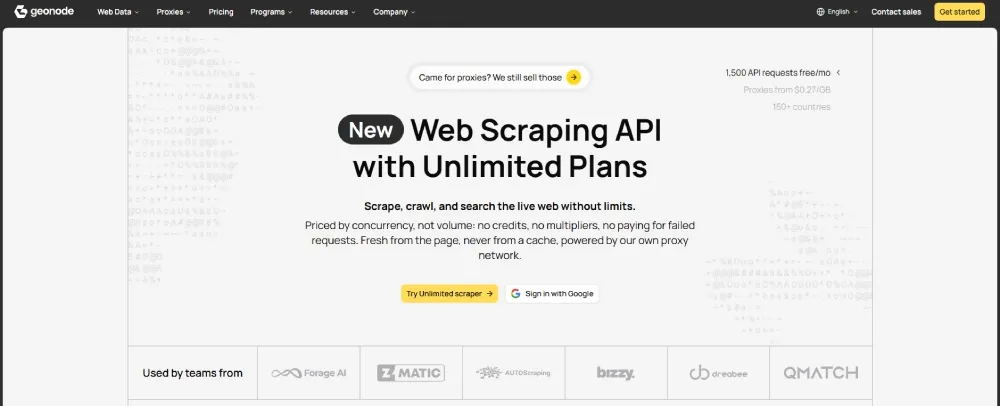
GeoNode’s homepage promotes its Web Scraping API while retaining a separate proxy product range. A GeoNode proxy review needs to keep the two categories separate: the API’s statement about not paying for failed requests must not be applied to residential proxy bandwidth billing.
For its residential proxies, GeoNode documents the following baseline:
| Dimension | GeoNode residential proxy baseline |
|---|---|
| Purchasing model | Pay As You Go traffic purchases or monthly subscriptions |
| Targeting | Country, state, city, ZIP, and ASN/ISP options; availability depends on online residential resources |
| Sessions | Rotating sessions or sticky sessions configurable from 3 minutes to 24 hours; an IP can change earlier if its device disconnects |
| Traffic accounting | Data transferred through the connection, including request and response traffic; retries and redirects generate additional traffic |
| Unused traffic | Pay As You Go bandwidth remains available until consumed, subject to plan terms; subscription bandwidth rolls over while the subscription stays active |
| Renewals | Monthly subscriptions renew automatically unless canceled; Pay As You Go can incur further charges if optional Auto Top-up is enabled |
GeoNode also lists ISP, datacenter, and unlimited residential services. A different proxy type may be available from your existing provider, so check that option before treating migration as necessary. Its getting-started documentation separates proxy access from web-data extraction products.
When Does Switching Make Sense?
A switch makes sense when another product solves a measured constraint: insufficient exits in a required city, sessions that do not last through your workflow, purchasing terms that do not match usage, or an integration requirement your current setup cannot meet. Support and procurement requirements can also justify a change.
Start with a concrete comparison, such as “Can this network maintain the required location and session for our authorized monitoring job?” Country targeting or sticky sessions appearing on another provider’s feature list is not, by itself, evidence that it improves on GeoNode.
Eight GeoNode Alternatives: Features Compared
The table compares residential offerings. Other network types are discussed where they change the selection decision; their prices and session behavior should be evaluated separately.
| Provider | Documented residential targeting | Session controls | Main selection consideration |
|---|---|---|---|
| Rola IP | Country, state, city on rotating residential; rotating datacenter and mobile support country targeting | Per-request rotation and configurable sessions; rotating-network documentation describes 1–120-minute session settings | Compare the network type and targeting level your task actually requires |
| Decodo | Continent, country, state, city, ZIP, ASN | Rotating and sticky sessions | Advanced residential targeting is included without a separate targeting charge |
| Oxylabs | Country, state, city, ZIP, coordinates, ASN and other filters | Rotation and sticky sessions advertised for up to 24 hours | Residential bandwidth draws from a shared product credit balance |
| Bright Data | Country, state/region, city, ASN/carrier; ZIP targeting documented for the US | Rotation and session controls | Fine targeting and proxy configuration; full network access involves KYC |
| SOAX | Country, region, city, ISP, ASN | Per-request, request-count, timed, or on-error rotation; sticky node selection | Location tiers and credit consumption affect the usable traffic budget |
| IPRoyal | Country, state, city | Rotating and sticky sessions, advertised for up to 7 days | Non-expiring residential traffic for intermittent usage |
| DataImpulse | Country; state, city, ZIP, ASN available at extra cost on the standard offering | Per-request rotation and sticky sessions advertised for up to 120 minutes | Account for targeting charges when comparing bandwidth prices |
| Webshare | Country, state, city, ZIP, ASN | Rotating residential offering | Check target-site restrictions before purchasing; free proxy access is a separate offer |
Session settings describe a product’s controls, not a guarantee that every residential device will remain online for the full configured period.
Purchasing and Cost Differences
| Provider | Purchasing or billing structure | Cost condition that matters |
|---|---|---|
| Rola IP | Rotating residential offers bandwidth-based purchasing; fixed-IP products are separate | Obtain terms for the selected network, including purchase amount and traffic validity; do not transfer fixed-IP terms to rotating traffic |
| Decodo | Monthly bandwidth plans and Pay As You Go | Monthly commitments and taxes affect cash outlay; advanced residential targeting is included |
| Oxylabs | Monthly subscription funds credits shared across products; residential usage is charged per GB | Request and response traffic is billed regardless of HTTP status; unused credits expire at cycle end unless the applicable plan provides carryover |
| Bright Data | Pay As You Go and volume plans | Promotional rates and volume commitments differ; price the residential product separately from managed scraping tools |
| SOAX | Plans and purchased credits fund traffic; country tiers affect consumption | A fixed credit balance does not imply the same number of GB in every location |
| IPRoyal | Traffic-based purchases and subscription options | Residential traffic does not expire; bulk unit rates differ from small purchases |
| DataImpulse | Pay-per-traffic purchasing without a required subscription | Traffic does not expire; standard country targeting is free, while finer targeting adds cost |
| Webshare | Residential bandwidth plans with subscription renewal | Compare the residential plan, rather than treating the separate free-proxy offer as a residential trial |
1. Rola IP: Compare Network Types and Their Targeting Boundaries
Rola IP offers rotating residential proxies, rotating datacenter, mobile, and static residential products. This gives teams several network options to evaluate within one provider’s catalog, but a broad product lineup is not unique to Rola IP or sufficient reason to leave GeoNode.
Useful distinction: Rola’s dynamic networks do not share identical location controls. Its proxy network documentation specifies country targeting for rotating residential, rotating datacenter, and mobile networks. Rotating residential also supports state and city targeting. The same documentation describes username/password and API-whitelist access, session parameters, and per-request rotation. Its protocol FAQ confirms HTTP/S and SOCKS5 support for rotating and static IPs.
For SEO monitoring or ad verification, city-level work should therefore be scoped to a product that actually supports city targeting. A country-level mobile or datacenter exit is a different test condition.
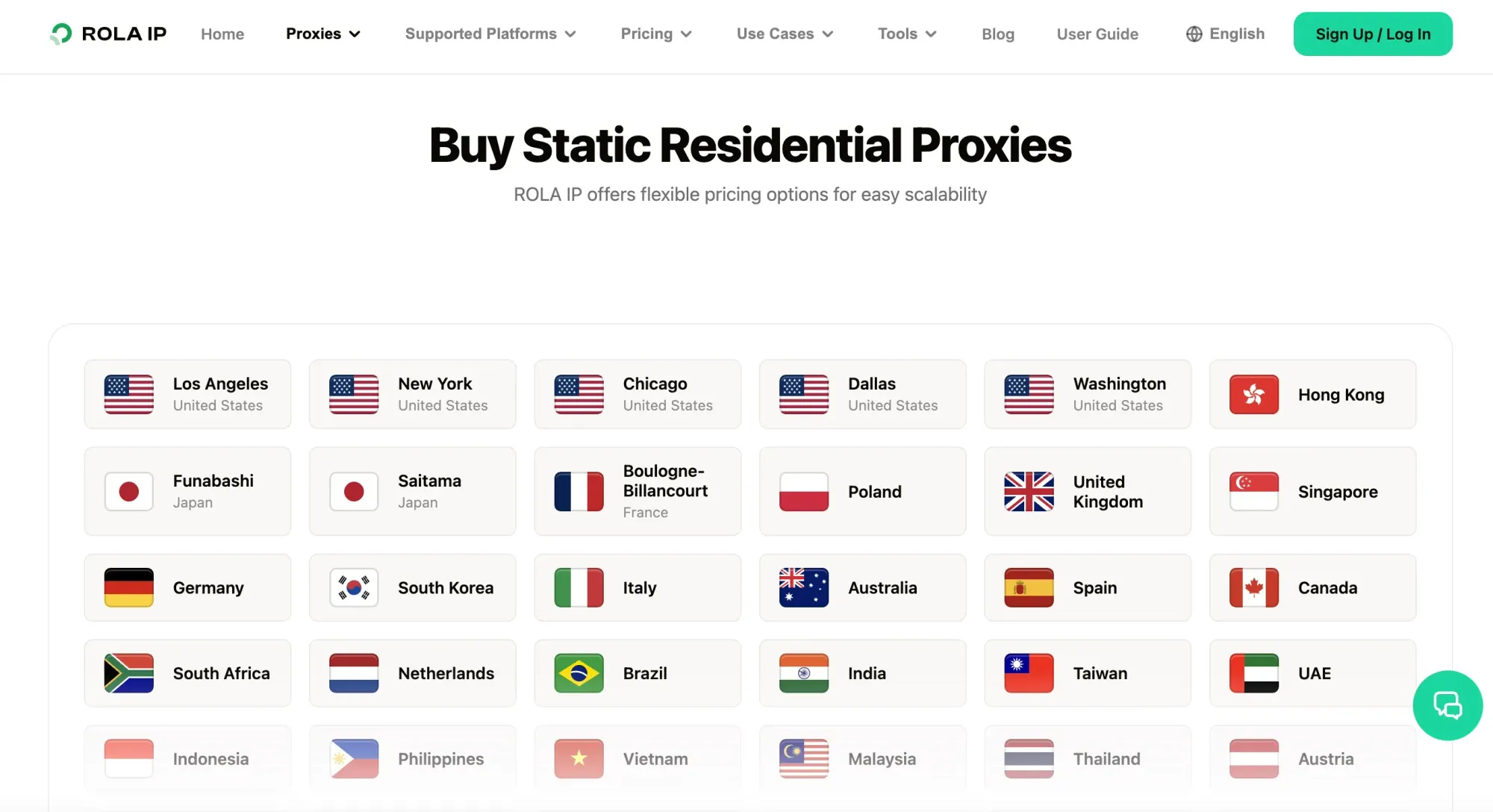
Boundary: Static residential proxies should be evaluated separately when the task requires a fixed IP. A rotating residential session setting is not the same as a dedicated fixed address. The static product screenshot above illustrates that product’s location selection, not the capabilities of every Rola network.
Suitable project: A collection or QA team comparing several network types, with a clear country/city requirement and an existing workflow for validating response content. Choose the product first, then obtain its purchase terms and run the same workload against GeoNode.
2. Decodo: Residential Targeting Included in the Plan
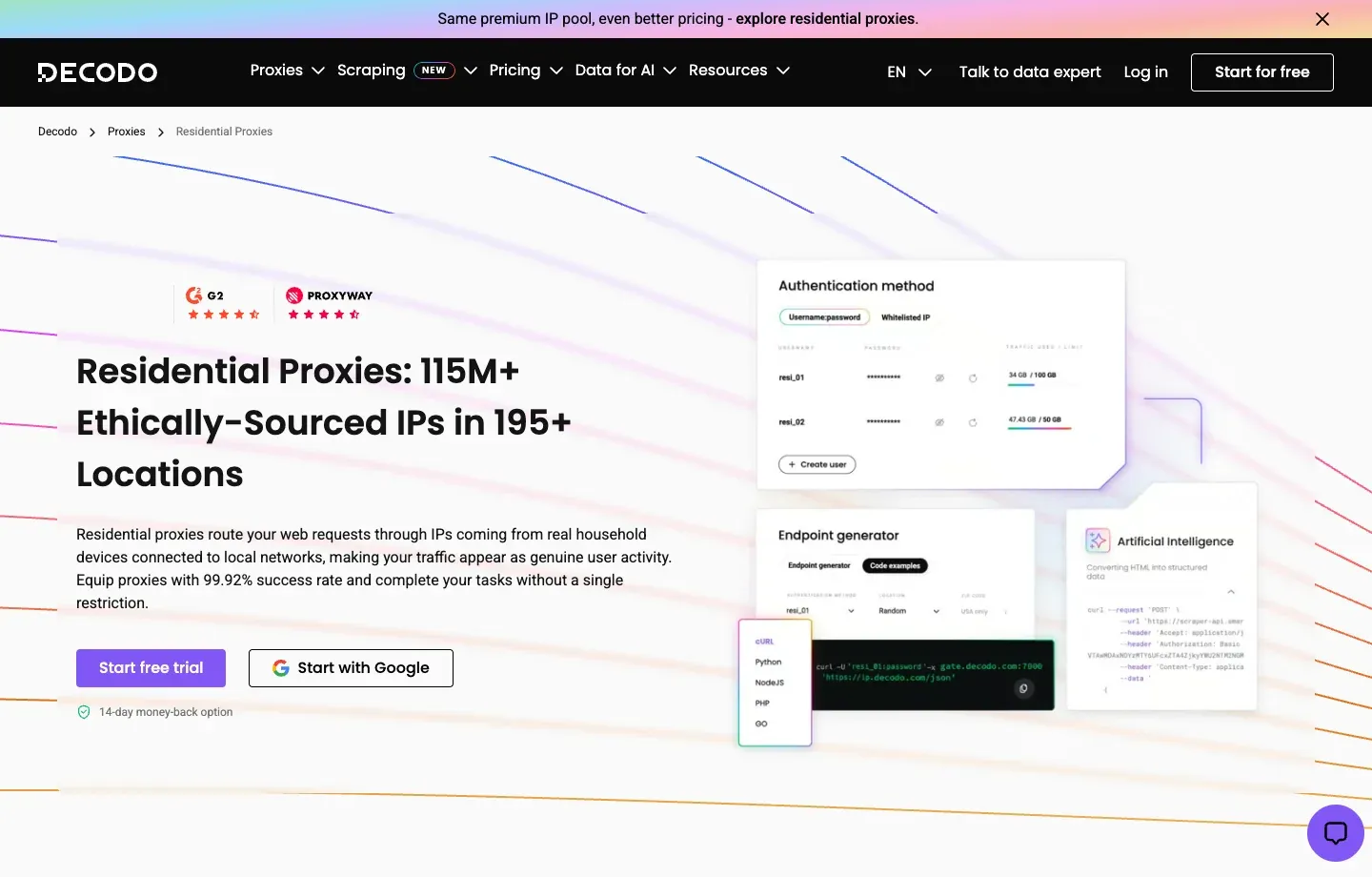
Decodo, formerly Smartproxy, documents continent, country, state, city, ZIP, and ASN targeting for residential proxies, together with rotating and sticky sessions. Its residential plans include advanced targeting without a separate targeting fee.
Useful distinction: When finer targeting is central to the task, an included targeting feature can make the cost model easier to compare with providers that add location-filtering charges. Decodo offers both monthly bandwidth plans and Pay As You Go purchasing.
Boundary: A monthly plan’s total purchase and tax treatment differ from its headline unit rate. Location inclusion also does not establish how many usable exits are available in one city at a particular time.
Integration: The residential authentication documentation describes proxy users and IP whitelisting. It recommends username/password authentication when the client’s IP changes frequently.
Suitable project: A team that needs residential location filters and wants to compare their cost without a separate advanced-targeting surcharge.
3. Oxylabs: Shared Credits Across Products
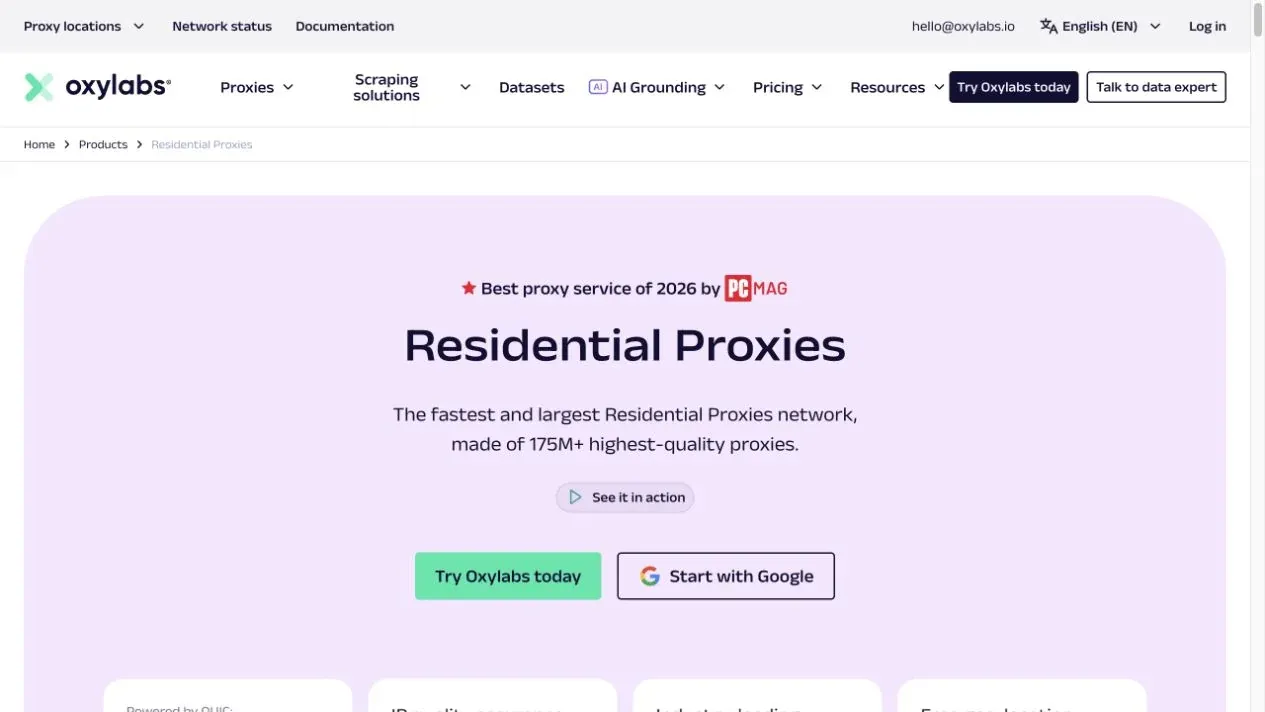
Oxylabs residential proxies document location filters including country, state, city, ZIP, coordinates, and ASN, together with rotating and sticky sessions. Its proxy documentation separates residential, mobile, ISP, and datacenter products.
Useful distinction: The current purchasing model uses a monthly subscription to fund a credit balance that can be spent across products. Residential traffic remains a per-GB product within that balance.
Boundary: Both request and response bandwidth count regardless of the returned HTTP status. Unused credits expire at the end of the billing cycle unless the applicable plan provides carryover. This is a different budget structure from buying non-expiring traffic for an intermittent project.
Suitable project: A team with recurring usage across multiple product categories that can track credit allocation, product rates, and unused balance. Compare the total subscription cost and consumed credits, rather than only a residential headline rate.
4. Bright Data: Granular Targeting and Network Configuration
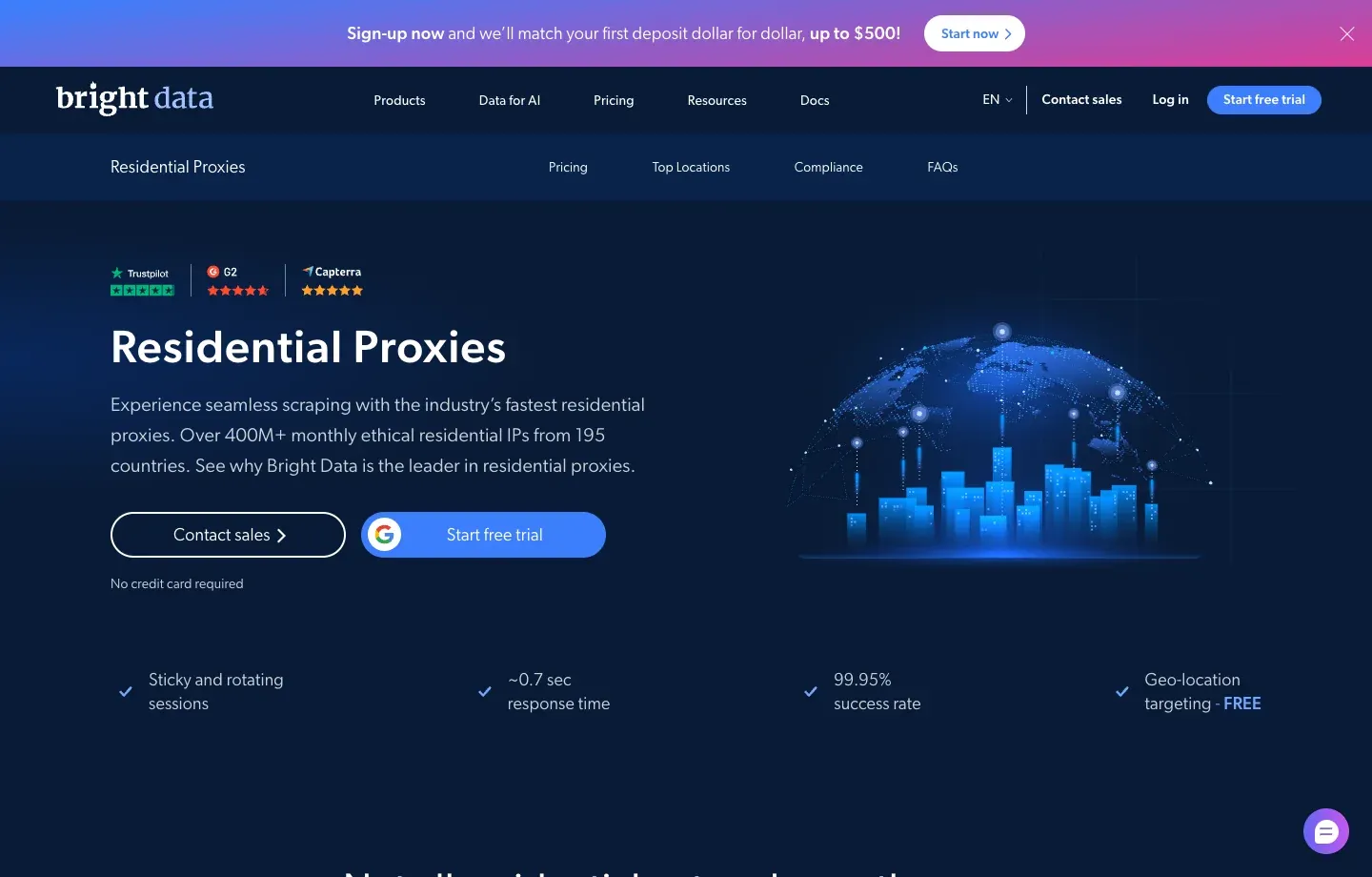
Bright Data’s residential documentation covers country, state/region, city, and ASN/carrier targeting. It specifies that ZIP-code targeting is available for the United States, an important boundary for location-dependent projects.
Useful distinction: The residential network documentation separates proxy-zone setup, credentials, network access, and session configuration. This provides defined integration stages for teams that need control over their proxy configuration.
Boundary: Full residential network access involves KYC. Residential proxy traffic, managed unlocking, and scraping APIs are different products; purchasing one does not automatically include the others. Promotional and volume prices also need separate treatment.
Suitable project: A developer team with specific location filters and the capacity to manage network configuration and onboarding. Compare the exact location capability needed, especially if the requirement involves ZIP codes outside the US.
5. SOAX: Location Tiers and Credit-Based Traffic
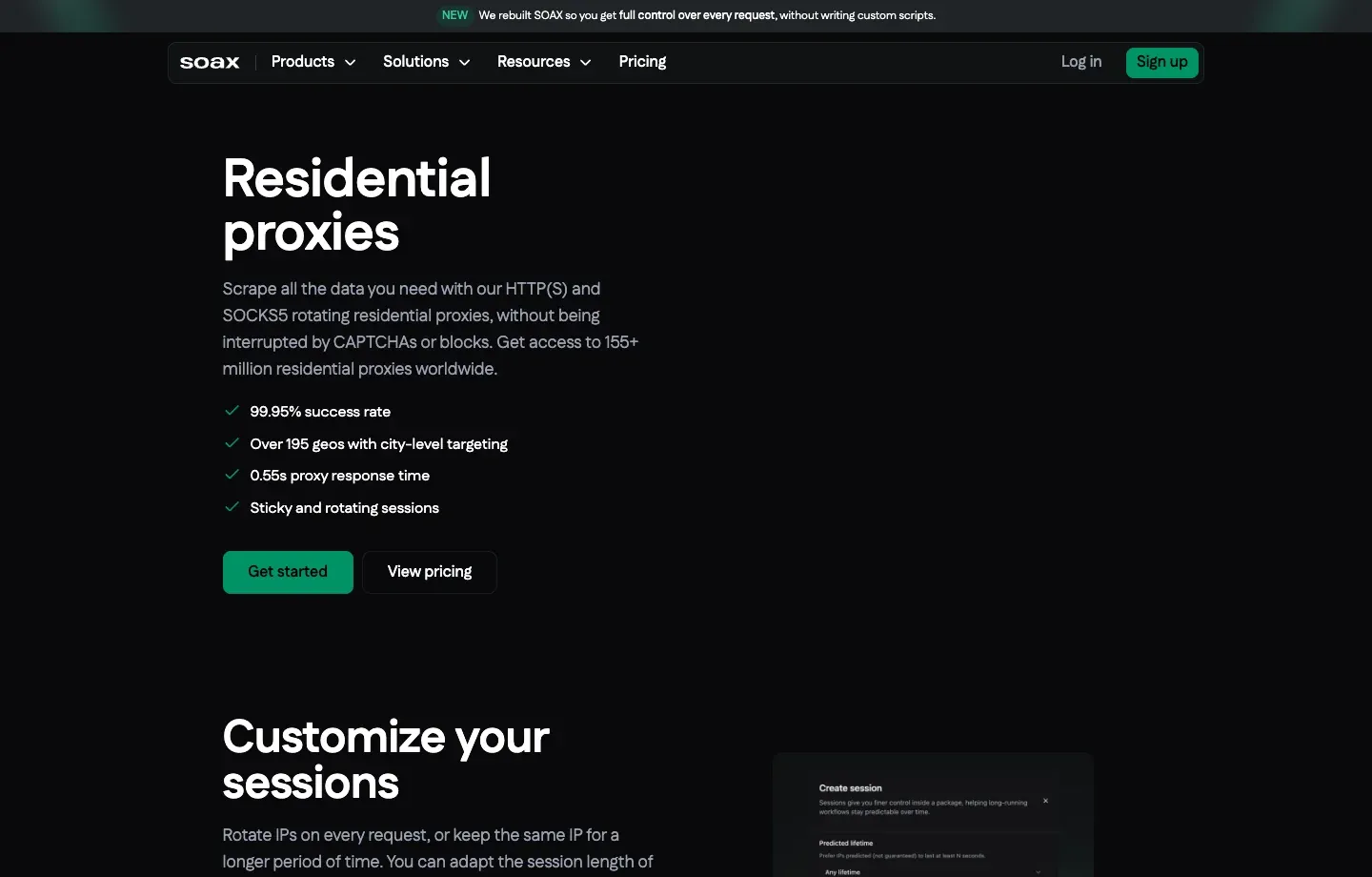
SOAX documents country, region, city, ISP, and ASN filtering. Rotation can occur per request, after a number of requests, after a time interval, or on error; sticky operation can keep requests on one node.
Useful distinction: Its current plans allocate credits for traffic, with location tiers affecting consumption. The SOAX API documentation covers proxy management, stateful sessions, and traffic/credit analytics.
Boundary: A credit balance cannot be converted into a universal number of GB without the relevant product and country-tier rates. The free Sandbox account is an account environment; proxy usage requires credits or a paid plan.
Suitable project: A team that needs explicit location and rotation controls and can monitor credit consumption by market. Use the intended target countries in the budget calculation rather than extrapolating a single location’s rate.
6. IPRoyal: Non-Expiring Residential Traffic
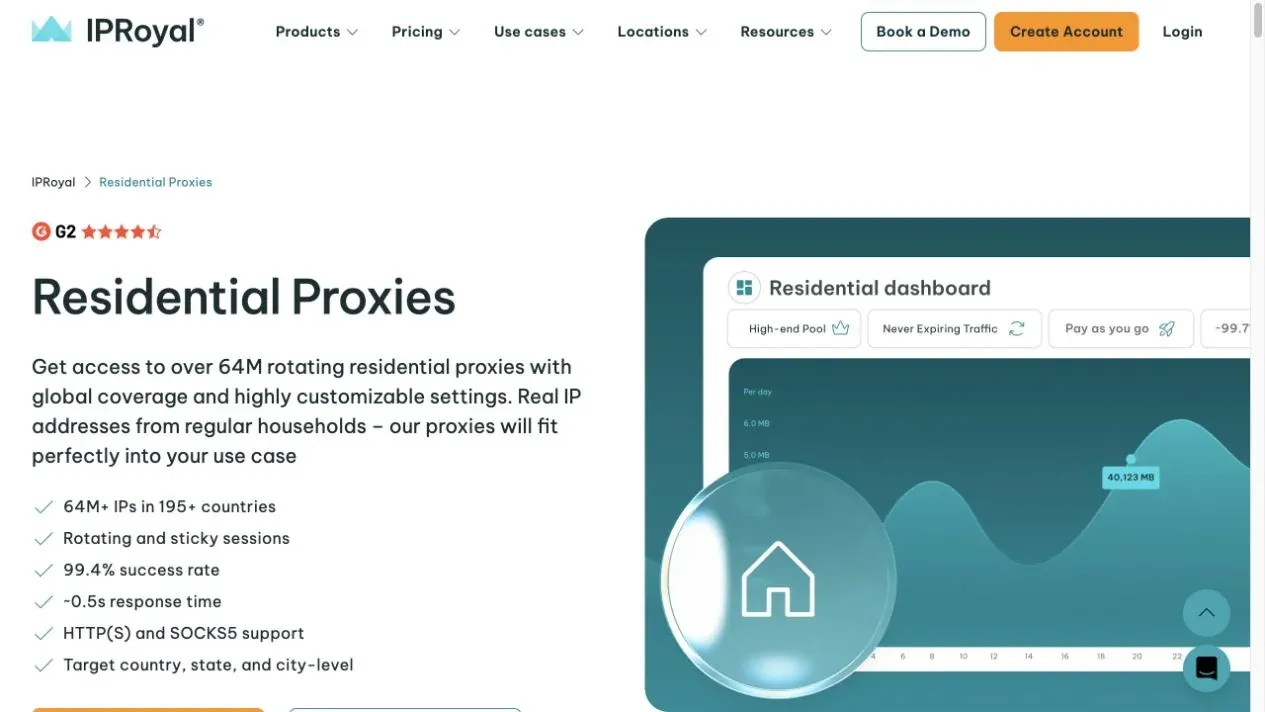
IPRoyal offers residential traffic that does not expire, country/state/city targeting, and rotating or sticky sessions. It advertises sticky sessions of up to seven days.
Useful distinction: Non-expiring traffic is relevant to seasonal research or monitoring jobs with long gaps between runs. It avoids treating a monthly usage estimate as a certainty.
Boundary: A long sticky-session setting does not turn a live residential device into a permanently assigned IP. IPRoyal distinguishes rotating residential traffic billed per GB from ISP products billed per IP; its product documentation separates residential and ISP integration. Bulk discounts also should not be used as the price of a small purchase.
Suitable project: An intermittent residential workload where unused traffic retention matters. Compare the purchase size and required session behavior against GeoNode’s Pay As You Go terms, which also retain unused bandwidth subject to their applicable conditions.
7. DataImpulse: Include Targeting Charges in the Comparison
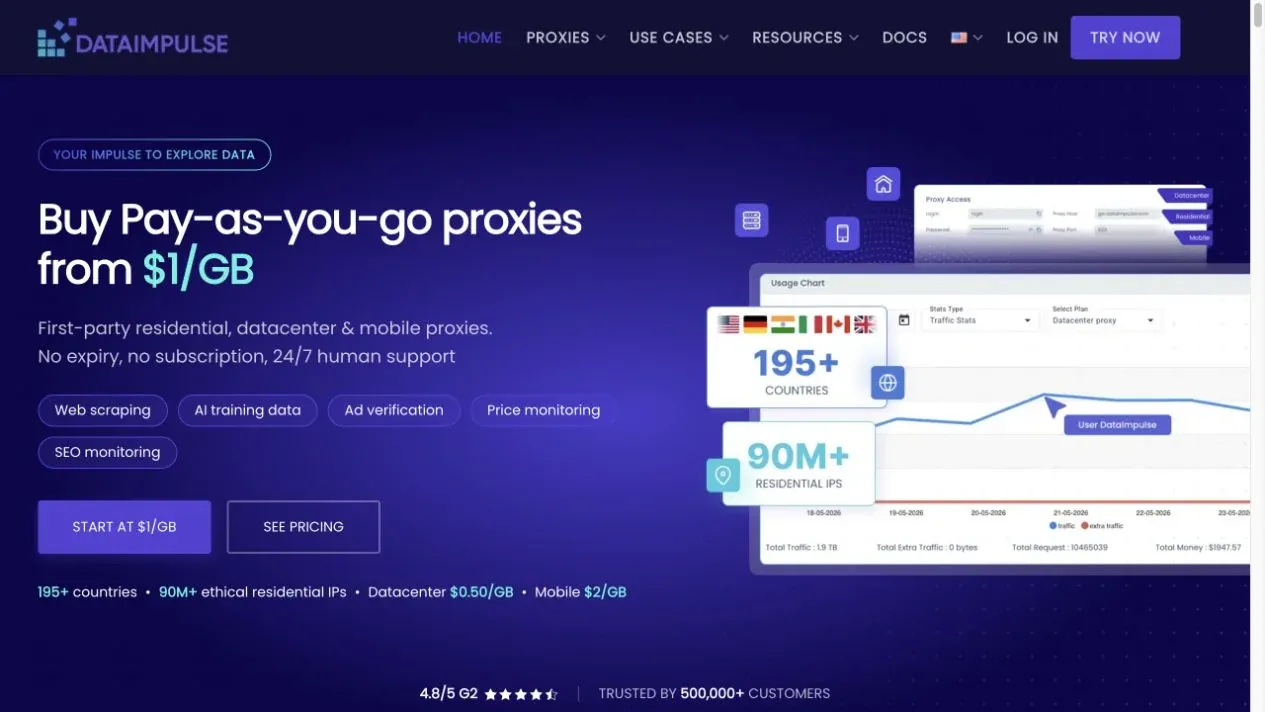
DataImpulse offers pay-per-traffic residential proxies with non-expiring bandwidth. Its standard offering includes country targeting; state, city, ZIP, and ASN filtering carry an additional charge. It also offers rotating sessions and sticky sessions advertised for up to 120 minutes.
Useful distinction: The budget separates base traffic from finer targeting. This makes a country-only task a different cost case from a city-specific task, even with identical traffic consumption.
Boundary: A low base price per GB cannot establish the cheapest city-targeted result. Include the selected targeting options and compare the standard and premium products separately.
Integration: The DataImpulse documentation separates authentication, traffic limits, blocked websites, and account billing controls.
Suitable project: A team that can define its targeting requirements precisely and track the cost of each option, rather than choosing from a base traffic price alone.
8. Webshare: Residential Plans with Explicit Access Restrictions
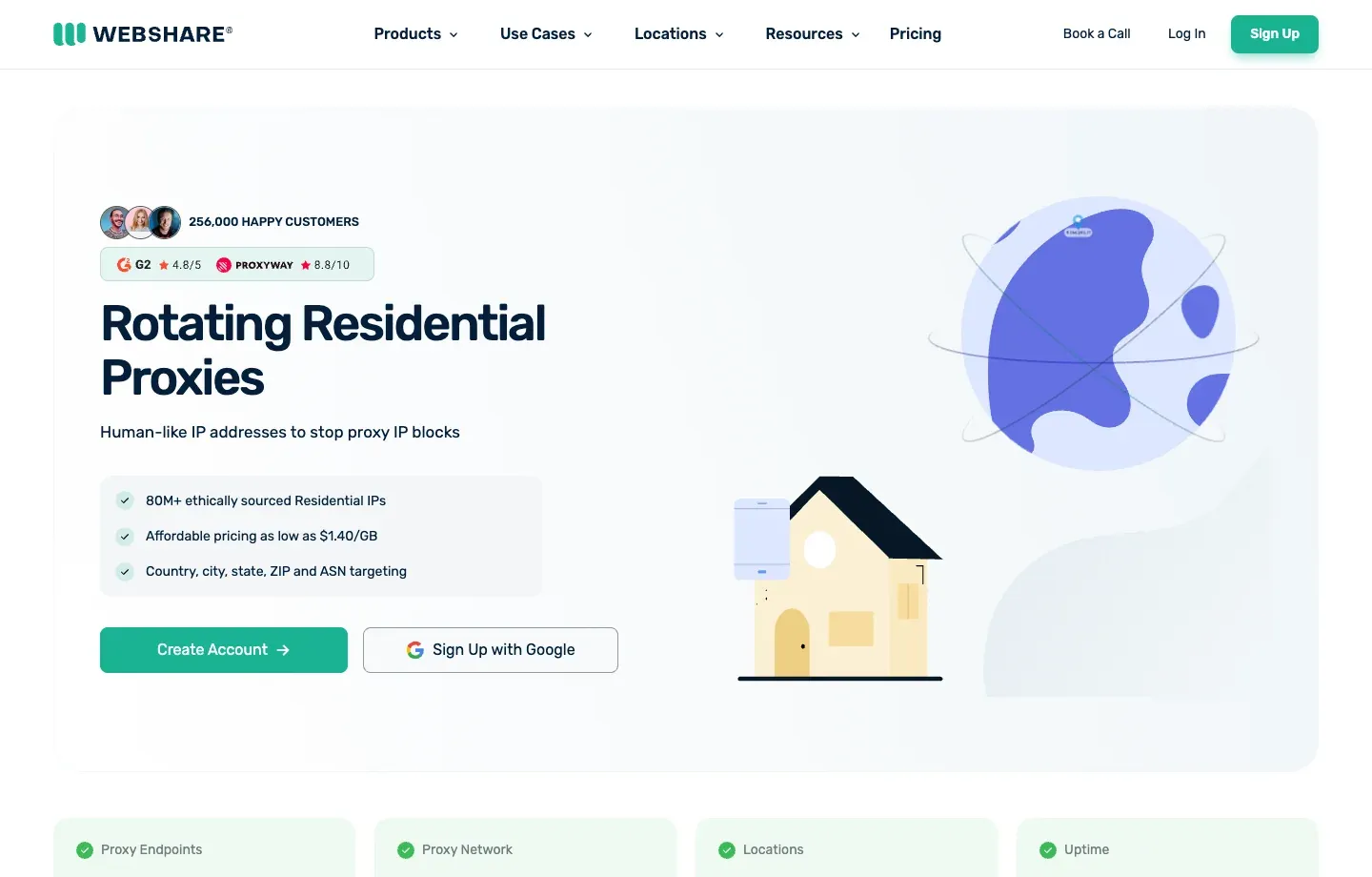
Webshare’s rotating residential offering documents country, state, city, ZIP, and ASN targeting, along with HTTP/SOCKS5 endpoints and bandwidth plans.
Useful distinction: Its residential target restrictions identify categories that may be restricted, with certain targets requiring KYC and compliance approval.
Boundary: Target eligibility needs to be established before buying traffic. Webshare’s free proxy offer should not be assumed to provide the same network and capabilities as a paid rotating residential plan. Residential subscriptions also have renewal conditions.
Suitable project: A developer or small team evaluating a bandwidth plan for an eligible target, with location requirements that match the documented residential controls.
How to Test a GeoNode Proxy Alternative
A workflow that needs one exit IP for a session has different requirements from one that needs a new exit per request. Sticky and rotating proxies address those different needs. Set the required behavior before comparing providers.
- Define the workload.
Record authorized target URLs, country/city, network type, session duration, requests per hour, required protocol, and budget. Separate hard requirements from preferences. - Use comparable samples.
Keep page types, region, time window, request headers, timeouts, and retry rules consistent. Compare residential with residential; test mobile or datacenter alternatives separately. - Measure usable output.
Record valid-response rate, required-field completeness, location consistency, latency percentiles, retries, and consumed traffic. A returned HTTP 200 or correct exit IP does not establish that the requested data is present. - Set spending controls.
Establish a pilot budget, a stop threshold, and usage alerts. Disable optional automatic top-ups if they conflict with that budget; if a provider lacks a suitable alert, monitor usage in your own job runner. - Increase concurrency gradually.
Track connection errors, 403/429 responses, output quality, and spend as load rises. A connection failure, an access denial, and rate limiting call for different diagnoses.
Cost Comparison: Separate Purchase Cost from Consumed Traffic
Use two figures: the cash required to start and the cost of producing valid results. A minimum purchase, monthly subscription, or credit balance affects cash outlay even when only part of the allowance is used.
Cost per valid record = costs allocated to the workload ÷ records that pass quality checks.
Include proxy traffic, targeting supplements, non-recoverable unused allowances, taxes, and any engineering/support cost you choose to allocate. Count failed or repeated traffic according to the selected product’s billing rules. Do not apply a managed API’s successful-request policy to a bandwidth-billed proxy connection.
For example, if a pilot incurs $20 in allocated costs and produces 8,000 valid records, its cost is $0.0025 per valid record. This is an arithmetic example, not a quoted vendor plan. Record any remaining reusable traffic or credits separately so they are not counted as a loss and then charged again in a later comparison.
Before committing, capture these terms for each shortlisted product: minimum purchase, unit of billing, traffic or credit expiry, renewal and auto-top-up settings, targeting charges, failed/retry traffic accounting, and support scope. A provider that meets the functional requirement may still be a poor match for the project’s purchasing cycle.
Choose a Replacement for a Specific Requirement
GeoNode already offers several proxy networks, location filters, and session controls. A useful alternative must improve the part that matters to your workload: usable exits in a required market, session continuity, purchasing terms, integration, or support.
Compare Rola IP and the other candidates against that requirement, then use one consistent pilot to measure valid output and total cost. Move the workload when those results justify the change.