
8 Best Germany Proxies in 2026: Provider Comparison

Aug 28, 2026 · Comparisons · 11 min read
The best Germany proxy is the one that matches your workload, not simply the provider with the largest advertised network. Start with four questions: Do you need residential, mobile, ISP, or datacenter IPs? Is city-level targeting essential? Do you need SOCKS5? And will you pay by traffic, IP, or time?
TL;DR
Choose a Germany proxy by IP type, targeting depth, protocol support, and billing model. Rola IP is a practical option when you need several German proxy types in one account; Decodo suits broad self-service needs, Oxylabs and Bright Data fit enterprise requirements, and SOAX is worth evaluating for granular mobile targeting. Verify live inventory, plan terms, and SOCKS5 support before purchase.
For buyers who want several German proxy types in one service, Rola IP is the most flexible starting point in this comparison. Its current Germany proxy page presents static residential, rotating residential, datacenter, and mobile options, with different pricing units for different workloads. Decodo is a practical all-round alternative, Oxylabs and Bright Data suit enterprise teams that need deeper controls, SOAX stands out for granular mobile targeting, and Webshare is a straightforward entry point for datacenter or static use.
This is a feature-and-fit comparison based on public information checked on August 26, 2026. It is not a controlled speed or success-rate benchmark. Prices, promotions, and German inventory can change, so confirm the live plan before buying.
Best Germany Proxy Providers at a Glance
Provider |
Best fit |
Germany proxy options |
SOCKS5 |
Pricing approach to check |
|---|---|---|---|---|
Rola IP |
Multiple German proxy types in one workflow |
Static residential, rotating residential, datacenter, mobile |
Yes, depending on product |
Per IP, per GB, or per day |
Decodo |
Balanced self-service choice |
Residential, mobile, datacenter, ISP |
Yes |
Traffic plans and product-specific plans |
Oxylabs |
Enterprise operations |
Residential, mobile, ISP, datacenter |
Yes |
Traffic or IP-based enterprise plans |
Bright Data |
Advanced targeting and management tools |
Residential, mobile, ISP, datacenter |
Yes, with network-specific rules |
PAYG and committed plans |
SOAX |
Granular mobile and residential targeting |
Residential, mobile, ISP, datacenter |
Yes |
Bundled traffic plans |
DataImpulse |
Budget-conscious traffic purchasing |
Germany residential; broader mobile network |
Yes |
Per-GB traffic |
IPRoyal |
Non-expiring residential traffic |
Residential, ISP, datacenter, mobile |
Yes on relevant products |
Per GB, per IP, or per day |
Webshare |
Simple datacenter and static proxy access |
Datacenter, static residential, residential |
Yes |
Per proxy or traffic allowance |
There is no universal winner in this table. A low per-GB rate may be expensive for a bandwidth-heavy workload, while a daily mobile plan may be wasteful if you send only a few requests. Compare the total cost of your actual task, not the smallest number on a pricing page.
How This Comparison Was Built
We reviewed three reference articles supplied for this guide: DataImpulse’s Germany proxy comparison, Proxyway’s Germany proxy research, and Proxy-Cheap’s German proxy roundup. We then checked each shortlisted provider’s current official Germany or product page.
The ranking emphasizes factors a buyer can verify before purchase:
- Availability of the required German IP type
- Country or city targeting, where offered
- HTTP(S) and SOCKS5 support
- Rotation and sticky-session controls
- Authentication and integration options
- Pricing unit and minimum commitment
- Documentation, support, and responsible-use controls
Provider-published network sizes and performance claims are not treated as independent test results. Proxyway describes a multi-country testing methodology on its comparison page, but those results should not be presented as tests performed by Rola IP or as proof about providers not included in the same test.
What to Look for in a Germany Proxy
1. Choose the IP type before the provider
Residential proxies route traffic through consumer ISP connections and are generally the first option for public-web collection, localization checks, and workflows that need a household-network appearance. Rotating pools fit many-request jobs; sticky sessions help when a site expects one IP to remain stable for a short interaction.
Mobile proxies use carrier-issued addresses. They can be useful for mobile localization, app testing, ad verification, and carrier-sensitive destinations, but their price model needs close attention. ISP or static residential proxies combine a stable address with ISP-associated routing, while datacenter proxies prioritize speed and predictable cost for targets that do not require a residential or mobile identity.
2. Check targeting depth, not just “Germany available”
Country targeting may be enough for checking German content or prices. City targeting matters when results differ between Berlin, Hamburg, Munich, Frankfurt, or other locations. Do not assume every city has equal inventory: availability can vary by proxy type, carrier, and time.
3. Match rotation to the session
Per-request rotation is useful for distributed fetching. A sticky session is better for a multi-step flow that expects the same source IP. A static IP is the simplest option when an approved destination requires allowlisting or a persistent endpoint.
4. Verify the protocol and DNS behavior
SOCKS5 is useful when an application needs more than browser-style HTTP proxying, but the label alone is not enough. Confirm whether DNS resolution happens remotely, which ports are allowed, how authentication works, and whether SOCKS5 is available on the exact Germany product you plan to buy.
5. Normalize the price
German proxy plans are sold per gigabyte, per IP, per day, or as a monthly bundle. Estimate requests, average response size, concurrency, session length, and retry rate. This produces a realistic monthly cost and makes different pricing models comparable.
The 8 Best Germany Proxies in Detail
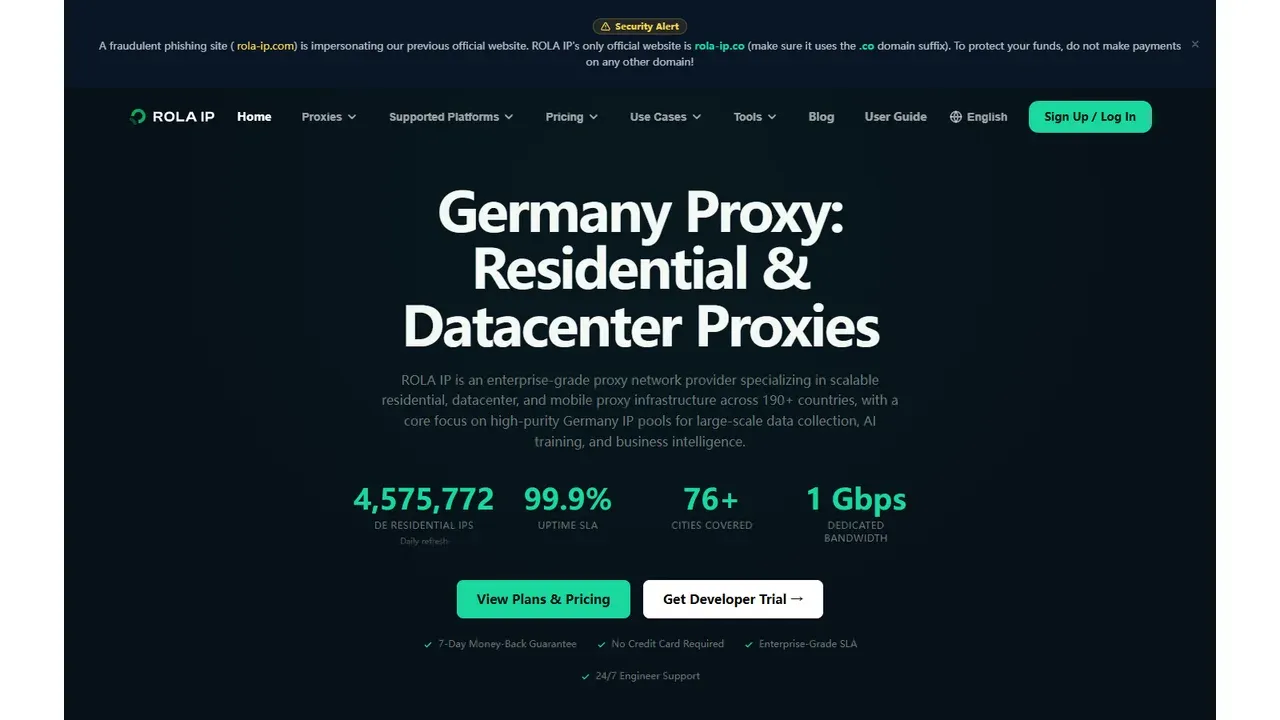
1. Rola IP — Best for Multiple German Proxy Types in One Account
Rola IP leads this shortlist for readers who want to compare several Germany-specific products without moving between unrelated platforms. Its current Germany page lists four choices: static residential, rotating residential, datacenter, and mobile proxies. The page also shows HTTP(S) and SOCKS5 availability across the relevant products, plus rotation, sticky-session, username/password, and IP-whitelist options. Rola’s protocol FAQ separately states that its rotating and static products support HTTP(S) and SOCKS5.
The practical advantage is choice. A research team can use rotating residential proxy traffic for distributed requests, a stable Germany IP for an allowlisted system, or a mobile endpoint for carrier-oriented testing. The tradeoff is that the products use different billing units. Buyers should compare the live checkout total rather than treating one headline price as representative of every Rola service.
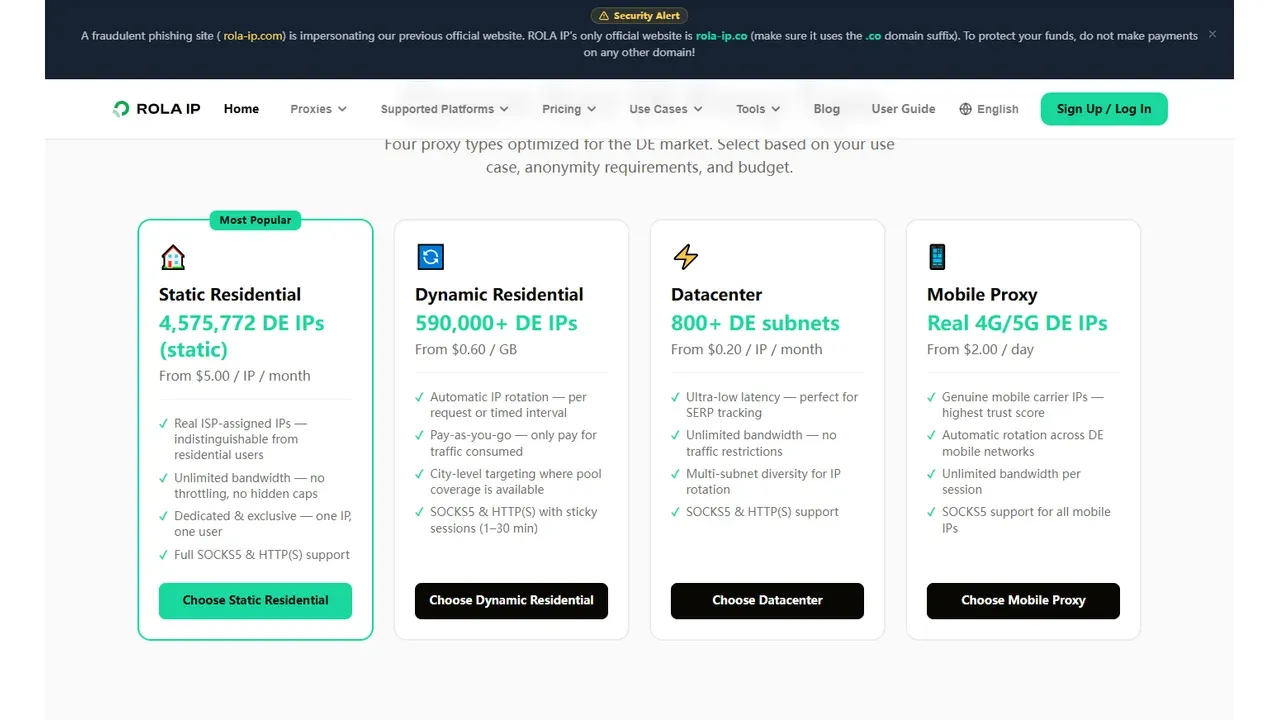
Best for: teams that want Germany residential, static, datacenter, and mobile options under one provider.
Watch for: changing inventory and the difference between per-IP, per-GB, and per-day costs.
2. Decodo — Best Balanced Self-Service Alternative
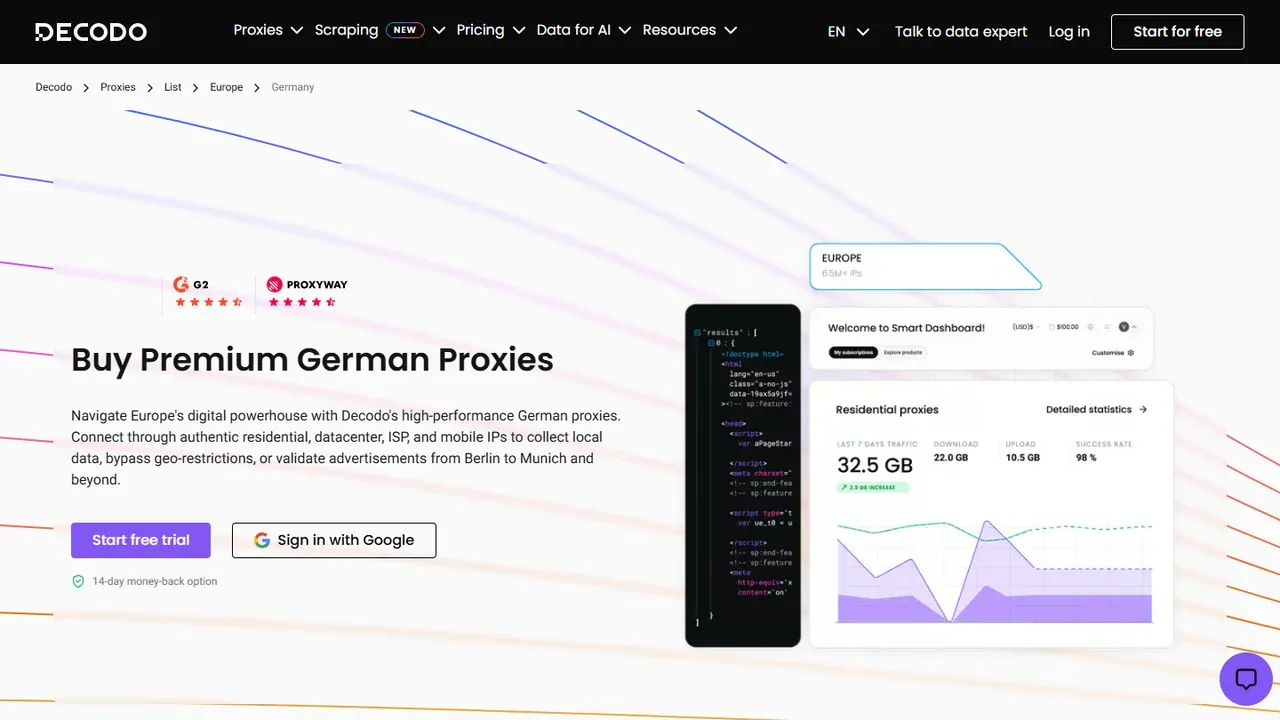
Decodo’s Germany page lists residential, mobile, datacenter, and ISP proxies, along with HTTP(S) and SOCKS5 support. This breadth makes it a sensible option for small and mid-sized teams that want both rotating and stable products without beginning with an enterprise-only sales process.
Its public prices sometimes include temporary discounts. Use the standard renewal price and required minimum spend—not only the promotional rate—when comparing it with other providers.
Best for: buyers seeking a broad catalog and accessible self-service plans.
Watch for: promotional pricing and different allowances across product types.
3. Oxylabs — Best for Enterprise Feature Depth
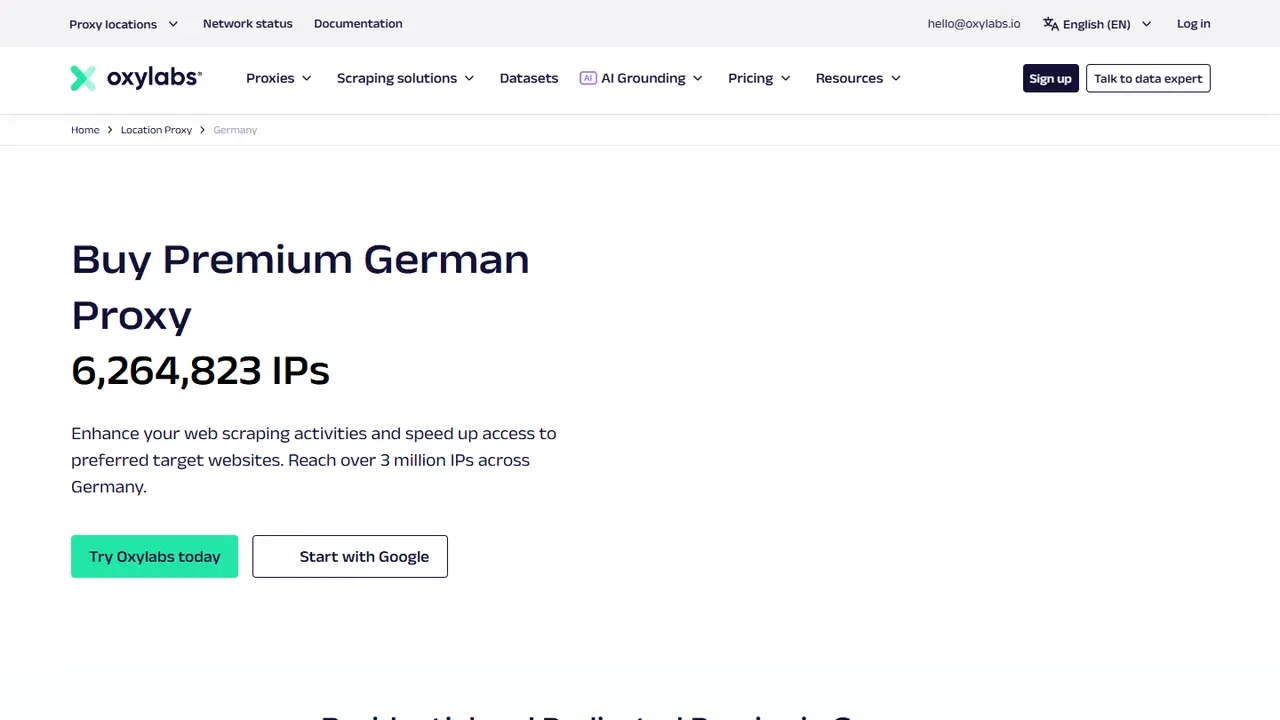
Oxylabs’ Germany proxy page presents German residential, mobile, ISP, and datacenter options, including city-level location controls on relevant services. Its documentation, account tooling, and enterprise positioning make it a strong candidate for large operations that value support and governance as much as the lowest unit cost.
Oxylabs generally has a higher entry price than budget providers. That can still be economical if the team needs enterprise support, mature controls, and fewer hours spent maintaining integrations.
Best for: larger programs with support, control, and documentation requirements.
Watch for: minimum commitment and whether advanced features are included in the selected plan.
4. Bright Data — Best for Advanced Targeting and Proxy Management
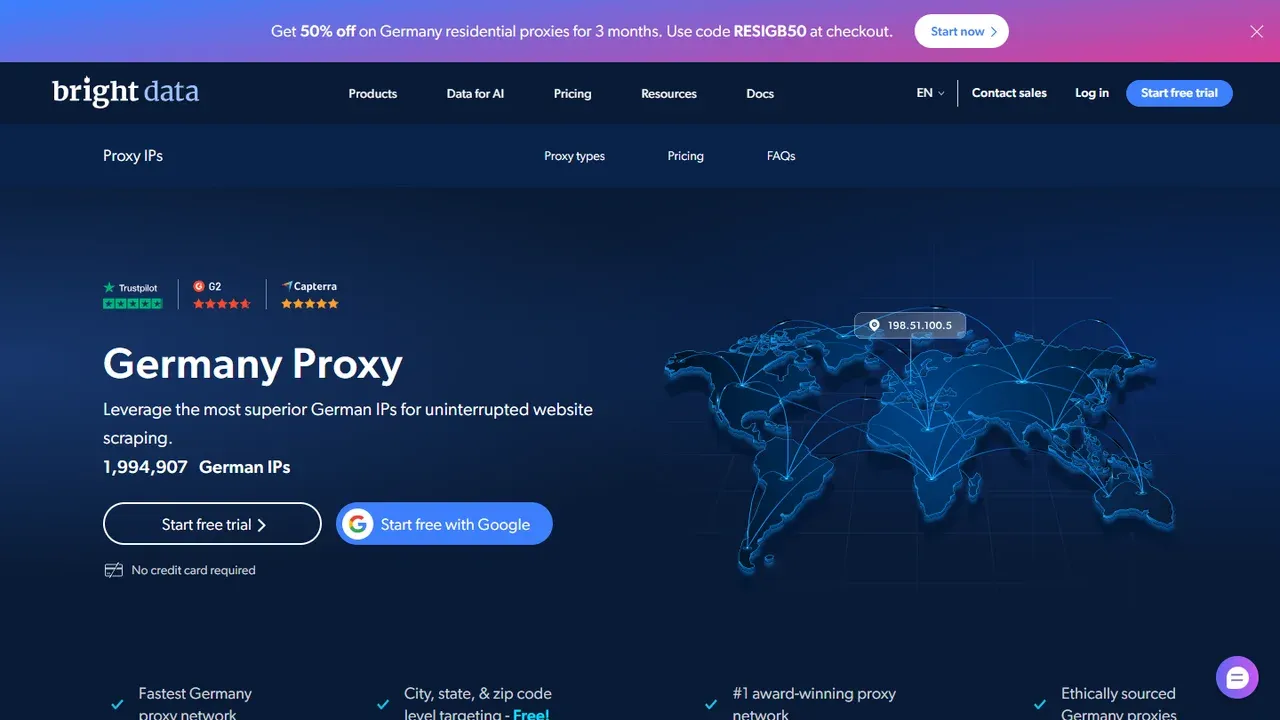
Bright Data’s Germany page advertises residential, mobile, ISP, and datacenter networks with country, city, state, and ZIP-level controls where available. It is a strong fit when teams need detailed targeting, proxy-manager features, and multiple network types.
Its SOCKS5 implementation has network-specific setup rules. Bright Data’s SOCKS5 documentation should be checked before integration rather than assuming every application and destination will work with a generic SOCKS5 configuration. Verification or compliance steps may also apply to some networks.
Best for: advanced targeting and centrally managed proxy operations.
Watch for: configuration complexity, verification requirements, and network-specific SOCKS5 behavior.
5. SOAX — Best for Granular German Mobile Targeting
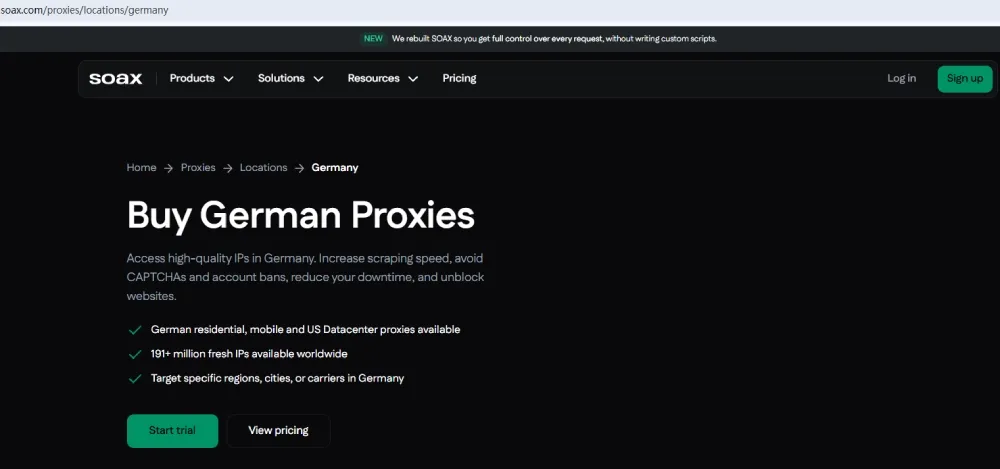
SOAX’s Germany page highlights residential and mobile coverage with city and carrier targeting, and it supports HTTP(S) and SOCKS5. This combination is valuable for mobile localization, ad verification, and QA workflows that need to select a German carrier or city rather than only the country.
SOAX uses bundled traffic plans, so the smallest advertised per-GB figure may require a larger monthly commitment. Confirm the included traffic, overage rules, and the granularity available on the chosen plan.
Best for: carrier-aware mobile or residential testing.
Watch for: plan minimums and whether the desired carrier has current inventory.
6. DataImpulse — Best for Low-Cost, Traffic-Based Purchasing
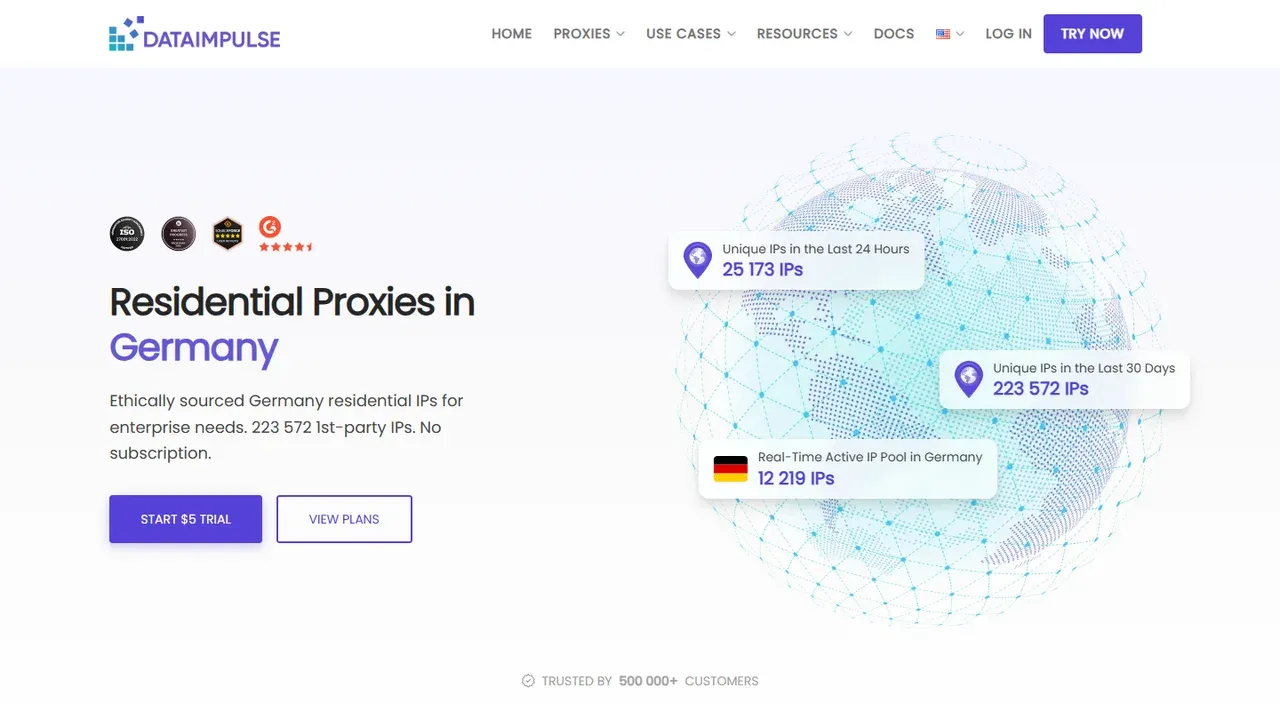
DataImpulse’s Germany residential page promotes a simple per-GB model, SOCKS5/HTTP(S) access, and non-expiring purchased traffic. That can work well for intermittent projects because unused bandwidth is not tied to a short monthly reset.
DataImpulse also sells mobile proxy traffic, but buyers looking specifically for a cheap German mobile proxy should confirm Germany availability in the live dashboard before paying. A global country count does not guarantee that the exact German mobile pool or carrier you need is available at that moment.
Best for: intermittent residential workloads and buyers who prefer traffic that does not expire.
Watch for: current Germany mobile inventory and the support level attached to the chosen plan.
7. IPRoyal — Best for Non-Expiring Residential Traffic
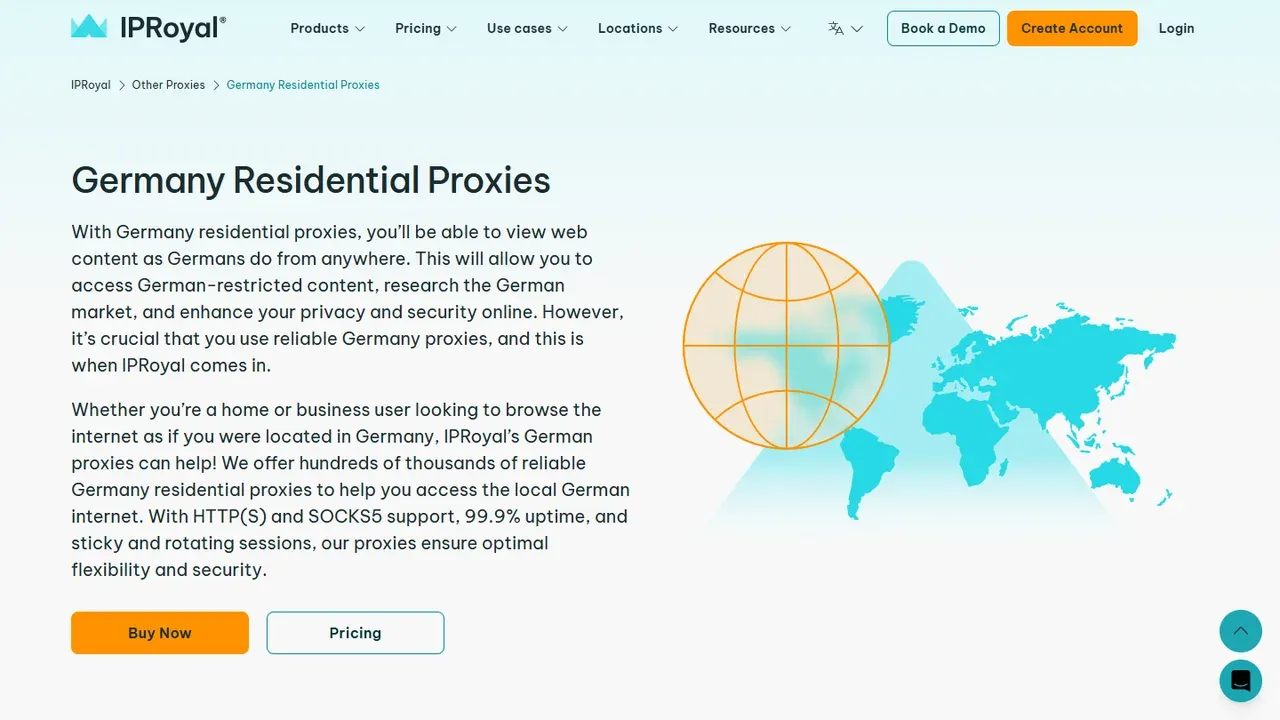
IPRoyal’s Germany residential page describes German residential access with traffic that does not expire, plus rotation and sticky-session options. The provider also offers ISP, datacenter, and mobile products, giving buyers several ways to balance stability and cost.
Non-expiring traffic is attractive for sporadic use, but it should not replace a live trial. Confirm city availability, concurrency, and destination compatibility with a small purchase before committing.
Best for: projects with uneven traffic that may sit unused between runs.
Watch for: differences in protocol and targeting features between product lines.
8. Webshare — Best Entry-Level Datacenter or Static Option
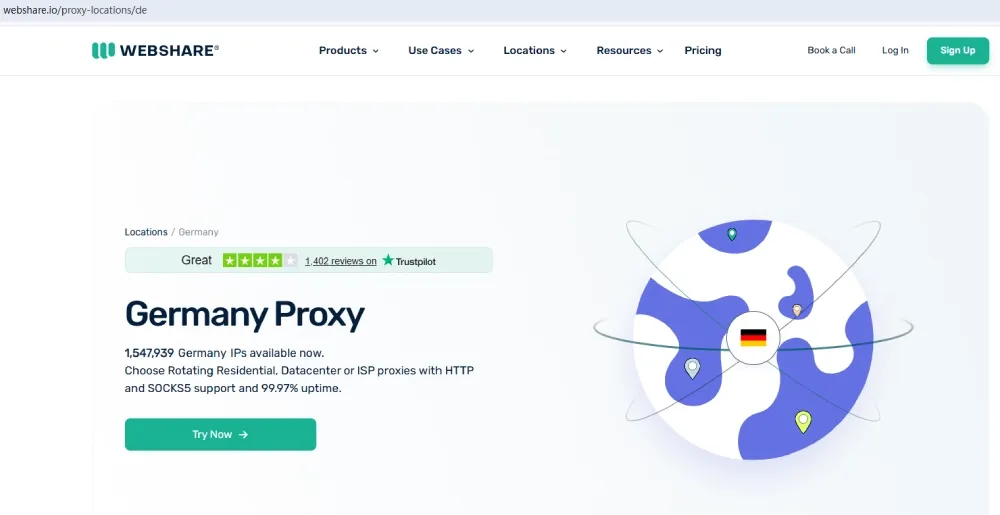
Webshare’s Germany page lists German datacenter, static residential, and rotating residential choices with SOCKS5 support. Its self-service interface and small starting plans can be convenient for developers who need a limited number of German endpoints.
Webshare is not the leading choice in this list for German mobile proxies because mobile service is not part of the Germany lineup shown on its location page. It is better evaluated as a datacenter, static residential, or rotating residential option.
Best for: small development, QA, and datacenter/static workloads.
Watch for: no Germany mobile option in the listed product range.
What Is the Best Cheap Mobile Proxy in Germany?
The answer depends on whether your workload is time-heavy or traffic-heavy.
Rola’s Germany page currently presents mobile access with a daily entry price, while DataImpulse sells mobile service by traffic volume. Decodo also offers Germany mobile plans, and SOAX includes mobile access in traffic bundles. These figures are not directly comparable.
Use this simple calculation:
Monthly mobile proxy cost = access fee + traffic cost + overages + replacement or concurrency fees
Then model two realistic scenarios:
- Long sessions, high bandwidth: A daily plan with generous session bandwidth can be cheaper than per-GB billing.
- Occasional checks, low bandwidth: A traffic-based plan may cost less because you pay only for data used.
Before selecting the best cheap mobile proxy Germany option, test the target city or carrier, sticky-session duration, IP replacement behavior, concurrent-session limit, and whether SOCKS5 is supported on the mobile product. Rola’s mobile proxy page is the appropriate place to review its current mobile terms; compare those terms with the other providers’ live dashboards on the same day.
What Is the Best SOCKS5 Proxy in Germany?
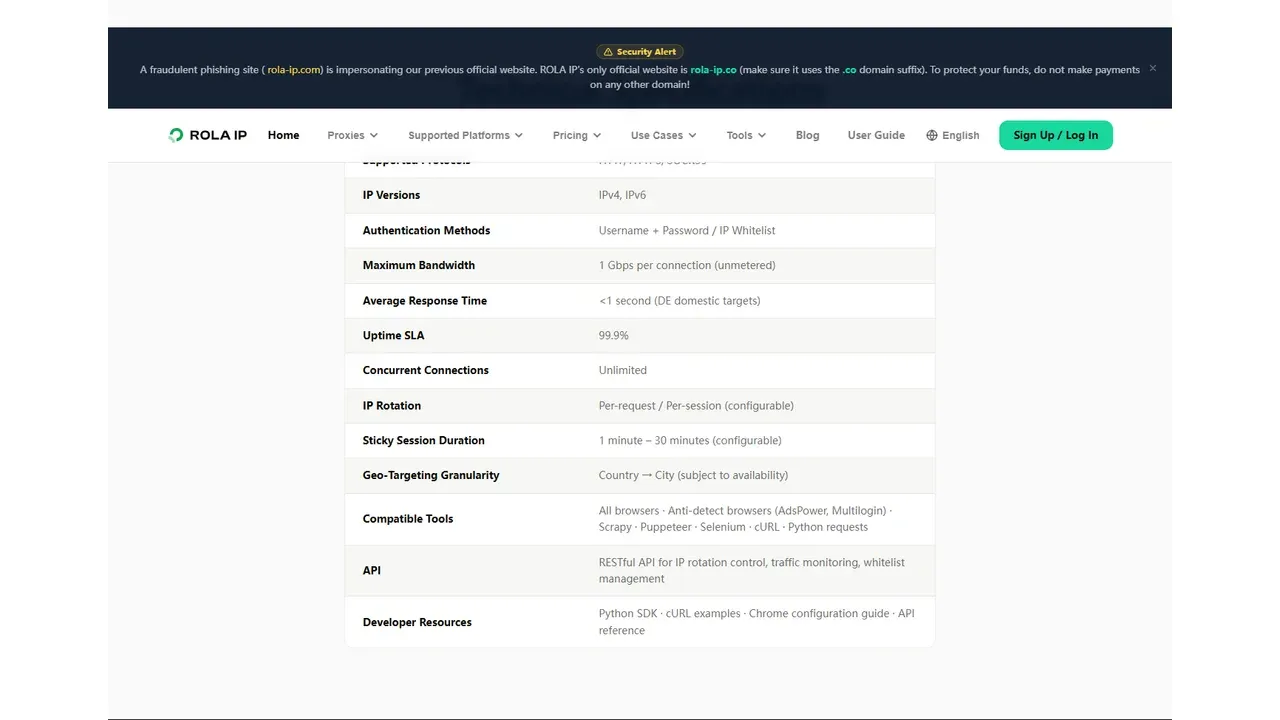
Several providers in this comparison support SOCKS5, so the best socks5 proxy in Germany is determined by implementation details rather than the protocol name alone. Rola, Decodo, Oxylabs, Bright Data, SOAX, DataImpulse, IPRoyal, and Webshare all publish SOCKS5 support on relevant products, but coverage and configuration differ.
Use this checklist before choosing:
- Exact product support: Verify SOCKS5 on the Germany residential, mobile, ISP, or datacenter plan you will buy.
- Remote DNS: Confirm whether domain names are resolved through the proxy to reduce DNS-location mismatch.
- Authentication: Check username/password, IP allowlisting, or both.
- Rotation behavior: Determine whether changing credentials, ports, or session parameters rotates the IP.
- Sticky duration: Make sure one IP can remain active long enough for the workflow.
- Port and destination rules: Review blocked ports, UDP support, and acceptable-use restrictions.
- Application compatibility: Test the exact browser, automation framework, or client—not only a command-line request.
Which Germany Proxy Type Should You Choose?
| Need | Recommended starting type | Why | Main tradeoff |
|---|---|---|---|
| Localized public-web research | Rotating residential | Broad IP rotation with German location signals | Traffic-based cost and session tuning |
| Mobile app, carrier, or ad verification | Mobile | Carrier-issued IP addresses | Usually costs more; carrier inventory varies |
| Stable account or allowlisted endpoint | ISP/static residential | Persistent IP with ISP-associated routing | Smaller pool and per-IP commitment |
| Fast requests to tolerant targets | Datacenter | Speed, predictable cost, easy scaling | More readily identified as hosting traffic |
| Multi-step session | Sticky residential or mobile | Keeps one IP during the flow | Must match session duration and rotation rules |
Use proxies only for lawful, authorized activities and follow the destination’s terms. No proxy type guarantees access, anonymity, or a particular success rate.
How to Test a Germany Proxy Before Scaling
Do not buy a large plan based only on a provider table. Run a small, repeatable test against your own approved workload.
- Define the pass criteria. Record the required German city or carrier, protocol, session duration, response time, and acceptable failure rate.
- Buy the smallest representative plan. A free trial can reveal integration problems, but it may not reflect paid-pool performance or peak-hour inventory.
- Confirm the exit location. Use a reliable IP lookup and a proxy checker to verify connectivity, protocol, and apparent location.
- Test rotation and persistence separately. Run a batch with per-request rotation, then a multi-step session with a sticky or static residential proxy.
- Measure the real cost. Include retries, failed requests, traffic overhead, and engineering time—not only the advertised unit price.
- Repeat at different times. German inventory, congestion, and target behavior may differ by hour and day.
Keep the same target set and test conditions for every provider. Otherwise, the comparison will measure different workloads rather than provider performance.
Germany Proxy Use, GDPR, and Responsible Data Handling
A German proxy changes the network route; it does not change the law or a site’s terms. If a workflow processes personal data, the GDPR still requires principles such as lawfulness, transparency, purpose limitation, and data minimization. Article 6 also requires an applicable legal basis for processing. Review the official GDPR text on EUR-Lex and obtain legal advice for your specific use case.
Use rate limits, honor access controls, secure proxy credentials, collect only necessary data, and retain it only as long as needed. Avoid using proxies to evade authorization, commit fraud, or harm a service.
Final Verdict
The best Germany proxies are not interchangeable. Choose Rola IP when you want residential, static residential, datacenter, and mobile Germany options in one account. Choose Decodo for a balanced self-service alternative, Oxylabs or Bright Data for enterprise controls, SOAX for granular mobile targeting, DataImpulse or IPRoyal for traffic models that suit intermittent use, and Webshare for a simple datacenter or static starting point.
Whichever provider you shortlist, verify current German inventory, normalize the pricing unit, test SOCKS5 behavior if required, and run a small workload before scaling. That process is more reliable than choosing solely by a headline pool size or promotional rate.