
5 Best AstroProxy Alternatives (2026)

Aug 28, 2026 · Comparisons · 13 min read
If you are looking for AstroProxy alternatives, it is usually not because AstroProxy is completely unusable. More often, your business scale, proxy type requirements, or management model has changed. This article compares Rola IP, Decodo, Oxylabs, SOAX, and IPRoyal across proxy types, geolocation, sessions and static IPs, actual purchase pricing, traffic validity, and onboarding/support.
Last verified: August 27, 2026. Prices, IP-pool size, trials, and feature availability can change; verify the applicable product page before purchase.
TL;DR
If you need rotating residential, static ISP, mobile, and datacenter proxies in one place, start with Rola IP. If you need finer targeting such as ZIP/ASN plus mature self-service tools, compare Decodo first. If you need enterprise procurement and large-scale capacity, choose Oxylabs. If granular location and session parameters matter most, look at SOAX. If your monthly usage is very small and you want traffic that does not expire, IPRoyal is more straightforward.
What Is AstroProxy?
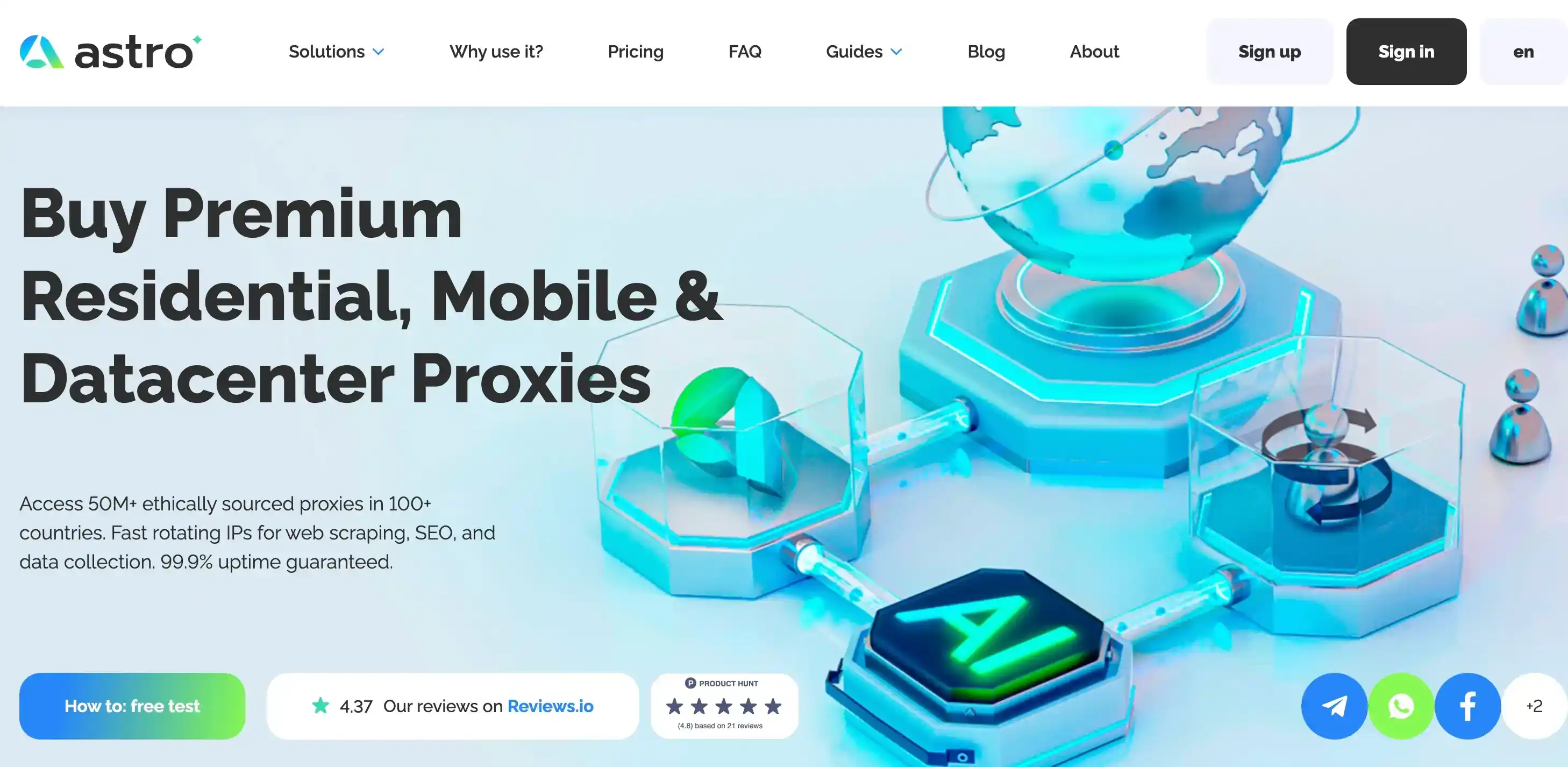
Figure 1: AstroProxy product page (Source: AstroProxy)
AstroProxy is a proxy provider offering residential, mobile, and datacenter proxies. It uses a “port + traffic” model: users create ports in the control panel, select a country, city, or provider, configure HTTP(S)/SOCKS5 and username/password or IP-whitelist authentication, and then choose whether IPs rotate by time, new connection, manual action, or API. Residential proxies can be purchased from as little as 100MB, with public pricing starting at $7.30/GB. The prepaid model also charges $0.30 per port.
The advantage of this model is simplicity. For a small number of ports, standard regional rotation, web scraping, SEO monitoring, ad verification, or regional access testing, one port can lock in a set of proxy rules. If your current project’s locations, sessions, and costs are already stable, AstroProxy can still be a practical choice.
Why Look for AstroProxy Alternatives?
You typically need to compare alternatives in the following situations:
- Ports and traffic must be calculated together. AstroProxy’s prepaid plans include both traffic fees and port fees, and ports are typically valid monthly. When a project is split across many regions, accounts, or queues, cost and renewal management can become more complicated than buying traffic alone.
- Your business needs a long-term static IP. AstroProxy residential proxies can use sticky sessions, but those sessions still come from a dynamic pool. If you need to keep the same outbound IP for days or weeks, dedicated ISP/static residential IPs are often easier to manage.
- Your project needs finer targeting or more complete management features. AstroProxy supports country, city, and provider filtering, while some alternatives go further with ZIP, ASN, ISP, subaccounts, usage statistics, enterprise support, and other features that fit complex data collection and team collaboration better.
- Monthly usage changes significantly. Some services use tiered per-GB pricing, some offer PAYG, some provide traffic that never expires, and some static proxies are billed per IP. The total cost of the same 10GB, 100GB, or long-lived static session can vary greatly under different pricing models.
So, “replacing AstroProxy” is not simply about finding a cheaper proxy provider. The better question is which product structure fits your workload: rotating residential proxies for short requests, ISP/static residential proxies for long-term logins, traffic-validity rules for low-frequency projects, and geotargeting, concurrency, account management, and support for large teams.
AstroProxy Alternatives at a Glance
Rank |
Provider |
Best For |
Key Information |
Residential Proxy Price Reference |
|---|---|---|---|---|
1 |
Rola IP |
All-around alternative; rotating + static exits |
80M+ residential IPs; 190+ countries/regions; residential, ISP, mobile, datacenter |
PAYG $4/GB; 100GB $2/GB; static residential from $5/IP |
2 |
Decodo |
Self-service onboarding, precise targeting |
125M+; 195+ locations; ZIP/ASN; unlimited concurrent sessions |
3GB $3.75/GB; 100GB $2.75/GB; PAYG $4/GB |
3 |
Oxylabs |
Enterprise scale and support |
175M+; 195 locations; unlimited concurrency; 24/7 support |
5GB $6/GB; 125GB $4/GB; 1TB $2.50/GB |
4 |
SOAX |
Location/ISP/ASN and session control |
155M+; 195+ locations; customizable sticky sessions and rotation; UDP/QUIC |
Monthly plan + credits; check current location-tier pricing |
5 |
IPRoyal |
Low-volume traffic, predictable budgets |
64M+; 195+ countries; non-expiring traffic; sticky sessions up to 7 days |
1GB $7/GB; 10GB $5.25/GB; 10TB $1.75/GB |
1. Rola IP: The Most Complete All-Around AstroProxy Alternative
Rola IP has a relatively complete product lineup: rotating residential proxies fit multi-region, high-frequency requests; ISP/static residential proxies fit long-term fixed exits; and mobile and datacenter proxies are also available. For teams that run both data collection tasks and long-lived sessions or static-IP workloads, different proxy types can be selected for different tasks within the same platform.
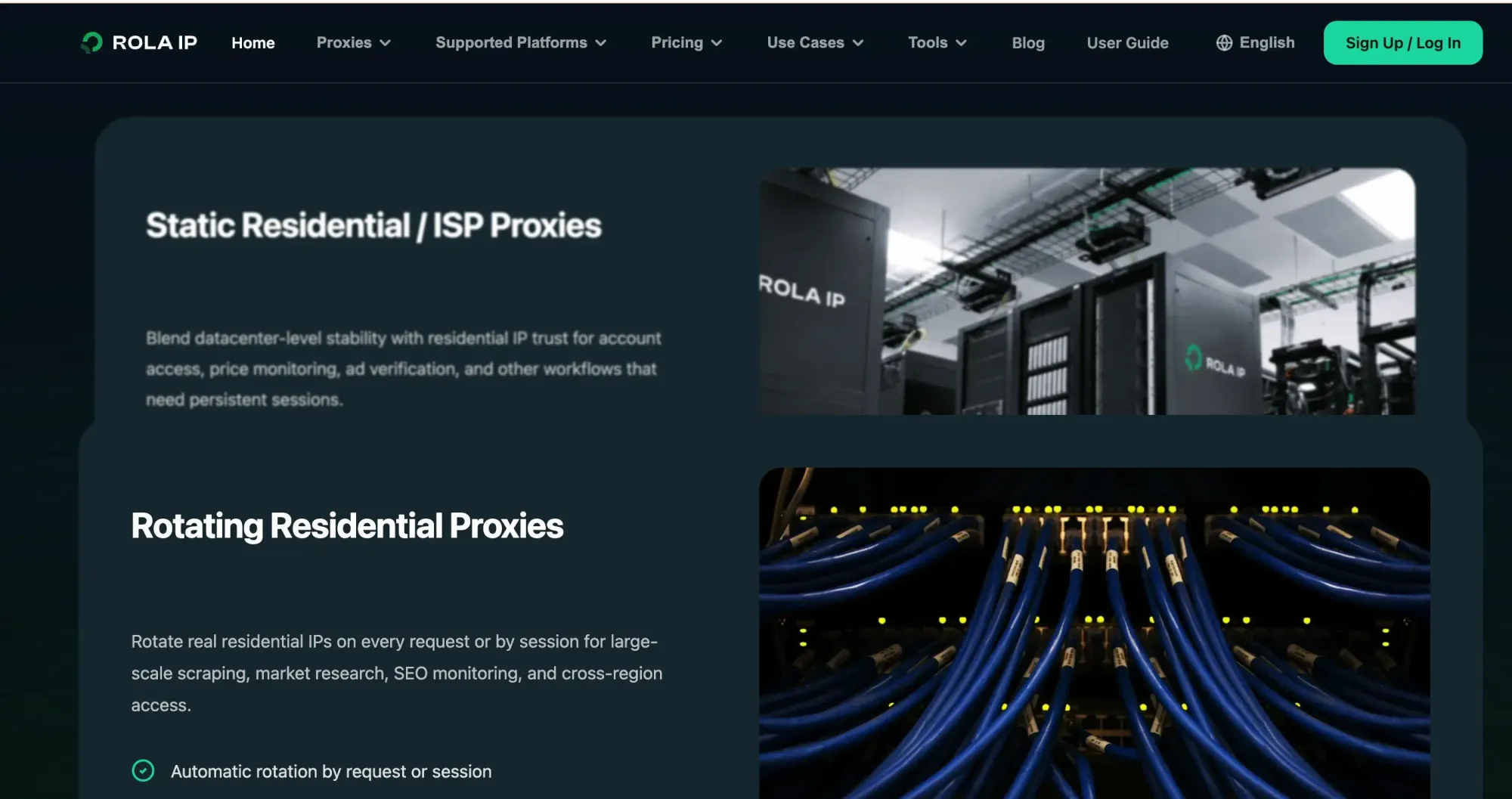
Figure 2: Rola IP proxy product page (Source: Rola IP)
Core Capabilities and Pricing
- Broad product coverage: rotating residential proxies, ISP/static residential proxies, mobile proxies, rotating datacenter proxies, and static datacenter proxies are available, making it easier to separate different workloads.
- Static residential/ISP proxies start at $5/IP and include unlimited traffic during the validity period, which suits long-term logins, browser sessions, account operations, and continuous monitoring.
- Rotating residential coverage spans 190+ countries and regions with a residential pool of 80M+ IPs. It supports country, state, and city targeting, along with per-request rotation and sticky sessions.
- Rotating residential proxies are available via PAYG or traffic packages: PAYG is $4/GB; 50GB, 100GB, 1,000GB, and 10,000GB packages are approximately $2.50, $2.00, $1.00, and $0.60/GB respectively.
- HTTP(S)/SOCKS5, username/password authentication, and IP-whitelist authentication are supported, along with unlimited concurrent sessions and 24/7 technical support.
| Dimension | Detailed Analysis |
|---|---|
| Advantages | Complete proxy-type coverage, including both rotating residential and dedicated ISP/static residential proxies. 80M+ residential IPs cover 190+ countries and regions. Rotating products support PAYG and traffic packages, while static products are purchased per IP with unlimited traffic during their validity period, allowing dynamic and static workloads to be managed on one platform. |
| Limitations | Prepaid rotating-residential traffic packages are valid for only 30 days, so users with highly variable monthly consumption may have unused traffic left over. Targeting focuses on country, state, and city. If your project requires finer filters such as ZIP or ASN, compare options such as Decodo and SOAX. |
| Use Cases | Rotating residential proxies fit multi-region web scraping, price monitoring, SEO/ad verification, and similar tasks. ISP/static residential proxies suit long-term account logins, cross-border business dashboards, and long browser sessions. Datacenter proxies can be used for high-throughput public-page workloads. |
| Best For | Teams that need both “dynamic rotation + long-term static exits,” especially small-to-midsize teams and scaled data teams that want to reduce multi-provider maintenance and switch pricing models by workload. |
Rola IP vs AstroProxy
| Comparison | AstroProxy | Rola IP |
|---|---|---|
| Proxy Types | Residential, mobile, datacenter | Rotating residential, ISP/static residential, mobile, rotating/static datacenter |
| Coverage | 100+ countries; country/city/provider | 190+ countries and regions; country/state/city |
| Rotation | Timed, new connection, manual/API; sticky sessions | Per-request rotation; sticky sessions |
| Long-Term Static IP | Primarily relies on sticky sessions | Dedicated ISP/static residential IPs |
| Residential Pricing | From $7.30/GB + $0.30/port | PAYG $4/GB; traffic packages as low as $0.60/GB |
| Static Residential Pricing | No standalone ISP/static residential product | From $5/IP; unlimited traffic during validity period |
| Best For | A small number of ports and standard rotating-proxy tasks | Teams that need both rotating pools and long-term static exits |
2. Decodo: Better Self-Service Experience and Granular Targeting
Decodo (formerly Smartproxy) leans toward a self-service experience built around fast activation, detailed configuration, and mature tools. Its residential proxy pool contains 125M+ IPs across 195+ locations, with country, state, city, ZIP, and ASN targeting, per-request rotation and sticky sessions, HTTP(S)/SOCKS5, and unlimited concurrent connections. For teams that frequently switch locations and need to generate proxy endpoints quickly, the onboarding cost is relatively low.
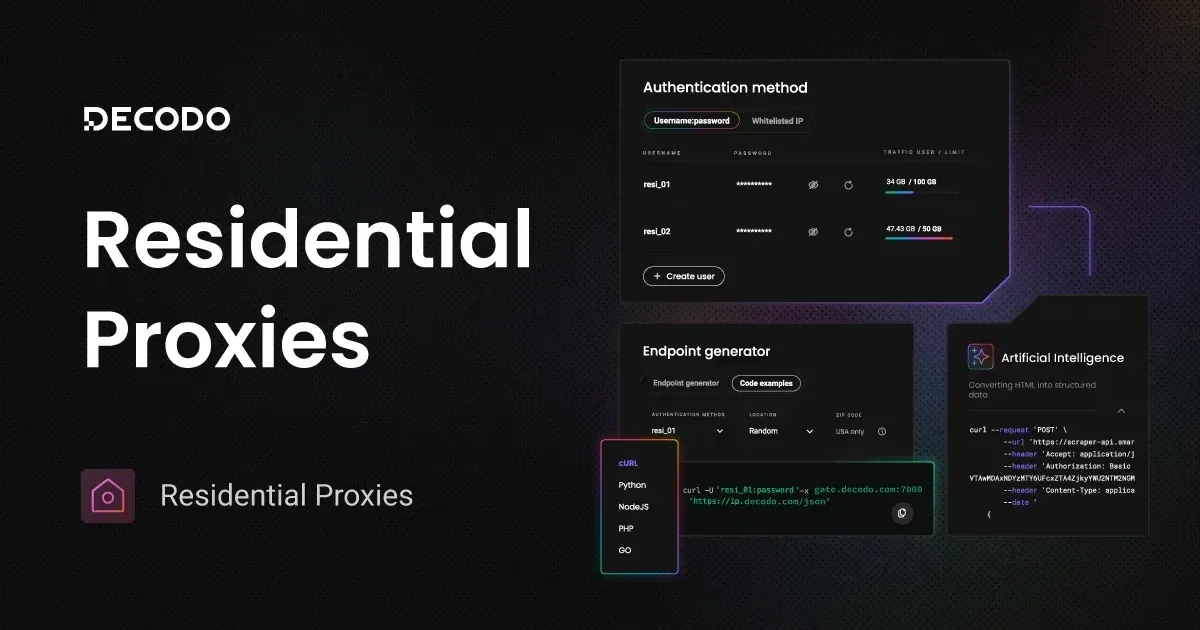
Figure 3: Decodo Residential Proxies (Source: Decodo)
Pricing and Usage Model
Decodo residential proxies list 3GB at $3.75/GB, 25GB at $3.25/GB, and 100GB at $2.75/GB, plus a PAYG option at $4/GB. In other words, within the common 3-100GB range, the actual unit price is approximately $2.75-$3.75/GB. The advertised “from $2/GB” price applies to higher-volume tiers and only becomes directly relevant when you reach the corresponding purchase volume. Decodo also offers a 3-day free trial so you can validate target locations, targeting parameters, and integration methods first.
| Dimension | Detailed Analysis |
|---|---|
| Advantages | Mature self-service activation, endpoint generator, documentation, and integration tools. 125M+ residential IPs cover 195+ locations. Country/state/city/ZIP/ASN targeting is more granular than AstroProxy, and unlimited concurrent sessions are supported. |
| Limitations | The actual unit price of small and midsize traffic packages is higher than the lowest price advertised on the page, so budgets should be calculated using your real usage tier. ISP/static residential is a separate product; if long-term static exits are your primary need, compare IP exclusivity, pricing, and renewal rules separately. |
| Use Cases | Multi-region web scraping, SERP/SEO monitoring, ad verification, ecommerce price monitoring, market research, and localized data tasks that require ZIP/ASN filtering. |
| Best For | Developers, SEO/growth teams, and small-to-midsize data teams that want fast self-service access, especially users who want to avoid a complex sales process but still need fine-grained targeting and mature documentation. |
3. Oxylabs: Better for Enterprise Procurement and Large-Scale Projects
Oxylabs is closer to enterprise-grade data infrastructure than a proxy service focused solely on low prices. Its residential network includes 175M+ IPs across 195 locations, supports country, state, city, and ZIP targeting, offers unlimited concurrent sessions and sticky sessions, and supports HTTP(S), HTTP3, and SOCKS5. Its advantages are more apparent for companies where proxies are part of a critical business workflow and where 24/7 support, an account manager, or formal procurement processes are required.
Figure 4: Oxylabs Residential Proxies (Source: Oxylabs)
Pricing and Usage Model
Oxylabs residential proxies use monthly plans: Starter includes 5GB at $6/GB, Basic includes 20GB at $5/GB, Advanced includes 125GB at $4/GB, and Corporate includes 1TB at $2.50/GB. The entry-level minimum monthly cost is $30. Unit pricing decreases as usage grows, but the main value is large-scale capacity, support, and enterprise services rather than the lowest per-GB price at low volumes.
| Dimension | Detailed Analysis |
|---|---|
| Advantages | 175M+ residential IPs, 195 locations, and unlimited concurrent sessions make it suitable for cross-region, high-request-volume workloads. It supports ZIP targeting and HTTP3 and provides 24/7 support and account managers, with a complete enterprise procurement and technical support structure. |
| Limitations | Entry costs at low usage are higher than some self-service providers, with the 5GB plan costing $30/month. Procurement and trial paths are more enterprise-oriented, so it is less flexible than PAYG or non-expiring traffic options if you only need a small amount of traffic temporarily. |
| Use Cases | Large-scale web scraping, price/inventory monitoring, ad verification, travel-fare aggregation, review monitoring, and critical data pipelines where proxy failures could directly affect business revenue. |
| Best For | Medium and large enterprises with formal procurement, compliance, or SRE/data engineering teams; especially users that prioritize capacity, reliable support, and escalation paths rather than comparing per-GB price alone. |
4. SOAX: Best for Teams That Prioritize Targeting and Session Parameters
SOAX puts geotargeting and session control at the center of its product. Its residential proxy pool contains 155M+ IPs across 195+ locations, supports country, region, city, and ISP targeting, and allows customized rotation and sticky sessions. Higher-tier plans add filters such as ASN and ZIP. In addition to HTTP(S)/SOCKS5, it supports UDP/QUIC. For local SEO, ad verification, or multi-step sessions, parameter control can matter more than simply comparing IP-pool size.
Figure 5: SOAX (Source: SOAX)
Pricing and Usage Model
SOAX uses a “monthly plan + credits” pricing model. The effective cost can vary by plan, target-location tier, and credit allocation, so review the current pricing page before purchase. This structure works better for stable monthly usage, but you need to understand the plan fee, location tier, and credits at the same time. Users who only buy a few GB occasionally should compare the current entry requirement with PAYG or non-expiring-traffic alternatives. Check SOAX’s current trial terms before relying on them for a test plan.
| Dimension | Detailed Analysis |
|---|---|
| Advantages | 155M+ residential IPs across 195+ locations, with rich targeting and session parameters. It supports country/region/city/ISP and adds ASN and ZIP on higher plans. Custom sticky sessions and rotation, UDP/QUIC, and unlimited concurrency suit complex data-collection pipelines. |
| Limitations | Pricing is not a simple per-GB model. You must account for the monthly fee, credits, and target-location tier, making cost calculations more complex than standard traffic packages. The current entry requirement may also be less suitable for users who only need small amounts of traffic occasionally. |
| Use Cases | Local SEO/SERP monitoring, ad verification, market research, regional content validation, and multi-step tasks that require explicit control over session lifetime, ISP, or ASN/ZIP targeting. |
| Best For | Data and engineering teams with stable monthly data demand that are willing to configure routing rules precisely. If your main need is only country/city rotation, SOAX’s advanced parameters and pricing structure may feel excessive. |
5. IPRoyal: Best for Small Starts and Users Who Do Not Want Traffic to Expire
IPRoyal is better suited to small purchases and projects with irregular usage. Residential proxies can be purchased from 1GB, and purchased traffic does not expire. It provides 64M+ residential IPs across 195+ countries, supports country, state, and city targeting, rotation and sticky sessions, HTTP(S)/SOCKS5, and allows sticky sessions to remain active for up to 7 days. For seasonal tasks or small-scale project validation, this makes budgets easier to control.
Figure 6: IPRoyal Residential Proxies (Source: IPRoyal)
Pricing and Usage Model
IPRoyal subscription pricing is: 1GB at $7/GB, 2GB at $5.95/GB, and 10GB at $5.25/GB. Custom high-volume pricing can go as low as $1.75/GB, but this requires 10TB (10,000GB). The key difference is not the lowest advertised price; it is that residential traffic does not expire. When usage is low, projects are intermittent, or purchase volume is hard to predict, unused traffic can be kept for future use.
| Dimension | Detailed Analysis |
|---|---|
| Advantages | Starts from 1GB, residential traffic does not expire, and there is no pressure from a long-term contract. 64M+ IPs cover 195+ countries, with common protocols, unlimited concurrency, and sticky sessions of up to 7 days. The self-service dashboard is also relatively straightforward. |
| Limitations | Per-unit pricing is not especially low for small volumes: 1GB costs $7/GB and 10GB still costs $5.25/GB. The lowest $1.75/GB rate requires 10TB. Targeting mainly covers country/state/city, so projects that require ZIP or ASN filtering should consider other providers. |
| Use Cases | Seasonal web scraping, small-scale project validation, SEO/regional checks, market research, and tasks with irregular monthly usage where unused traffic should remain available for later use. |
| Best For | Individuals, freelance developers, and small teams benefit most from this pricing model. Organizations with high requirements for enterprise SLA, complex team quotas, or large-scale static-IP management should also compare options such as Oxylabs and Rola IP. |
5 Questions to Ask Before Choosing an AstroProxy Alternative
- What is your real monthly usage? The best plan for 10GB, 100GB, and 1TB can be completely different. Calculate total cost using your actual usage tier instead of budgeting from the lowest unit price shown on a provider’s homepage.
- Do you need rotating IPs or long-term static IPs? Short requests are better suited to rotating residential proxies. Long-term account logins, multi-step workflows, or fixed regional environments usually fit ISP/static residential proxies better.
- How granular must targeting be? If you only need country/city targeting, there are many choices. If ZIP, ASN, or ISP is mandatory, filter out options that do not support those parameters first.
- Does traffic expire? Stable monthly usage can justify 30-day packages in exchange for a lower unit price. Seasonal or intermittent tasks are better suited to PAYG or non-expiring traffic.
- Does your team need formal support and governance? Personal projects may focus mainly on price and ease of use. Multi-user collaboration and critical business pipelines should also consider subaccounts/seats, usage statistics, SLA, account managers, and escalation paths.
Detailed Comparison: AstroProxy vs 5 Alternatives
Provider |
Proxy Types |
Targeting |
Sessions / Static IP |
Pricing Characteristics |
|---|---|---|---|---|
AstroProxy |
Residential, mobile, datacenter |
Country, city, provider |
Rotation + sticky; no standalone ISP product |
Residential from $7.30/GB + $0.30/port |
Rola IP |
Rotating residential, ISP, mobile, datacenter |
190+ countries/regions; state/city |
Rotation + sticky; dedicated static residential |
Residential PAYG $4/GB; static from $5/IP |
Decodo |
Residential, ISP, mobile, datacenter |
195+; state/city/ZIP/ASN |
Rotation + sticky; ISP also available |
3GB $3.75/GB; PAYG $4/GB |
Oxylabs |
Residential, ISP, mobile, datacenter, etc. |
195; state/city/ZIP |
Rotation + sticky; ISP product |
5GB $6/GB; 1TB $2.50/GB |
SOAX |
Residential, ISP, mobile, datacenter |
195+; city/ASN/ISP |
Custom rotation and sticky sessions |
Monthly plan + credits; pricing varies by location tier |
IPRoyal |
Residential, ISP, mobile, datacenter |
195+; state/city |
Rotation + sticky; ISP product |
1GB $7; residential traffic does not expire |
How to Choose the Best AstroProxy Alternative for You
- If you need both rotating residential proxies and long-term static IPs: compare Rola IP first. It places rotating residential and ISP/static residential products in the same product ecosystem, making it suitable for different workloads under one provider.
- If self-service onboarding, documentation, and ZIP/ASN targeting matter most: compare Decodo first. Its onboarding path and targeting options are friendlier to development teams.
- If you have formal procurement, a larger budget, and critical business pipelines: compare Oxylabs first. Its strengths are enterprise support, capacity, and procurement processes.
- If ASN, ISP, and session duration are your core variables: compare SOAX first. It is better suited to projects that require fine-grained routing rules.
- If you only want to start from 1GB and your usage is irregular: compare IPRoyal first. Residential traffic does not expire, which makes budgeting easier.
- If AstroProxy is currently stable, you use only a few ports, and you consistently consume your monthly traffic before it expires: there is no need to switch just for the sake of switching providers. Migration only makes sense when there is a clear cost or feature gap.
Conclusion
For most teams comparing AstroProxy alternatives, the better approach is to narrow the list to two or three providers based on requirements and then test them. If you need rotating residential and long-term static ISP proxies on the same platform, Rola IP has the more complete product mix. If self-service onboarding and ZIP/ASN targeting matter most, prioritize Decodo. If you need enterprise support, capacity, and formal procurement, choose Oxylabs. If ISP/ASN and session parameters are your core variables, look at SOAX. For low-frequency, small-volume, irregular usage, IPRoyal’s non-expiring traffic is more attractive.
AstroProxy itself does not need to be replaced in every scenario. Its port-based model remains simple and direct for a small number of regions, standard rotation, and stable usage. Switching providers brings practical value only when you clearly run into limitations around port/traffic costs, long-term static IPs, precise targeting, traffic validity, or team support.