
How to Get Cited by ChatGPT and Track Brand Mentions

Nov 5, 2026 · Guides · 18 min read
This guide explains how to get cited by ChatGPT through accessible pages, evidence-backed answers, and repeatable measurement. It is for SEO and regional-QA teams that need to separate brand mentions, recommendations, and source citations. Start with a small, fixed prompt panel, check the pages that could support those answers, and record the results under declared conditions.
Rola IP can support authorized regional QA when the network route is a planned test variable. It does not create citation eligibility, replace useful content, or guarantee that ChatGPT will cite a site. ChatGPT visibility is not one ranking: a brand can be mentioned without a link, recommended as one option, cited through an owned page, or supported by an independent source. Referral traffic is a separate outcome.
TL;DR
- Make intended public pages accessible, and review OAI-SearchBot rules separately from GPTBot controls. Preserve restrictions that still belong on private paths.
- Give each target question a direct answer, supporting evidence, an explicit scope, and a real update history.
- Track mentions, recommendations, owned citations, and third-party citations as separate observations.
- Keep prompts, account context, search state, language, and collection method comparable. Record failed attempts instead of silently dropping them.
- Use Rola IP only when an authorized test requires a documented network route. Verify the observed exit and session behavior; changing an IP is not a citation tactic.
- Recheck the same panel after a documented page change. Report observations and limitations, not guaranteed rankings or causal claims from one short test.
Start With the Crawlable, Citable, Cited Funnel
Teams often jump straight to rewriting copy. That can waste weeks if the page is not reachable, or if the team is measuring a brand mention while calling it a citation.
Use this three-stage funnel:
- Crawlable: OAI-SearchBot can fetch the public URL. The host, CDN, and firewall also accept requests from OpenAI’s published searchbot IP ranges.
- Citable: The page contains a clear, useful answer supported by evidence that another publisher or answer system could responsibly reference.
- Cited: A live ChatGPT answer links to the page for a defined prompt, market, surface, and date.
Each stage has a different failure mode. A crawler that cannot reach the page needs a technical fix. A crawlable page that says nothing original needs editorial work. A citable page that is not selected may need better query alignment, stronger corroboration, or simply more observation time. Do not diagnose all three as a content problem.
Make Your Site Eligible for ChatGPT Search
OpenAI’s crawler documentation says OAI-SearchBot is used to surface websites in ChatGPT search features. GPTBot is the separate control for potential foundation-model training. See the current OpenAI crawler documentation before changing production rules.
Read the existing robots.txt groups before adding a rule. A public page may already be allowed under the wildcard group. If you create a dedicated OAI-SearchBot group, do not assume that it inherits the wildcard group’s disallowed paths. Preserve every restriction that should apply to that crawler, including relevant language-prefixed routes, and test representative public and restricted URLs before deployment. Robots rules describe crawler behavior; they do not authenticate users or protect confidential content. See the Robots Exclusion Protocol for group matching and scope.
OpenAI also recommends allowing requests from its published searchbot IP ranges. A CDN rule, managed firewall, bot-management product, login wall, JavaScript challenge, or redirect loop can still prevent access after robots.txt appears correct. Do not disable a firewall or loosen private-path controls merely to obtain a successful fetch.
Audit the full path for every priority URL:
- Robots policy: Confirm the intended public path is not disallowed for OAI-SearchBot.
- CDN and firewall: Compare allowed traffic with OpenAI’s current published searchbot IP list. Do not hardcode a copied list and forget it.
- HTTP behavior: Verify that the canonical URL returns the intended page without a challenge, soft error, or regional redirect loop.
- Index controls: Check canonical tags,
noindex, and conflicting headers. A sitemap entry does not prove a page is indexable or reachable. - Rendered answer: Make sure the useful answer is present in accessible HTML. Do not hide the only meaningful content behind an interaction the crawler cannot complete.
OpenAI notes that its systems may take about 24 hours to adjust after a robots.txt change. That is not a promise that a newly allowed page will be crawled, selected, or cited within a day.
On October 29, 2026, a public fetch of Rola IP’s robots.txt returned HTTP 200 and showed a wildcard policy with restricted application paths and a sitemap declaration. That observation describes the file returned to the test client. It does not establish that an authenticated OpenAI crawler request passed every CDN or firewall rule; confirm that separately with current crawler guidance and, where available, verified request logs.
Make a Page Worth Citing
Crawler access makes a page eligible. It does not make the page useful.
The strongest citation candidates usually do one job well. They answer a question directly, define the conditions around the answer, and make the supporting evidence easy to inspect. A practical page pattern is:
- A question-led heading that matches real buyer language.
- A direct answer in the first one or two sentences.
- Supporting evidence, method, scope, and date.
- Limitations or cases where the answer changes.
- A clear next step for readers who need implementation detail.
An answer capsule puts a short, self-contained answer directly under a question-led heading. Follow it with evidence, the conditions under which it applies, and important exceptions. This is an editorial pattern for making a passage easier to understand and verify; it is not a published ChatGPT ranking formula or a guarantee of citation. A prevalence figure from cited pages would not, by itself, measure the citation lift caused by adding that feature.
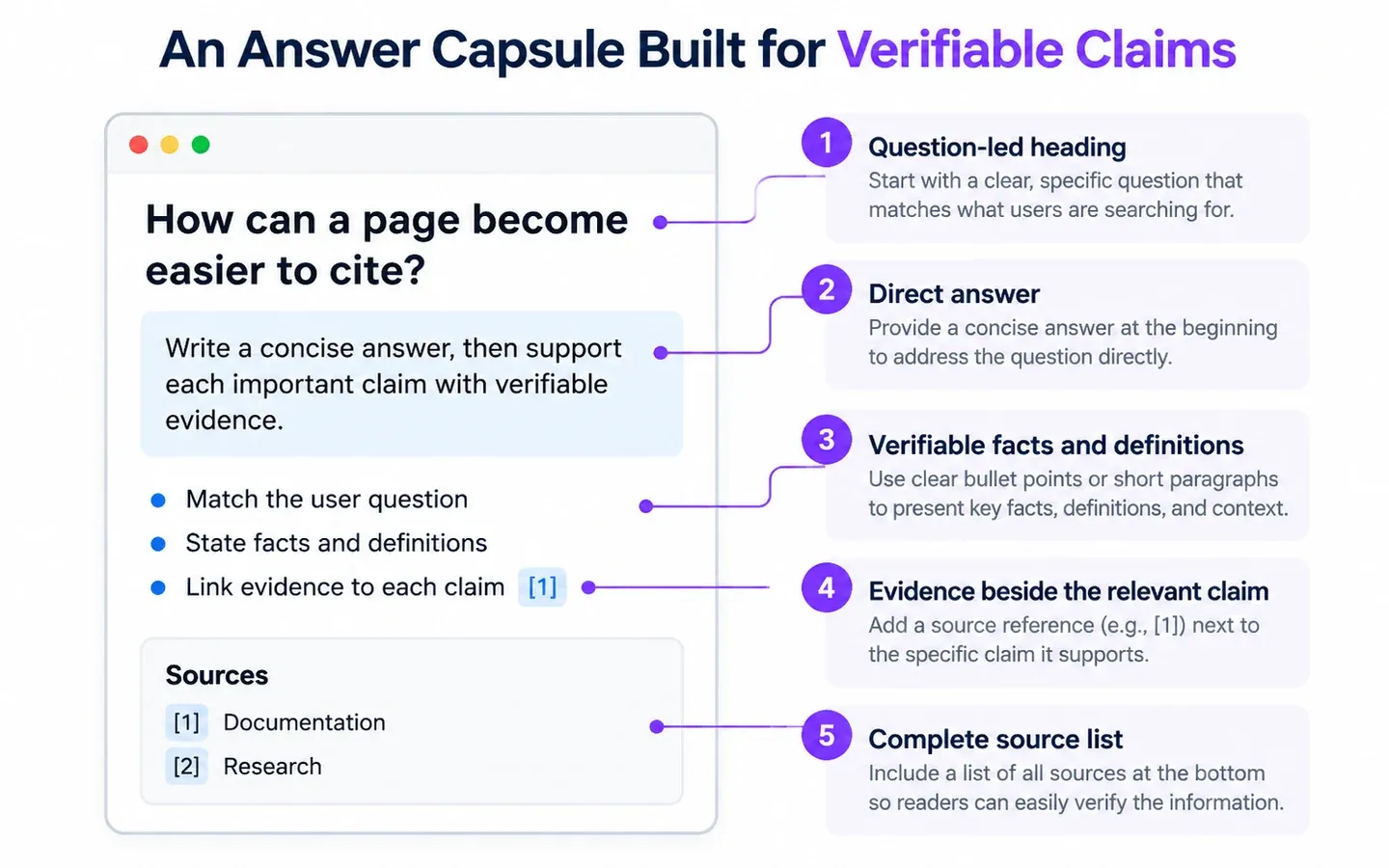
Original evidence is especially valuable when it is reproducible. Useful examples include a dated test method, a public dataset with definitions, a comparison whose fields share the same criteria, a documented decision framework, or a source-backed explanation of a recurring failure. A decorative statistic copied from another blog adds little. If the number matters, cite the primary source and state what it measures.
Keep entity facts boringly consistent. Use the same real-world organization name, product names, authors, contact details, and policy terminology across your site and legitimate public profiles. Structured data can clarify those facts, but markup should describe visible, accurate content. It cannot rescue a thin page or guarantee a ChatGPT citation.
Build Public Corroboration Without Manufacturing It
ChatGPT can cite your site, a publisher that mentions your brand, or another source that answers the user’s question. This makes off-site evidence part of the work.
Start by mapping the pages already cited for your priority prompts. Then ask:
- Which domains appear repeatedly?
- Are they editorial reviews, trade publications, directories, forums, public documentation, or original research?
- Which competitor facts do they support?
- Is your brand missing because no credible public source contains the relevant fact?
- Would a new owned page answer the question, or is independent coverage the real gap?
Earned coverage should be accurate and editorially legitimate. Do not create fake profiles, undisclosed endorsements, fabricated reviews, or low-value syndication solely to multiply a brand phrase. If you need to audit current referring pages, use the Rola IP guide to find pages that link to a URL and verify the live source page instead of trusting a database row as final proof.
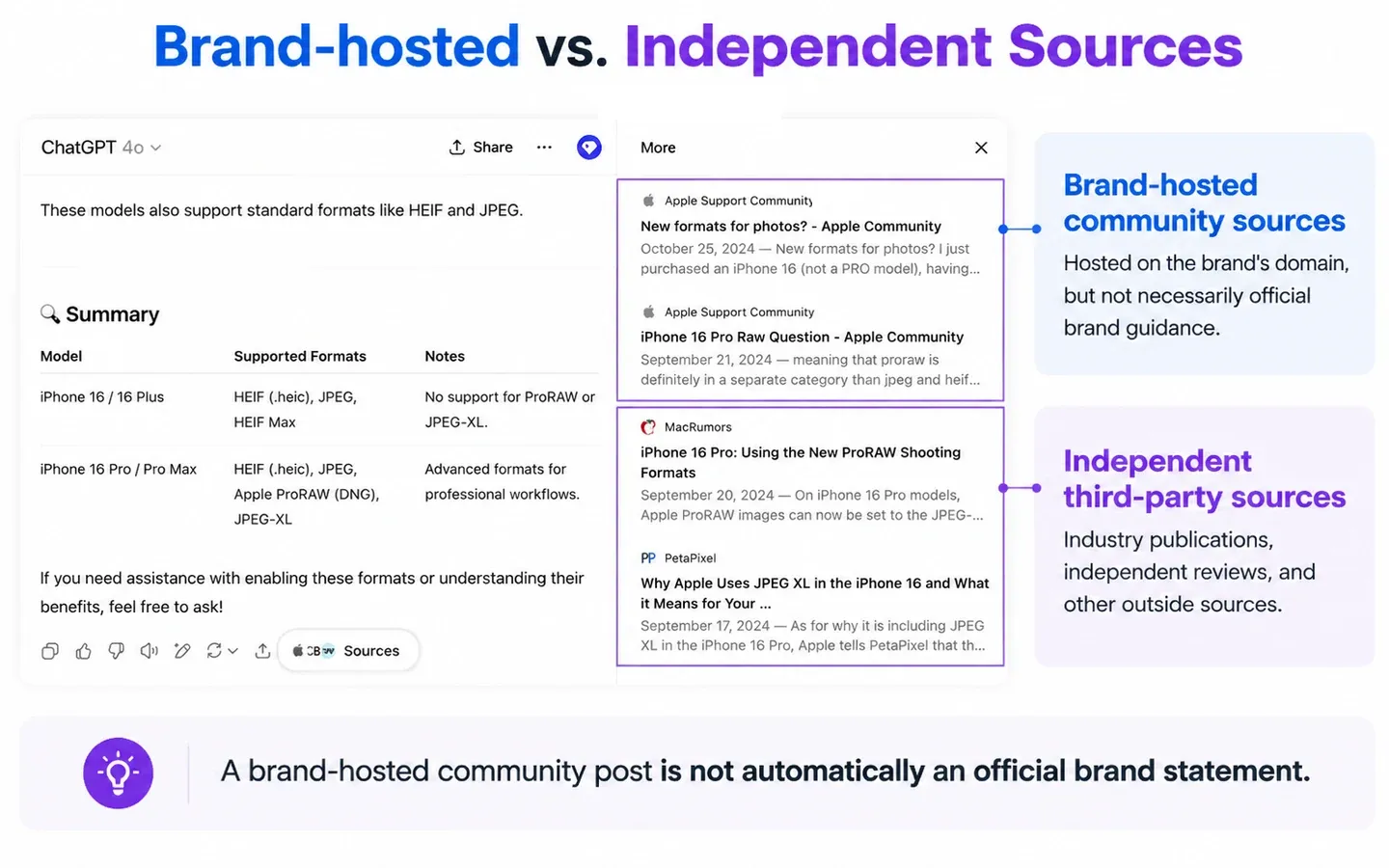
Use the source type to decide what must be verified and what action is appropriate:
| Source type | Checks to perform | Appropriate action |
|---|---|---|
| Brand-hosted community | Author role, date, and whether the post is official guidance or user-generated content | Correct inaccurate information and add an official source when one exists |
| Independent editorial | Method, publication date, disclosed relationships, and whether the claim still applies | Supply current factual evidence or pitch a genuinely relevant update |
| Directory or profile | Ownership, eligibility, and consistency with the real business | Correct the legitimate listing rather than creating duplicates |
| Forum or review | Date, context, representativeness, and recurring customer questions | Use recurring gaps for research; never manufacture reviews or endorsements |
How to Get Cited by ChatGPT for a Local Business
Local businesses need a consistent entity plus location-specific evidence. Start with the real-world business name, an accurate address or service area, phone number, hours, primary category, and one canonical page for each legitimate location.
Google’s official guidance says a Business Profile should represent the business as it is consistently recognized in the real world and should use an accurate address or service area. It also warns against virtual offices that do not meet its eligibility conditions and duplicate pages for one location. Those rules are Google-specific, but the underlying discipline is useful anywhere entity facts are consumed. See the Google Business Profile representation guidelines.
For each legitimate location:
- Publish a unique location page with actual services, coverage, staff or operating details, policies, and current hours.
- Keep the business name, phone, address or service area, and category consistent across owned pages and important profiles.
- Add the most specific applicable
LocalBusinessstructured data to the matching visible page. Google’s LocalBusiness documentation explains the recognized fields and testing process. - Seek relevant local coverage and directory listings that genuinely help customers verify the business.
- Remove closed locations, update changed hours, and avoid doorway pages that swap only a city name.
Then track local prompts, not just broad category prompts. A useful matrix might include “best emergency plumber near downtown Austin,” “accountant for a two-location restaurant in Portland,” and “weekend pediatric dentist in north Phoenix.” Record the location wording exactly because ChatGPT Search may use general location context and rewrite the query.
Build One Location Evidence Record Before Testing Local Prompts
Choose one real location or legitimate service area and reconcile its facts before running a prompt. Compare the owned location page, the business profile, and at least one independent source where available. Resolve mismatches instead of inventing an address or creating a virtual local entity.
| Field | Owned-page evidence | Profile or independent evidence | Test action |
|---|---|---|---|
| Business identity and category | Visible name, category, and canonical URL | Matching real-world profile or listing | Correct conflicts before sampling |
| Location or service area | Address or clearly defined service area | Eligible profile and public corroboration | Test only the supported geography |
| Hours and availability | Current published hours and exceptions | Matching profile or booking information | Record the test time and availability condition |
| Local service evidence | Services, policies, staff, or delivery terms for that location | Relevant local coverage, reviews, or directory facts | Write a prompt that matches the documented service |
| Prompt and citation result | Exact prompt, raw answer, and owned URLs | Third-party URLs cited in the same answer | Preserve all complete and failed attempts |
Treat the city named in the prompt, network exit, optional device location, and account, memory, or chat history as separate variables. OpenAI documents that ChatGPT Search may use approximate IP location, an optional precise device location, memory, and rewritten queries. That explains why conditions should be recorded; it does not prove that one signal determines a local answer or citation.
How to Track Brand Mentions in ChatGPT
Tracking starts with a fixed question set. Randomly asking ChatGPT about your brand every few weeks produces anecdotes, not a trend.
Build 30 to 100 prompts across the buyer journey. Assign every prompt to a declared cohort and do not combine the denominators for unbranded discovery, branded evaluation, and local intent:
- Problem discovery: “How do I solve X?”
- Category discovery: “What type of service handles X?”
- Comparison: “Best tools for X” or “Brand A alternatives”
- Evaluation: “Does Brand A support Y?”
- Local: “Best provider for X in location Y”
- Purchase or implementation: “Which option fits condition Z?”
For each prompt, preserve these fields:
| Field | Why it matters |
|---|---|
| Prompt ID and exact text | Prevents silent wording drift |
| Prompt cohort | Keeps unbranded, branded, comparison, and local rates separate |
| Date, time, and market | Separates time and location effects |
| Collection source, ChatGPT surface, and model | Separates consumer ChatGPT, approved APIs, and vendor datasets |
| Search requested and observed | Distinguishes an intended search run from an answer that shows no search or citations |
| Run number | Captures answer variability |
| Outcome status | Preserves complete answers, timeouts, refusals, CAPTCHA, 403, and 429 outcomes |
| Route ID, when used | Identifies the declared network condition without exposing credentials |
| Raw answer | Makes later classification auditable |
| Brand mentioned | Measures presence, not a link |
| Brand role | Separates neutral mention, comparison, and recommendation |
| Cited URLs and domains | Shows which sources supported the answer |
| Competitors mentioned | Enables share-of-voice comparison |
| Notes | Records anomalies without overwriting raw output |
On October 29, 2026, one unbranded manual ChatGPT Search sample asked which proxy providers support sticky HTTP(S) or SOCKS5 sessions for authorized regional QA in the United States. The completed answer named several providers, did not mention Rola IP, and displayed inline source links and a citation popover containing vendor documentation. This is one consumer-interface observation, not a ranking benchmark or a measure of citation lift.
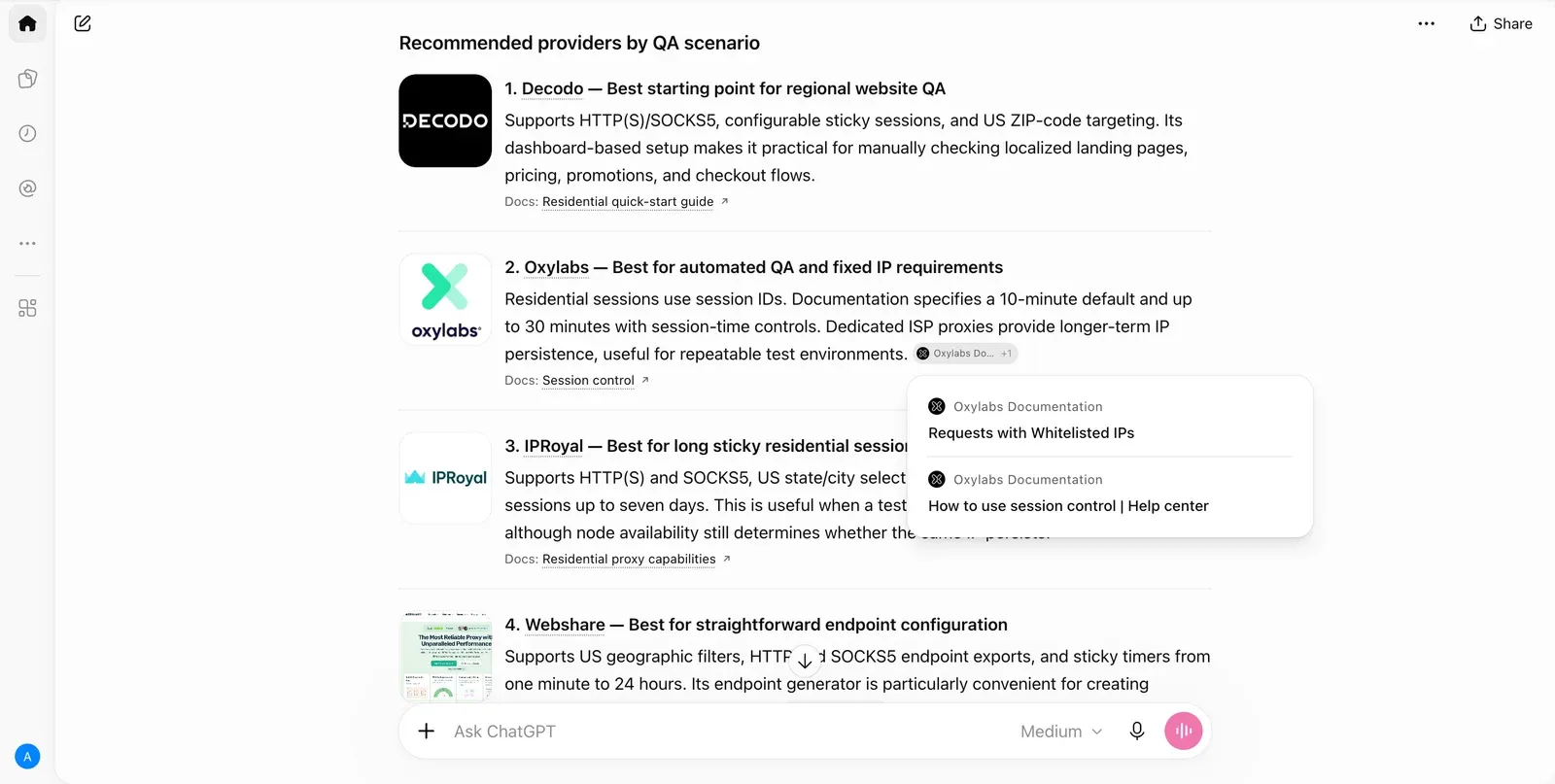
Run each prompt more than once under the same declared conditions. Three runs is a reasonable starting sample for detecting obvious variability, not a statistical guarantee. Keep the cadence stable, such as weekly for fast-moving categories or monthly for slower B2B topics.
Define a complete answer before collection: the interface or approved data source returned a final response that can be classified and saved. Record timeouts, refusals, CAPTCHA, 403, and 429 outcomes as failed attempts; do not silently remove them or count them as complete answers. Report completion rate separately.
Calculate each rate within one fixed prompt cohort:
| Metric | Reproducible definition |
|---|---|
| Mention rate | Complete answers naming the brand at least once ÷ complete answers |
| Recommendation rate | Complete answers actively recommending the brand ÷ complete answers |
| Owned citation rate | Complete answers citing at least one owned URL ÷ complete answers |
| Third-party brand citation rate | Complete answers citing an independent URL that substantively discusses the brand ÷ complete answers |
| Any brand-associated citation rate | Complete answers with an owned or qualifying third-party brand citation ÷ complete answers |
| Brand share of voice | Answer-level mentions of the brand ÷ answer-level mentions of every brand in the fixed comparison set |
| Owned citation share | Unique owned answer–URL pairs ÷ all unique qualifying brand-associated answer–URL pairs |
Count a brand once per answer for share of voice. For citation shares, retain the original URL, create a normalized URL for analysis, and deduplicate the same normalized URL within one answer. State how parameters, fragments, redirects, and syndicated copies are handled. If a denominator is zero, report the metric as not applicable rather than zero.
Here is an illustrative calculation, not a Rola result: a cohort has 12 planned runs, 2 timeouts, and 10 complete answers. Four complete answers mention the brand, so mention rate is 4 ÷ 10 = 40%; completion rate is 10 ÷ 12 = 83.3%. If 2 complete answers cite an owned page, owned citation rate is 20%. If the brand receives 4 answer-level mentions among 12 mentions across the fixed competitor set, brand share of voice is 33.3%.
Keep consumer ChatGPT observations, approved API responses, and vendor measurements in separate source fields and reports. Do not merge them merely because each dataset ultimately references an OpenAI product.
Do not treat ChatGPT referral traffic as a complete mention counter. A mention without a click creates no referral session, and referral labels can change as products and link formats evolve. Define the channel from the current landing URL and analytics evidence you actually observe. Use referral visits as one outcome alongside the prompt panel, not as a substitute for it.
Turn Tracking Results Into Page Priorities
The tracking table becomes useful when every failure state maps to a next action.
| Observed state | Hypotheses to test | Evidence needed |
|---|---|---|
| Target page cannot be fetched | Robots scope, firewall, response, redirect, or canonical conflict | Tested URL, timestamp, response chain, rendered page, and relevant access logs |
| Competitors appear, but your brand does not | Entity mismatch, category misalignment, weak evidence, or prompt mismatch | Raw answers, competitor sources, owned facts, and independent coverage |
| Brand is mentioned, but no page is cited | The mention may be unsupported, supported by an unexposed source, or not require a citation | Raw answer, visible citations, search state, and relevant owned passages |
| A third-party page is cited for your brand | The outside source may be relevant, current, or simply selected for this run | Source text, publication method, date, raw answer, and repeated runs |
| Owned page is cited inconsistently | Answer variability, rewritten intent, passage specificity, freshness, or competing sources | Repeated raw answers, cited passages, page-change log, and fixed conditions |
| Referral visits rise without panel movement | The prompt set may be incomplete or traffic may come from a different surface | Landing URLs, referral evidence, prompt coverage, and collection-source fields |
Maintain a page modification log beside the prompt data. Record the URL, changed passage, evidence added or removed, date, and expected prompt group. Avoid changing the page, prompt set, market, and measurement tool at the same time. If everything changes, you cannot tell what the next observation means.
For adjacent search-performance data, use an authorized search API workflow rather than treating direct consumer-SERP automation as the default. Google rankings and ChatGPT citations are different datasets, but conventional search data can still reveal the questions and pages that deserve investigation.
Scale Measurement Safely
For a small prompt set, manual sampling is often enough. For a larger program, use an approved API, an enterprise agreement, or a specialist measurement vendor whose terms cover the collection, retention, and downstream use you need. Ask which product surface is measured, how search state is identified, and whether the vendor exposes raw answers, prompt-level records, model, timestamps, cited URLs, and repeat-run variance. A dashboard score without the underlying observations is difficult to audit.
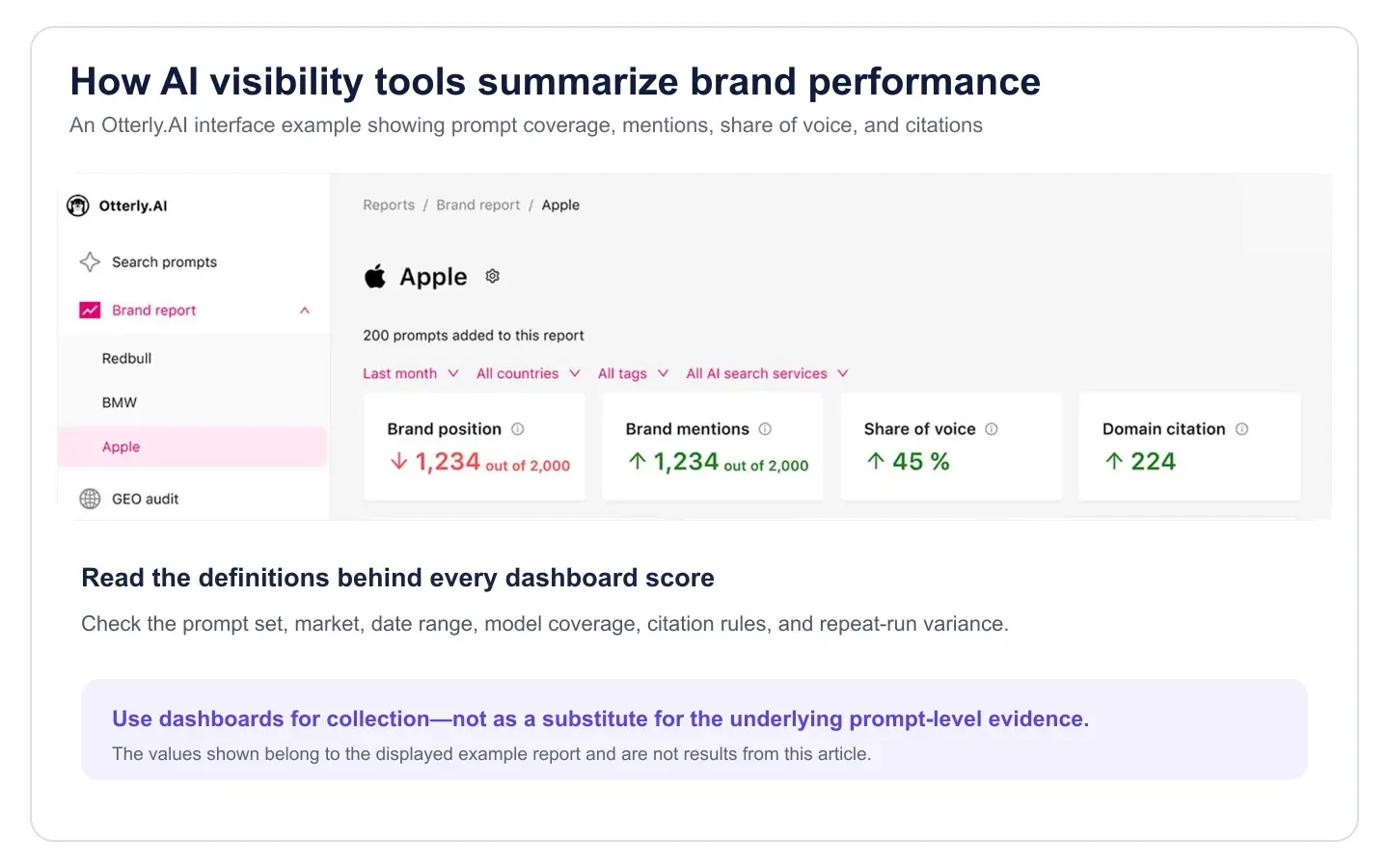
Do not build the program around browser automation that hammers the consumer ChatGPT interface, then rotate proxies to evade 429 responses or platform controls. A 429 is a stop signal to review quotas, terms, scheduling, and the approved access path. Changing the exit IP does not create permission.
Regional QA can still be legitimate. If your team is authorized to compare a public experience across markets, define the market, prompt, time, account state, and network route before the run. The same discipline applies to an SEO monitoring workflow: document what the location signal represents, keep sessions comparable, and stop when a target or provider returns a policy or quota failure. A route configured on one client does not establish how an API, vendor, or remote search service obtained its own location or search context.
How Do You Run an Authorized Regional Citation Check With Rola IP?
Use Rola IP’s ChatGPT proxy workflow only when the network route is a declared variable in an authorized QA test. Rola IP can provide an HTTP(S) or SOCKS5 route and session controls for that test context. It does not make a page crawlable, guarantee a citation, erase account or device signals, or authorize automated collection from a third-party service.
- Define one question and outcome. Keep branded, unbranded, and local prompts in separate cohorts. Decide whether the observation is a mention, recommendation, owned citation, or third-party citation.
- Record the environment. Save the operating system, browser, ChatGPT interface, model, observed search state, language, account context, memory state, and exact prompt.
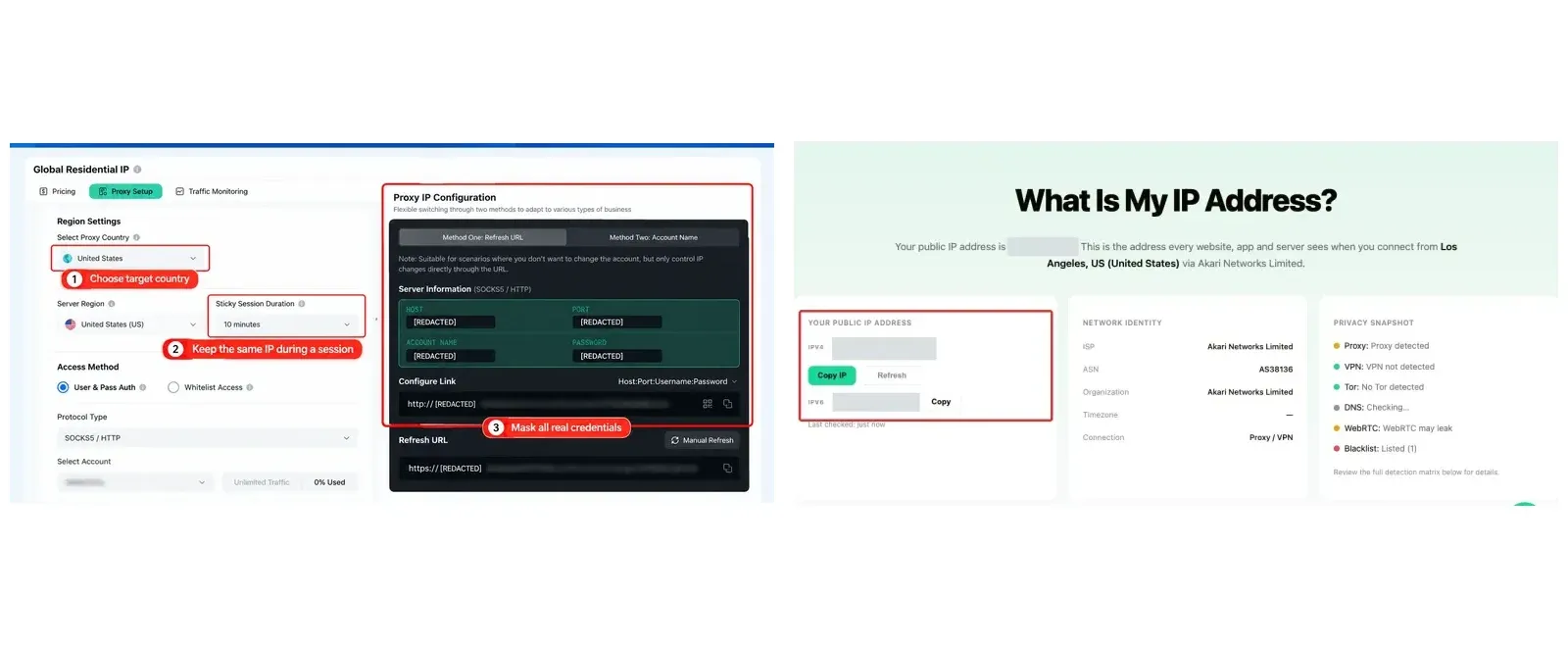
- Configure the assigned route. Record the Rola product, route type, country or market, protocol, host, port, authentication method, and sticky or rotating session choice. Use values supplied in the authorized account and redact credentials from screenshots and logs.
- Verify the network observation. Use an approved IP-check service or an endpoint your organization controls. Record the source, observed country or region, timestamp, and session identifier. This proves the client route observed by that service, not ChatGPT’s internal search location.
- Run the prompt manually. Save the complete answer, visible search state, cited URLs, and screenshot or export. When comparing conditions, change only the planned variable.
- Repeat and classify every attempt. Preserve complete answers, timeouts, refusals, CAPTCHA, 403, and 429 outcomes. Do not rotate routes to bypass a challenge, refusal, quota, or access control.
- Report observations with limitations. State the number of planned attempts, complete answers, failures, and the exact condition. Do not claim the route caused a local result or citation without a suitable design and repeated evidence.
The figure below combines two separately captured, redacted editorial examples: a United States Rola proxy configuration and a United States exit-IP verification screen. They demonstrate the fields and output to preserve, but they were not captured as one session and do not prove that the ChatGPT sample above used that route.
Use one environment record for every run:
| Field | Record |
|---|---|
| Verification time | Timestamp and timezone |
| Client environment | OS and browser version |
| Collection surface | Consumer interface, model, and observed search state |
| Prompt design | Prompt ID, cohort, exact text, and language |
| User context | Account state, memory or chat context, and device-location setting |
| Route configuration | Rola product, protocol, redacted authentication method, and route ID |
| Geography | Intended market and independently observed exit location |
| Session design | Sticky or rotating choice and session identifier |
| Outcomes | Planned attempts, complete answers, and failures by class |
| Evidence files | Raw answers, cited URLs, screenshots, and change-log references |
Troubleshooting a Regional Citation Check
| Observed issue | Safe response | What the result means |
|---|---|---|
| 407 proxy authentication required | Verify the assigned host, port, username, password, and allowed authentication method | The client did not authenticate to the proxy; it says nothing about ChatGPT citations |
| 403 forbidden | Stop and inspect the responding service, account permissions, and applicable policy | Access was refused; changing routes is not evidence of permission |
| 429 too many requests | Stop, review quotas and cadence, and use an approved access path | The service is rate-limiting; do not rotate IPs to evade it |
| CAPTCHA or challenge | Pause the run and complete only interactions permitted by the service | The sample is failed or interrupted, not a complete answer |
| Timeout | Record the failure and check route health, DNS, TLS, and service status | Do not omit it from completion-rate reporting |
| Observed country differs from intended market | Recheck route assignment, session persistence, DNS, and the independent IP observation | The declared network condition was not achieved |
| Brand appears without a citation | Save the answer and search state; inspect visible sources and relevant owned passages | A mention is not an owned citation |
| API or vendor result differs from consumer ChatGPT | Keep the datasets separate and compare their documented surfaces and search states | The sources are not interchangeable test clients |
A Practical 30-Day Plan
Days 1 to 5: Establish the baseline
Choose 30 high-intent prompts. Run each prompt three times under recorded conditions. Label mentions, recommendations, owned citations, third-party citations, competitors, and referral landing pages.
Deliverable: A complete sample sheet with prompt cohorts, environment records, raw answers, failures, and baseline calculations.
Days 6 to 10: Fix access blockers
Audit the priority pages through the five-layer crawler checklist. Resolve accidental robots rules, CDN blocks, redirect loops, soft errors, incorrect canonicals, and hidden answer content. Recheck the live page after deployment.
Deliverable: A verified public-URL table showing each tested layer, timestamp, evidence, owner, and unresolved limitation.
Days 11 to 20: Improve the evidence
Rewrite the pages that match the tracked questions. Add a direct answer, current primary evidence, scope, limitations, ownership, and an update date. Merge or redirect duplicative pages when one stronger source can own the question.
Deliverable: A page-change log with before-and-after passages, evidence snapshots, dates, and linked prompt cohorts.
Days 21 to 25: Strengthen corroboration
Correct important profiles and inaccurate third-party descriptions. Pitch legitimate original findings to relevant publishers. For local businesses, finish accurate location pages and business-profile cleanup before chasing more mentions.
Deliverable: A corrected source and entity record listing owned facts, profile facts, independent evidence, and remaining conflicts.
Days 26 to 30: Rerun and diagnose
Repeat the unchanged prompt panel. Compare rates and cited-domain mix, but do not claim causation from one short cycle. Use the result to select the next access, content, entity, or authority problem.
Deliverable: A stratified rerun report with completion rate, cohort-level metrics, cited-domain mix, change log, and limitations.
Conclusion
The practical answer to how to get cited by ChatGPT is to become eligible, useful, corroborated, and measurable. Let OAI-SearchBot reach the right public pages. Publish specific answers with inspectable evidence. Keep brand and location facts consistent. Then track a fixed set of buyer questions with raw answers and clear denominators.
The work resembles SEO, digital PR, analytics, and technical publishing, but it is not a new way to promise rankings. ChatGPT citations remain variable and selective. A disciplined program improves your evidence and your ability to diagnose what happened, which is more valuable than chasing a single screenshot.
Disclosure: This article is published by Rola IP. Product examples should be evaluated against current documentation, platform terms, and the requirements of your authorized use case.