
Best Proxies for Brand Protection & Monitoring in 2026

Aug 25, 2026 · Use Cases · 14 min read
TL;DR
Proxies for brand protection help authorized teams inspect permitted public pages from relevant regions, devices, and network environments. They support counterfeit discovery, unauthorized-seller checks, trademark-ad monitoring, impersonation detection, and evidence collection.
Choose proxy types by platform, market, session stability, and evidence requirements; validate performance on your target sites before scaling.
Why Brand Protection Needs Proxies
Brand infringement doesn’t show the same way to every visitor. A counterfeit seller might only display an infringing listing to German buyers; a phishing ad might only redirect to a fake page on mobile; an unauthorized seller might show different prices by region. If a brand only checks from its office network, it likely sees a clean page — while the actual consumer sees infringing content.
This is why proxies for brand protection come up again and again. Proxies spread monitoring requests across different regions and network environments, letting brand teams see results closer to what real consumers encounter. They’re particularly useful for:
- Checking e-commerce platforms across countries or cities for counterfeits, pirated goods, parallel imports, and unauthorized sellers.
- Reviewing search ads, shopping ads, and social ads for trademark misuse, phishing landing pages, or misleading competitor redirects.
- Monitoring impersonation accounts and traffic-diversion links on Instagram, TikTok, Facebook, YouTube, and similar platforms.
- Checking the App Store, Google Play, download sites, and third-party APK pages for fake apps.
- Bulk-scanning phishing domains, typosquatted domains, and fake customer-service pages.
- Continuously tracking whether MAP pricing, channel pricing, or regional promotions are being violated.
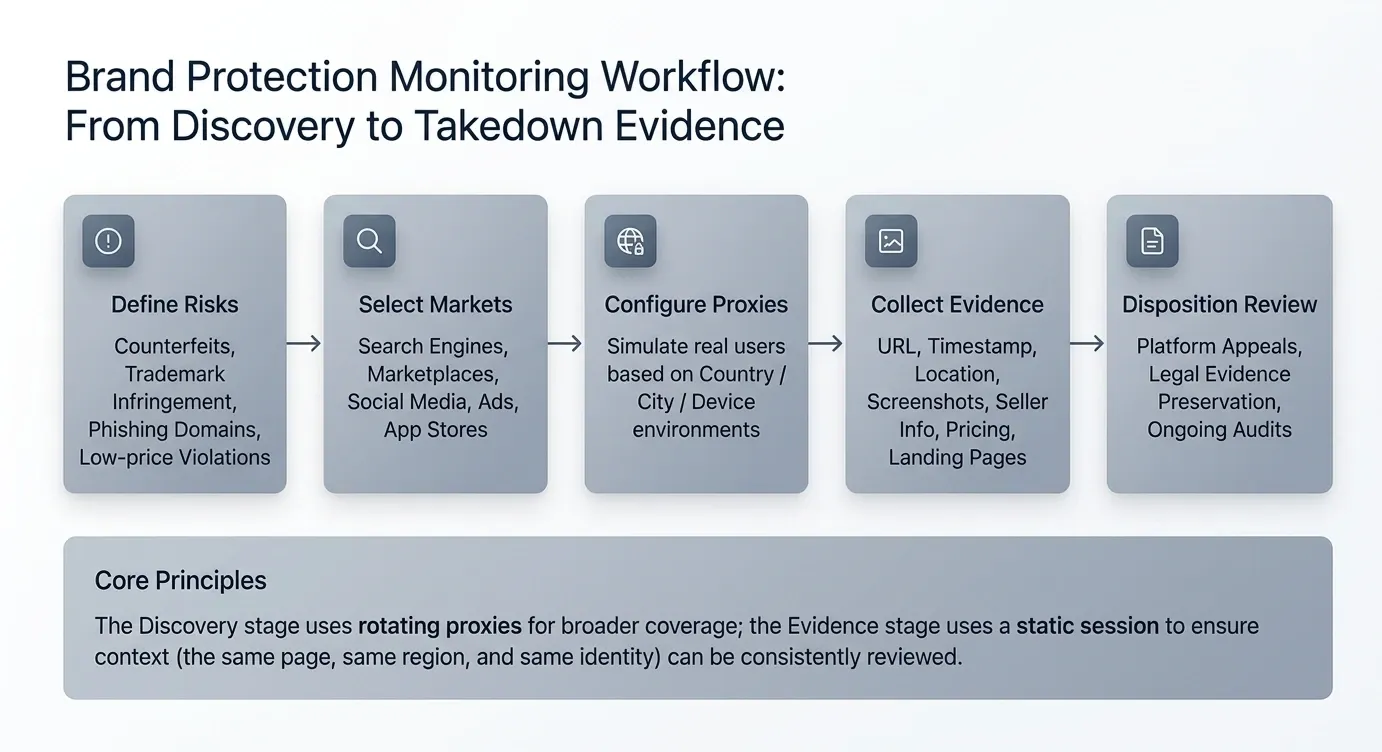
Figure 1. Brand protection monitoring typically includes discovery, proxy configuration, evidence collection, and platform enforcement.
What Makes a Good Brand Protection Proxy?
A good brand-protection proxy first needs to reliably show a brand team the same page a real consumer would see. It isn’t simply a substitute for a general-purpose scraping proxy — it needs to satisfy regional accuracy, IP authenticity, session control, platform compatibility, and reviewable evidence all at once. This matters especially on platforms like Amazon, eBay, Walmart, Google Shopping, Instagram, TikTok, and the App Store, where page content is often affected by country, city, device, IP reputation, and login state.
| Evaluation Dimension | Why It Matters | How to Check |
|---|---|---|
| Regional accuracy | Brand protection often needs to verify the products, ads, prices, and sellers shown in different countries or cities | Visit the same URL from target countries/cities and check whether currency, shipping, ads, and sellers change |
| IP authenticity | Residential or mobile networks are closer to real consumer environments, which suits high-risk-control platforms | Check whether marketplaces, social platforms, and ad landing pages load consistently, and whether the CAPTCHA rate is acceptable |
| Rotation and sticky sessions | Large-scale discovery needs rotation; evidence review, pagination, and seller deep-dives need stable sessions | Test both per-request rotation and 10–60 minute sticky sessions separately |
| Multi-type coverage | Brand protection tasks may need residential, mobile, static residential, and datacenter proxies at the same time | Test by task rather than covering every scenario with one proxy type |
| API and team management | Ongoing monitoring needs an API, whitelisting, sub-accounts, usage stats, and automation support | Check for Python, browser, HTTP/SOCKS5, credential, and IP-whitelist support |
| Compliance and evidence chain | Brand complaints and legal handling rely on explainable, reviewable data sources | Confirm only public pages are collected, and that URL, timestamp, region, screenshot, and access environment are saved |
Judging whether a provider fits brand protection shouldn’t come down to IP pool size alone. What matters more is the “cost per piece of valid evidence”: if a cheap proxy fails frequently on the target platform, the resulting manual review and missed-detection costs end up higher.
What Problems Can Brand Protection Proxies Actually Solve?
Proxies don’t replace trademark registration, platform complaints, cease-and-desist letters, or channel management. What they solve is the technical layer of “seeing the problem” and “proving the problem.” WIPO’s basic definition of a trademark emphasizes that it distinguishes one company’s goods or services from another’s; when a third party confuses consumers with a similar mark, counterfeit packaging, or misleading advertising, brand teams need to detect it quickly and preserve evidence.
Counterfeiting also remains a global-scale risk. A 2025 OECD and EUIPO report on the trade in fakes points out that counterfeit and pirated goods continue to threaten consumer safety, intellectual property, and supply chain integrity. The role of a brand-protection proxy is to upgrade online monitoring from “manual spot checks” to a multi-region, reviewable, sustainable inspection system.
Which Proxy Type Should You Use for Brand Protection?
There’s no single proxy type that’s best for every task. The best proxy for brand protection depends on the platform, request frequency, regional granularity, whether login is required, whether a mobile-network vantage point is needed, and whether the evidence needs to be reliably reviewable.
| Proxy Type | Best-Fit Tasks | Usage Recommendation |
|---|---|---|
| Residential proxies | E-commerce platforms, social pages, region-specific content, counterfeit listing review | The default choice for most brand monitoring; good at simulating an ordinary consumer visit |
| Mobile proxies | Mobile ads, app impersonation, mobile social content, carrier-related checks | Higher cost — prioritize for checks that genuinely depend on a mobile network environment |
| Static residential / ISP proxies | Long-term rechecking of the same seller, store, price, or logged-in page | Suited to sticky sessions and stable evidence collection, avoiding frequent identity changes |
| Datacenter proxies | Domain scanning, initial public SERP screening, bulk checks on low-protection pages | Fast and low-cost, but easier to detect on strongly defended platforms |
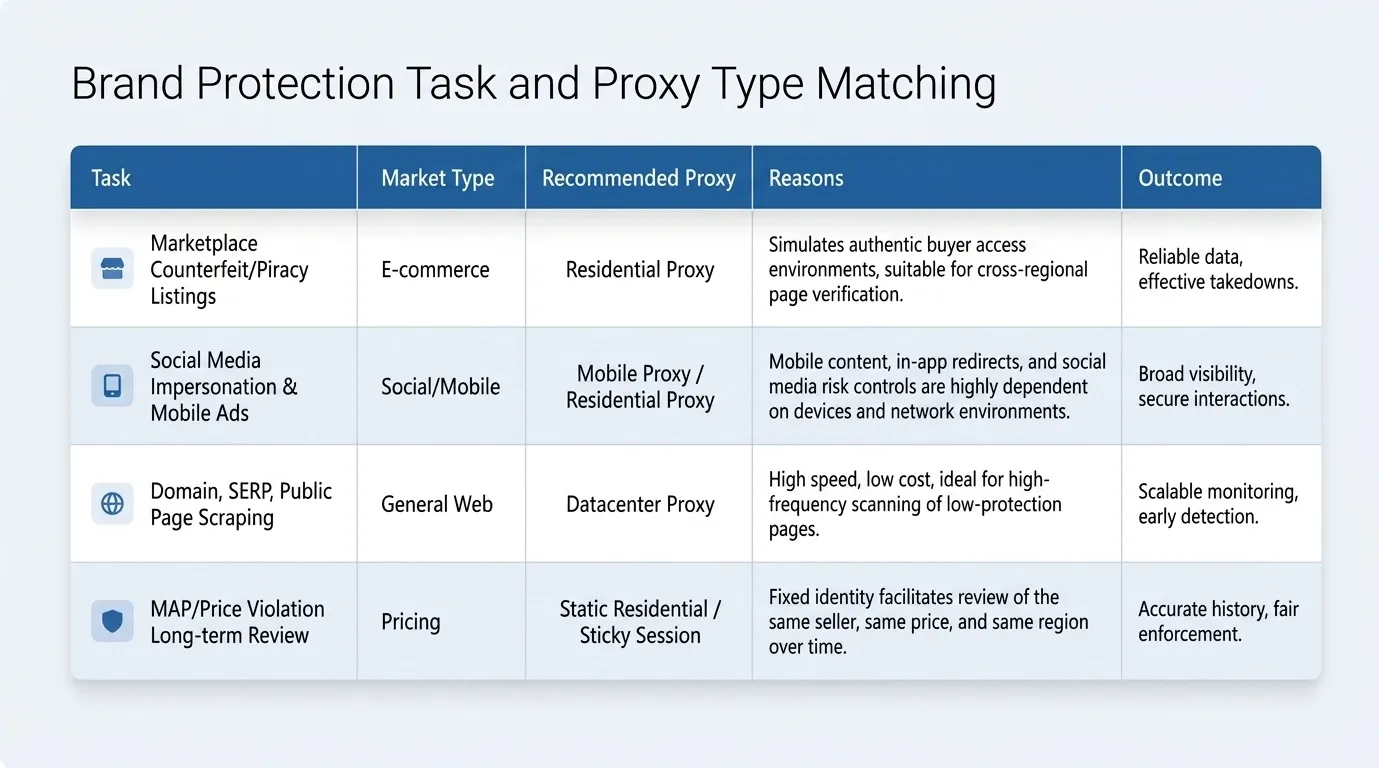
Figure 2. Different brand protection tasks should be matched to different proxy types.
Quick Comparison: Best Proxies for Brand Protection at a Glance
The comparison below is organized around product coverage, workflow fit, and the amount of monitoring infrastructure a team must build. Rola IP is listed first as an option for teams that want to build their own monitoring pipeline; this is a workflow recommendation, not an independently verified industry ranking. The other providers suit different budgets, enterprise procurement needs, or managed data-collection scenarios.
Workflow Option |
Proxy/Provider |
Best Fit |
Strengths |
Watch Out For |
|---|---|---|---|---|
Self-built monitoring |
Rola IP |
Self-built brand monitoring, marketplace inspection, social/mobile review, Python automation |
Official pages document residential, mobile, and datacenter proxy options, plus proxy-network documentation |
Teams need to design their own monitoring, evidence, and complaint workflow; verify API and plan limits before deployment |
Managed enterprise collection |
Bright Data |
Enterprise brand protection, MAP monitoring, managed data collection |
Mature product line — public materials show coverage across residential, mobile, ISP, datacenter, and data-collection tools |
Budget and procurement thresholds tend to be higher |
Enterprise intelligence |
Oxylabs |
Enterprise threat intelligence, compliance data collection, large-scale monitoring |
Strong enterprise services, proxy variety, and data-collection capability, suited to mature teams |
Better fit for mid-to-large budgets; not always ideal for lightweight testing |
Cost-sensitive discovery |
DataImpulse |
Cost-effective multi-region monitoring, in-house crawler teams |
Competitor materials emphasize traffic-based billing, residential/mobile/datacenter combinations, and multi-region coverage |
The brand-protection tooling still needs to be built in-house |
Supplementary coverage |
Decodo / IPRoyal / Webshare |
Budget-sensitive or supplementary tasks |
Can serve as supplementary options for price, region, or proxy type |
Success rate and evidence quality need to be tested per platform |
Best Proxies for Brand Protection — Full Reviews
The reviews below are reordered around the actual brand-protection workflow: whether the provider can reveal risk across regions, whether it can reliably support evidence review, whether it supports automation, and whether it fits long-term cost control.
1. Rola IP: An Option for Building Your Own Brand Protection Monitoring
Rola IP is suited to teams building their own brand monitoring workflow with scripts, browsers, or an internal dashboard. Teams can select residential, mobile, or datacenter proxies by task; confirm current targeting, session, and account features in the official documentation.
Figure 3. Rola IP residential proxies.
For implementation, see the proxy network configuration documentation.
Country or city targeting can help compare region-specific sellers, prices, ads, and shipping options, but coverage and plan limits should be verified before publication. Dynamic resources are generally better for broad discovery; static or sticky environments are better for rechecking the same seller, price, or page.
How Rola IP’s Dynamic IPs Support Brand Monitoring
Dynamic IPs suit broad keyword, marketplace, social, and ad discovery. Check the proxy parameters documentation for current rotation, sticky-session, concurrency, and billing conditions; do not treat unverified figures as guarantees.
In practice, dynamic residential proxies work well for high-value platforms such as Amazon, eBay, Walmart, TikTok, Instagram, and Google Shopping, while dynamic datacenter proxies suit public search pages, initial domain screening, low-risk directory pages, or status-code checks. This keeps coverage broad while controlling cost.
| Brand Protection Task | Recommended Rola IP Resource | How to Use It |
|---|---|---|
| Brand keyword search and SERP monitoring | Dynamic residential / dynamic datacenter | Rotate exits by country to collect search results, ad placements, similar domains, and infringing pages |
| Marketplace counterfeit discovery | Dynamic residential | Inspect by keyword, SKU, seller, and price range, logging product pages and seller information |
| Social impersonation account discovery | Dynamic residential / mobile | Visit public account pages, short links, and landing pages from different regions to identify traffic funnels impersonating the brand |
| Ad landing page review | Dynamic residential / mobile | Visit search, shopping, and social ads regionally to check for redirects to phishing or fake pages |
How Rola IP’s Static IPs Improve Evidence Review
Figure 4. Rola IP static residential proxies.
Static IPs suit evidence rechecks that require a consistent region or access environment. Review the supported proxy protocols documentation and current plan conditions; dedicated IP, concurrency, multi-device, and activation terms vary by plan.
| Review Scenario | Why a Static/Sticky Environment Is Needed | Evidence Output |
|---|---|---|
| Rechecking key sellers | The same seller may show different prices, stock, and shipping depending on the access environment | Seller ID, product URL, price, stock, shipping country, screenshot |
| MAP price monitoring | Price violations need continuous observation, not a single-page check | Time-series prices, region, channel, lowest-price record |
| Post-complaint revival monitoring | An infringing link may reappear under a new URL after takedown | Old URL status, new URL, similar titles, matching seller or image evidence |
| Post-login channel checks | Authorized backends, dealer pages, or member pricing may require a stable access identity | Account environment, access time, page screenshot, price and terms |
Rola IP’s API, Whitelisting, and Team Management Capabilities
Teams can connect Rola IP through browser tools, scripts, or internal systems using API whitelist setup and account-management documentation. Confirm authentication, sub-account, quota, and protocol availability for the selected plan before promising these capabilities.
Bright Data: Suited to Enterprise-Managed Brand Protection and Large-Scale Data Collection
Figure 5. Bright Data.
Bright Data is one of the more established names in the enterprise proxy market, with a product line spanning residential, mobile, ISP, and datacenter proxies, plus an enterprise data-collection platform, automation tools, and compliance-management capability. For large enterprises running long-term brand protection, counterfeit monitoring, price tracking, channel inspection, and market intelligence, Bright Data functions more like a full data infrastructure than just a set of proxy IPs.
In brand-protection use cases, Bright Data’s advantage mainly shows up in network scale and enterprise-grade stability. A global brand typically needs to monitor e-commerce platforms, search engines, social media, and local market pages across multiple countries at once, and different regions’ sites can have access restrictions, regional content differences, or anti-bot mechanisms. Bright Data’s varied proxy resources help enterprises simulate real-user access environments and improve data-collection coverage.
Bright Data also offers relatively complete enterprise management capabilities, including proxy pool management, usage statistics, access control, and compliance-related features. This matters for large enterprises with multiple brand lines, multiple regional teams, or a need to coordinate with a security department, since brand protection requires not just “finding infringement” but building a stable, auditable data-collection process.
That said, Bright Data’s enterprise positioning also means a higher procurement threshold. Compared with lighter-weight proxy providers, it typically requires a bigger budget, and some advanced features may go underused by small teams or those who only need simple monitoring tasks. Bright Data is best suited to organizations with sufficient budget that want to build a long-term brand-protection system and need proxy capability integrated with data-collection tooling.
Oxylabs: Suited to Enterprise Threat Intelligence and Large-Scale Brand Monitoring
Figure 6. Oxylabs.
Oxylabs is a major player in the enterprise proxy and web-data-collection space, well known in brand protection, competitive intelligence, market research, and threat-intelligence contexts. It’s positioned more toward large enterprises and dedicated data teams, and fits brand-protection projects that need to continuously gather public web information at scale.
For international brands, risk usually doesn’t come from a single platform. Counterfeit products can show up simultaneously across marketplaces, small e-commerce sites, search result pages, social platforms, and ad channels in different countries. What enterprises need isn’t a one-time infringement search, but a data system that can continuously surface risk, analyze trends, and support decisions.
Oxylabs’ strength lies in stability, enterprise support, and large-scale task handling. For organizations with a mature security team, data-analysis team, or external brand-protection service provider, Oxylabs can serve as underlying data-access infrastructure, helping teams build a long-term monitoring mechanism — for example, collecting product information, seller changes, and keyword-ranking shifts across markets through the proxy network, then combining that with an internal risk-control system.
Oxylabs, too, is more suited to enterprise users. For teams that only need to check a few platforms occasionally or run small-scale brand searches, its cost and technical investment may exceed actual needs. And when using any enterprise proxy service, the organization still needs to build its own data-analysis and processing workflow, since proxies solve the access and collection problem — not the full brand-protection strategy.
DataImpulse: Suited to Cost-Effective Multi-Region Brand Monitoring and Discovery Tasks
Figure 7. DataImpulse.
DataImpulse leans toward cost-sensitive enterprises and growing teams, with an advantage in offering a combination of residential, mobile, and datacenter proxies while emphasizing lower usage costs and flexible traffic plans. For teams that want to expand brand-search coverage, catch early-stage infringement, or quickly validate a monitoring approach, it’s worth considering.
In real brand-protection work, the first challenge many companies face isn’t deep investigation — it’s “discovering unknown risk.” A new brand, for instance, may need to quickly scan search results, marketplace pages, and public sales channels across multiple countries to find unauthorized product pages or suspicious sellers. This kind of task usually needs broad coverage rather than extremely high precision on a single visit, which is where cost-effective proxy resources add real value.
DataImpulse’s advantage is helping teams run large-scale data-collection tests at lower cost, especially useful for organizations with an in-house crawler system, data-analysis capability, or technical team. Companies can choose different proxy types by task — residential proxies for access closer to a real user, and datacenter proxies for large-scale public data collection.
It’s worth noting that proxy cost is only part of a brand-protection project. A lower price doesn’t necessarily mean a higher ROI. When choosing a provider, you still need to test success rate on target platforms, CAPTCHA-trigger frequency, data completeness, and how many valid infringement leads actually result. If a proxy can’t reliably produce valid evidence, cutting IP cost alone won’t improve brand-protection outcomes.
Decodo, IPRoyal, Webshare: Suited as Supplementary Brand Protection Proxy Options
Beyond the large enterprise proxy providers, the market also has many services better suited to small-to-mid teams and budget-sensitive users, such as Decodo, IPRoyal, and Webshare. These providers typically offer residential proxies, datacenter proxies, and basic proxy-management features, which can meet supplementary needs in some brand-protection scenarios.
They’re better suited to tasks like:
- Public search-result monitoring
- Low-risk web collection
- Initial marketplace screening
- Regional keyword checks
- Backup channels for a larger proxy pool
For companies just getting started with brand protection, these providers can help a team launch a monitoring project quickly without a large upfront cost. For example, a company might use lower-cost proxies for initial infringement discovery, then hand high-value targets to a more specialized brand-protection system for deeper analysis and evidence-gathering.
That said, these providers tend to emphasize price competitiveness and flexible usage rather than a full enterprise brand-protection ecosystem. So the choice shouldn’t be based on price alone — it should be tested against actual business needs, including target-site coverage, IP quality, stability, data accuracy, and long-term supply reliability.
How to Use Proxies to Protect Your Brand?
Using proxies for brand protection shouldn’t start with “how many IPs to buy” — it should start with monitoring goals, evidence standards, and a handling process. Below is a reusable execution framework suited to collaboration between brand teams, e-commerce operations, channel management, legal support, and data teams.
Step 1: Define the Risk List
List the types of infringement to monitor — counterfeits, unauthorized sellers, trademark keyword ads, social impersonation, fake apps, phishing domains, price violations, and image theft. Don’t try to scan the entire web at once; start by building a verifiable process around the highest-risk channels.
Step 2: Build a Keyword and Platform List
Brand names, common misspellings, product models, SKUs, packaging keywords, authorized channel names, and misleading competitor terms should all go into the monitoring keyword bank. Platforms can be grouped into search engines, marketplaces, social media, ad libraries, domains, app stores, and forums.
Step 3: Configure Proxies by Market
Set proxy exits by sales country and key cities. Prices, stock, sellers, and ads shown in the US, Germany, Japan, and the UK, for example, can all differ. If the region is wrong, the monitoring conclusion can be misleading.
Step 4: Choose Rotating or Sticky Sessions
Use rotating proxies for compliant, authorized public-page discovery, while respecting platform terms, robots rules, and request-rate limits. Use sticky sessions when reviewing a specific seller or ad, to keep the page environment stable for later screenshots, price comparisons, and complaints.
Step 5: Collect Submittable Evidence
Every lead should preserve the URL, timestamp, region, proxy type, screenshot, page title, price, seller ID, redirect chain, and a description of the infringement. An alert without an evidence chain is just noise.
Step 6: Review, Submit, and Track Outcomes
Sort leads into high, medium, and low risk. Prioritize high-risk counterfeits, phishing, and fake customer-service impersonation; hand price and channel violations to the channel team for review; and keep tracking whether a takedown target reappears afterward.
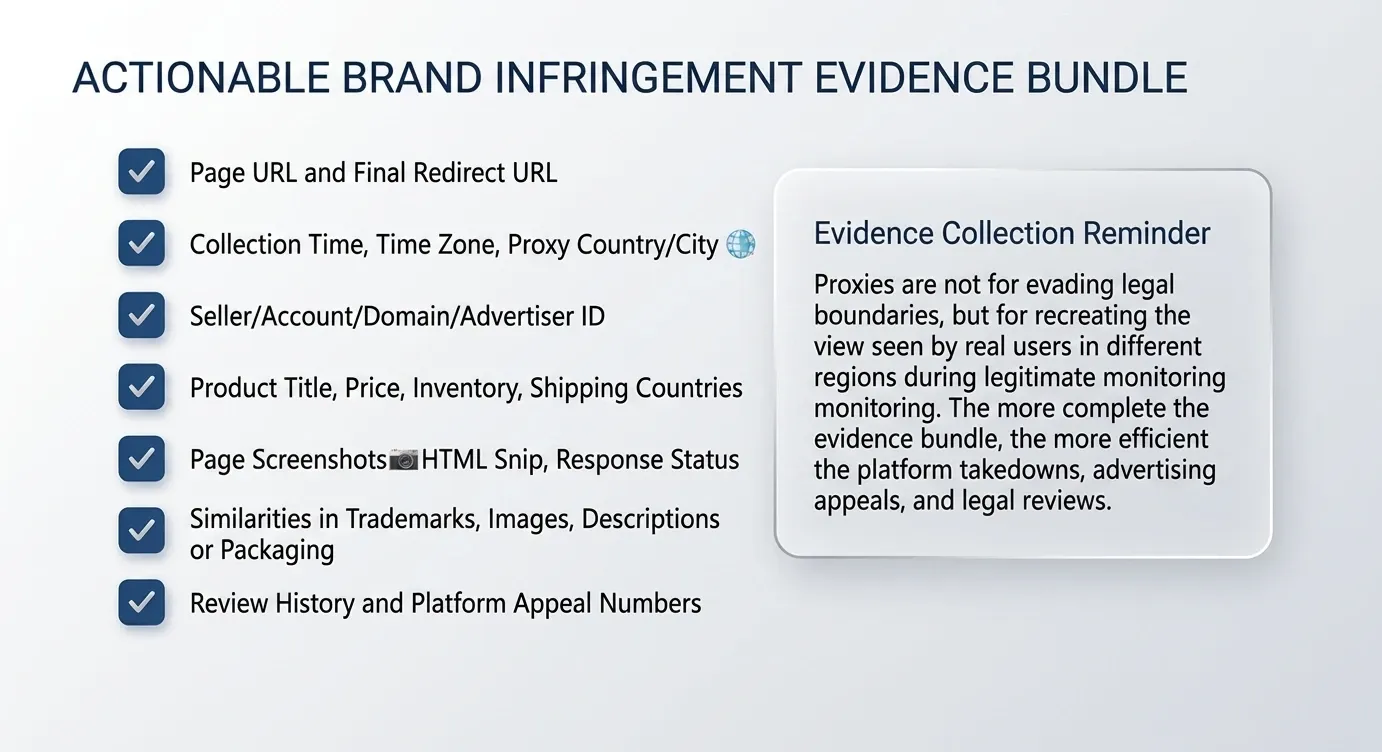
Figure 8. Platform complaints and legal review rely more on a complete evidence package.
Compliance Boundaries for Brand Protection
Brand-protection monitoring should prioritize public pages, authorized channels, and platform-approved complaint processes. On the advertising side, Google’s Ads trademark policy explains that Google reviews related ads after a trademark owner submits a complaint, and makes restriction decisions based on how the trademark is used in the ad. On e-commerce platforms, brands should use the official complaint channel — for example, Amazon Brand Registry provides Report a Violation for reporting IP infringement, store-policy violations, and regulatory compliance issues.
- Don’t access non-public data, bypass login permissions, or scrape personal information unrelated to brand protection.
- Don’t use proxies for click fraud, malicious ordering, fake reviews, or seller harassment.
- Don’t draw conclusions from a single screenshot alone — key leads should be double-checked and logged with region, timestamp, and access environment.
- High-risk infringement should be handed to legal, a platform complaint team, or an authorized agent.
Conclusion
The point of proxies for brand protection is to help brand teams see the infringing content a real consumer might encounter — across regions, devices, and platforms. A good proxy strategy isn’t a single product; it’s a system made up of residential proxies, mobile proxies, static sessions, bulk discovery, evidence collection, and a platform-complaint process.
If you’re comparing the best brand protection proxy providers, start from your business scenario and work backward to the proxy type, then test regional accuracy and evidence quality with a small sample. Review Rola IP’s brand protection use case and proxy documentation before configuring a pilot. The proxy truly worth buying isn’t the cheapest one — it’s the one that reliably helps you find risk, review leads, submit evidence, and keep monitoring over time.