Bright Data Alternatives: Proxy vs Full-Stack Options

Aug 7, 2026 · Comparisons · 15 min read
TL;DR: Six Bright Data Alternatives at a Glance
| Provider | Main replacement layer | Best fit | Validate before purchase |
|---|---|---|---|
| Rola IP | Proxy network, access, and management | Teams that already own crawlers, parsers, or browsers | IP type, location, session, rotation, protocol, allowlist, price, and time-to-first-request |
| Oxylabs | Proxy network, managed scraping, and SERP capabilities | Enterprise teams that need broader data infrastructure and support | Enterprise terms, compliance materials, success rate, support, contract, and total cost |
| Decodo | Proxy network and Web Scraping API | Teams that may move between proxy access and managed collection | Billing unit, rendering, retries, output format, and benchmark scope |
| IPRoyal | Residential, datacenter, ISP, and mobile proxies | Budget-sensitive projects that need several proxy types | Traffic validity, concurrency, locations, protocols, and target-site results |
| SOAX | Residential and mobile proxy networks | Workloads that prioritize IP sourcing, location, and session control | Available locations, IP source, rotation behavior, trial terms, and connectivity |
| Webshare | Proxy network, proxy lists, and API access | Developers who need a quick connection to an existing script | Proxy quality, location, API, concurrency, plan limits, and stability |
There is no universal best alternative to Bright Data. Rola IP is closer to a proxy-layer replacement. Oxylabs and Decodo are closer to a combined proxy and managed-scraping option. IPRoyal, SOAX, and Webshare are mainly candidates for proxy-network comparison. A team that needs cleaned datasets still needs a data service, a parser, or both.
What Are You Actually Replacing in Bright Data?
Proxy Networks
Bright Data’s proxy network includes Residential proxy, datacenter proxy, Internet Service Provider (ISP) proxy, and mobile proxy products. A proxy network controls the egress IP, geographic location, session behavior, IP rotation, and connection protocol. It does not automatically parse a page or return a validated data record.
Bright Data’s public proxy page states coverage across 195 countries. That is a supplier-published figure, not a guarantee that every plan has the same city, Autonomous System Number (ASN), carrier, concurrency, or target-site coverage. Compare the countries, cities, carriers, and target URLs required by the workload. The product split is described on the Bright Data proxy network page.
Web Access and Browser Infrastructure
Web Unlocker and Scraping Browser address problems beyond IP replacement. They may involve browser rendering, cookies, User-Agent behavior, request retries, JavaScript execution, target-site restrictions, and challenge pages.
Bright Data’s documentation describes Web Unlocker as an API-based access product that can handle proxy rotation, anti-bot challenges, and CAPTCHA responses before returning HTML or JSON. That makes it closer to managed web access than to a normal proxy port. The exact product behavior and billing should be checked in the Bright Data Web Unlocker documentation.
Scraping APIs, SERP APIs, and Datasets
A Scraping API may return HTML, a screenshot, or extracted fields. A Search Engine Results Page (SERP) API is designed for search-result collection. A dataset is usually collected, cleaned, and delivered by the provider before or during a subscription. These products have different development requirements and billing units.
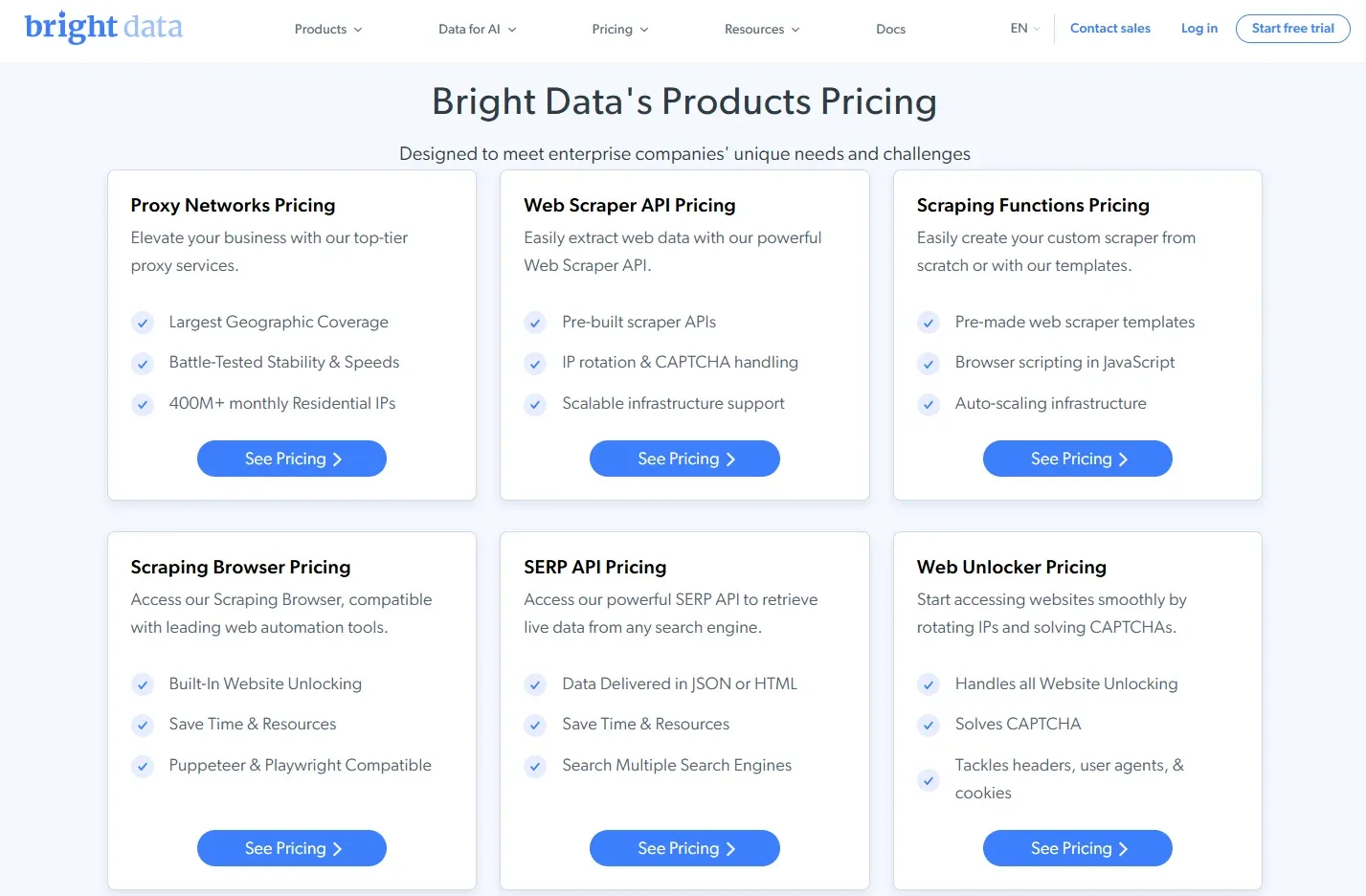
Bright Data lists Proxy Networks, Web Scraper API, Scraping Browser, SERP API, Web Unlocker, and Datasets as separate products on its official pricing page. A claim that Bright Data is expensive is incomplete unless the underlying product and billing unit are identified first.
Proxy Layer or Full Stack?
What is the difference between a proxy-layer and full-stack Bright Data alternative?
A proxy-layer alternative supplies network access, while a full-stack alternative also handles some combination of browser execution, retries, parsing, extraction, or data delivery.
If a team already maintains Requests, Scrapy, Playwright, Puppeteer, or a custom data pipeline, the proxy supplier mainly needs to provide:
- Residential, datacenter, ISP, or mobile egress IPs.
- Country, city, ASN, and carrier targeting.
- IP Rotation and Sticky Session controls.
- HTTP, HTTPS, or SOCKS5 access.
- Credentials, ports, API allowlists, and account controls.
Buying a complete scraping platform in this situation may add configuration and maintenance costs for features the application does not use. A proxy-layer product is usually the more direct bright data proxy alternative when the existing system already owns page access and parsing.
When a Full-Stack Product Is Required
Proxy access alone is not enough when the team lacks browser rendering, challenge handling, HTML parsing, field extraction, or data delivery. The comparison should then include:
- JavaScript rendering and browser automation.
- Handling for dynamic page structures and client-side content.
- HTML, JSON, schema-based fields, or complete datasets as output.
- Retries, logs, webhooks, scheduling, and storage.
- Enterprise support, compliance documentation, and service-level terms.
Oxylabs and Decodo’s managed collection products belong in this comparison. Rola IP should be evaluated alongside an existing parser, browser, or Scraping API rather than described as a one-to-one copy of Web Unlocker.
Which Bright Data alternative fits an existing scraper?
An existing scraper usually benefits from a proxy-layer alternative because the application can keep its parser, selectors, browser logic, and storage pipeline. The migration then focuses on endpoint, port, credentials, protocol, location parameters, sessions, rotation rules, and allowlists.
An application that consumes Bright Data-specific JSON, browser results, or dataset schemas needs a second comparison for output compatibility. A proxy connection and a structured record are different deliverables, even when both are marketed for web data collection.
How to Compare Bright Data Alternatives
Product Coverage
Classify each provider by what it actually delivers:
- Proxy connection and exit IP.
- Page access or browser session.
- HTML, screenshot, or Markdown.
- Extracted fields or schema-based JSON.
- Scheduled dataset or enterprise data delivery.
Then label the result as a direct replacement, partial replacement, or combined replacement. Price and performance comparisons are meaningful only when the product layers match.
Proxy and Network Criteria
Record the following for every candidate:
- Proxy type: residential, datacenter, ISP, or mobile.
- Location: country, city, postal code, ASN, carrier, and time zone.
- Session policy: per-request rotation, time-based rotation, or Sticky Session.
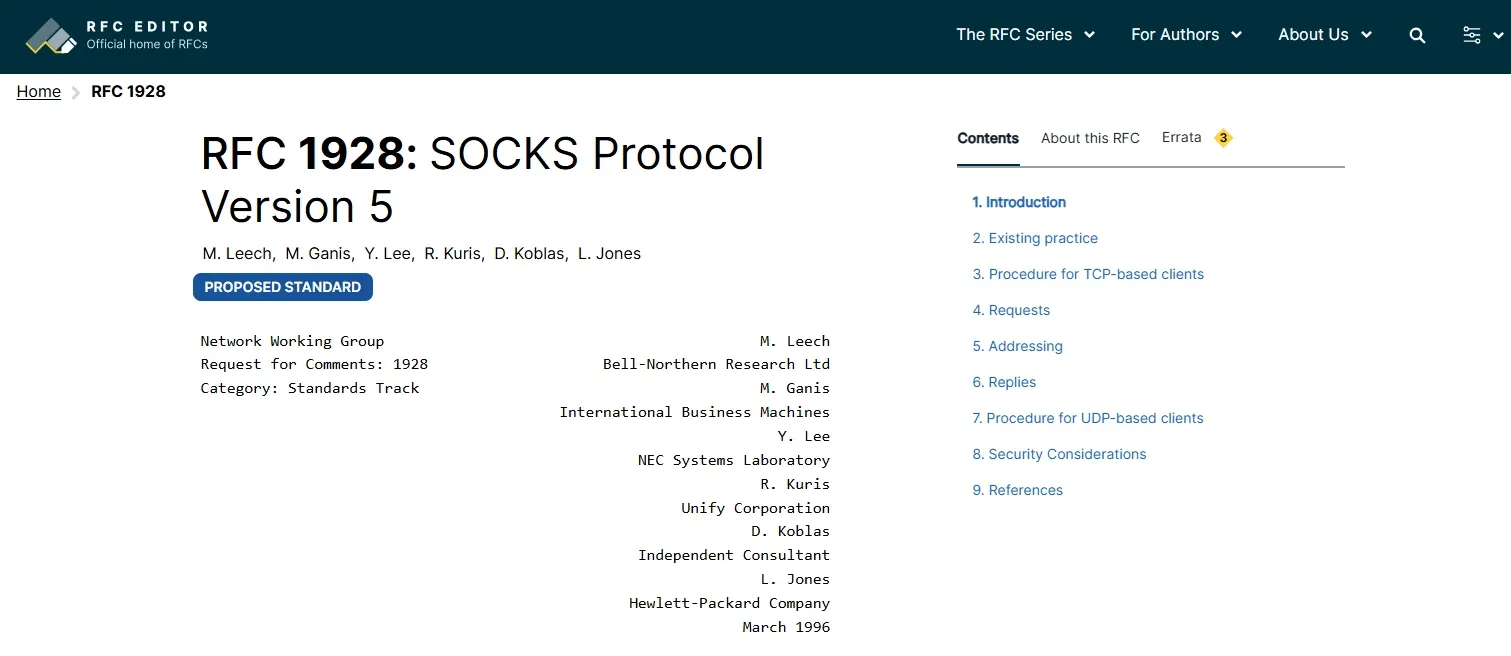
- Protocol: HTTP, HTTPS, or SOCKS5. The protocol definition is available in the IETF SOCKS5 specification.
- Runtime behavior: concurrency, bandwidth, connection duration, retries, and error categories.
Residential proxies are not automatically better for every workload. Residential networks may more closely reflect end-user connections, while datacenter proxies may suit speed, cost, and high concurrency. ISP proxies may fit longer sessions with a comparatively stable egress. Mobile proxies should be tested with the relevant carrier, location, and target site.
Integration and Developer Experience
Compare the API, SDK, browser extension, credential flow, allowlist controls, ports, logs, and documentation. A usable proxy service should let developers determine:
- Which exit IP handled the request.
- Which country, city, or ASN was applied.
- Whether the session persisted and when rotation occurred.
- Whether a failure came from authentication, port access, DNS, timeout, or target-site refusal.
- How much traffic was consumed and whether failed requests can be traced.
For Python or Scrapy projects, a proxy-layer integration is lower risk when it only changes the endpoint, port, and credentials. The parser should not need to be rewritten. Product-specific parameters still require testing against the target location and proxy type.
Data and Automation Output
A proxy service returns a connection and an egress IP. A Scraping API may return HTML or a screenshot. A structured service returns fields. Any statement that a provider supports data extraction should identify the output format, because purchasing a proxy does not by itself produce cleaned JSON.
Cost, Support, and Compliance
Separate the total cost into:
- Traffic or request charges.
- Retry and browser-rendering charges.
- Parsing, cleaning, validation, and storage.
- Monitoring, maintenance, and incident recovery.
- Minimum spend, trial limits, and contract commitments.
- Account review, Know Your Customer (KYC), sales communication, and dashboard setup.
KYC or a sales call may depend on product type, plan, location, and account risk review. It should not be presented as a fixed workflow for every Bright Data customer. Record the actual time from registration to the first successful request, or Time-to-first-request, during evaluation.
Six Bright Data Alternatives in Detail
1. Rola IP: A Proxy-Layer Option for Existing Pipelines
Rola IP is best positioned as a Proxy Layer alternative to Bright Data. Its role is to separate proxy type, location, session, protocol, and operational management from the parser or browser that the team already operates.
Network and Access
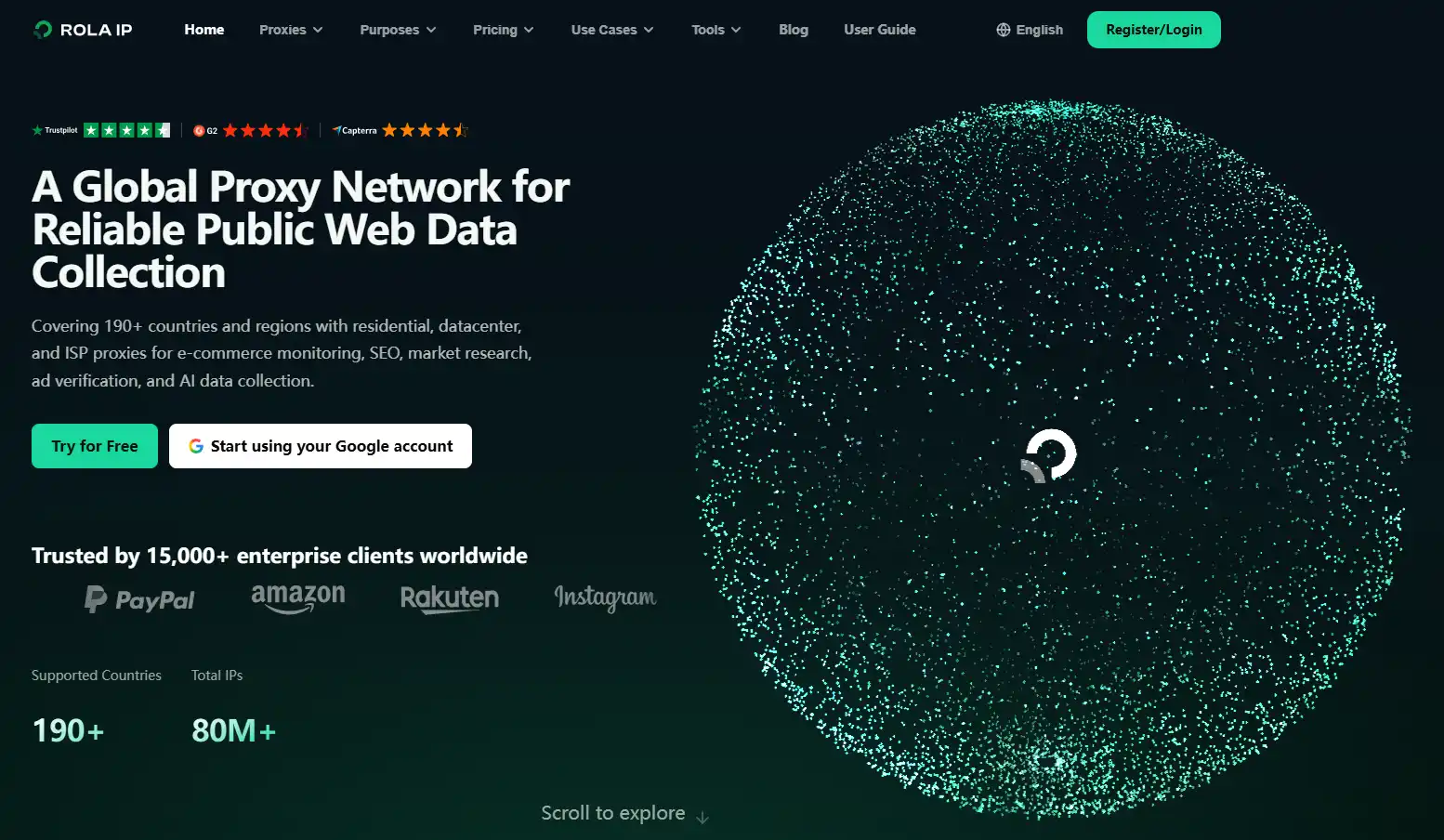
The Rola IP residential product page publicly lists coverage of more than 190 countries and regions, a pool of more than 80 million IPs, and 99.9% availability. These are supplier-published figures, not independent test results. A production evaluation should use the target country, target URL, request frequency, and required session length.
Teams can select among residential, datacenter, mobile, and ISP proxy products according to location, session, concurrency, and effective-result requirements. The residential proxy page is a useful starting point for the residential network. A rotating proxy may be more appropriate for repeated requests, while another IP type may fit a workload that prioritizes high concurrency, a stable session, or a mobile carrier.
Rola IP supports HTTP/HTTPS, SOCKS5, proxy parameters, API allowlists, account management, port forwarding, and code integration. Rola Connect can be used for system-level proxying and port forwarding. Location, session, and rotation parameters should be recorded before the migration so that changes can be traced during testing.
Public Price References
| Product | Public pay-as-you-go or starting reference | Comparable cost unit |
|---|---|---|
| Dynamic residential IP | From $4/GB | Traffic per GB and effective traffic after retries |
| Dynamic datacenter IP | From $1.80/GB | Traffic per GB, concurrency, and connection success |
| Mobile IP | From $5/GB | Traffic per GB, carrier, and location |
| Static residential IP | From $5/IP | Cost per fixed IP, session period, and validity |
High-volume references are as low as $0.60/GB for dynamic residential IP, $0.20/GB for dynamic datacenter IP, and $2/GB for mobile IP. High-volume plans commonly have minimum purchase quantities or validity limits, so these figures should not be compared directly with Bright Data’s on-demand prices.
Replacement Boundary
Rola IP can serve as a Bright Data proxy alternative for network access, location control, IP rotation, session management, protocol access, and account operations. It should not be described as a direct replacement for Web Unlocker, Scraping Browser, or prebuilt datasets without an additional browser, parser, extraction service, or data pipeline.
That boundary is useful for SEO monitoring, price monitoring, advertising verification, market research, and permitted public-web collection where the team owns the request and parsing logic. Teams can also review the web scraping proxy use case page before running a small, target-specific test.
2. Oxylabs: Enterprise Proxy and Data Collection Infrastructure
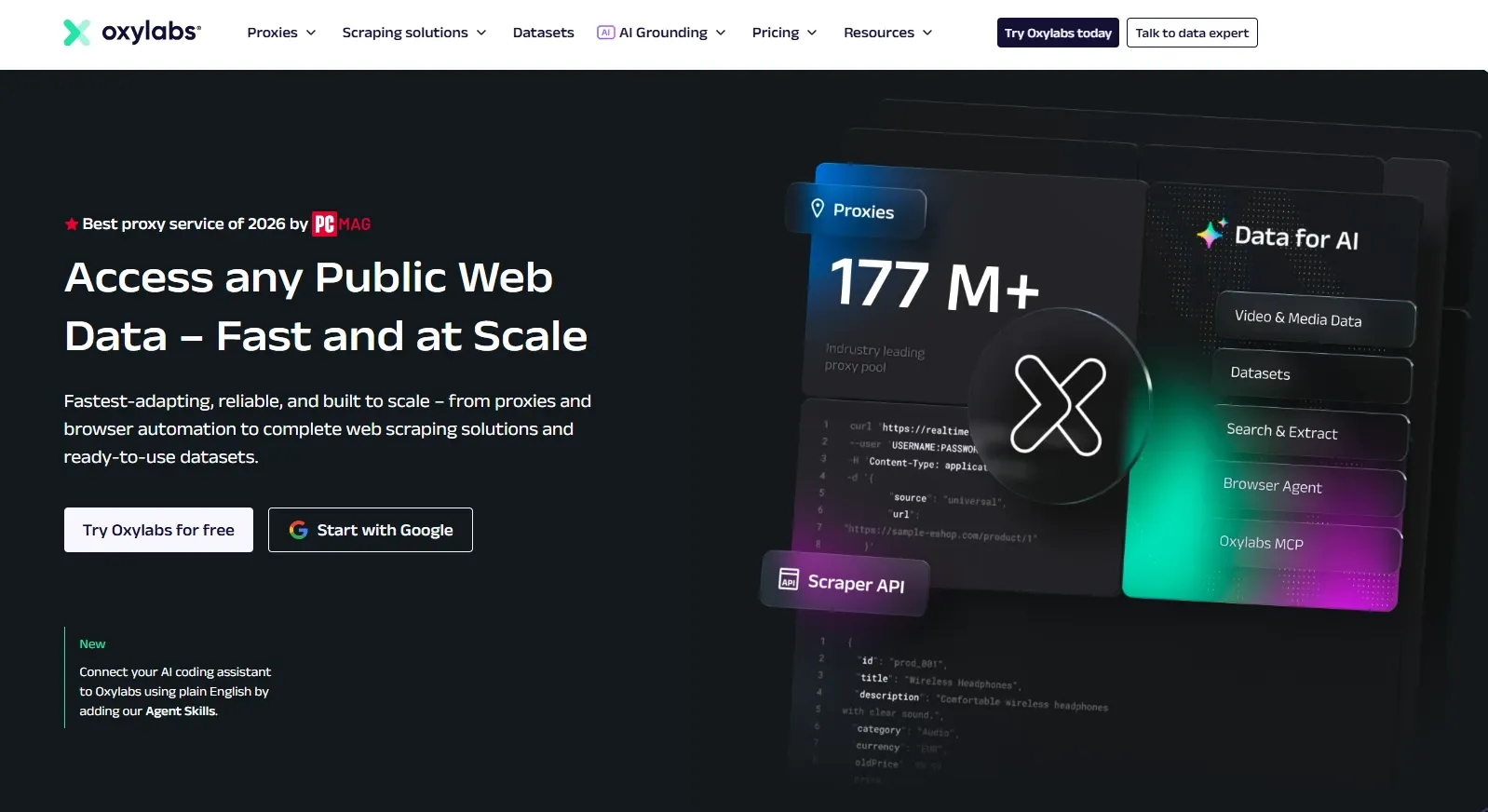
Oxylabs is closer to the enterprise full-stack direction. It fits teams that need proxy networks, managed scraping, SERP data, and enterprise support rather than only the lowest proxy traffic price.
Evaluation should separate residential, datacenter, ISP, and mobile proxies from Web Scraper API and SERP API products. Questions to validate include:
- Do the required countries, cities, and ASNs meet the business specification?
- Does the API return HTML, JSON, or extracted fields?
- Are JavaScript pages charged or handled through a separate rendering path?
- How are failed requests retried and categorized?
- Do enterprise terms include minimum spend, contract commitments, dedicated support, and compliance materials?
Oxylabs may be a strong fit when product breadth and enterprise operations matter. The tradeoff can appear in procurement, configuration, and total ownership cost. Teams that already own a parser should compare the pure proxy product before buying a complete managed collection workflow.
3. Decodo: Proxy Network and Web Scraping API
Decodo covers residential, ISP, mobile, datacenter proxies, and Web Scraping API products. It fits teams that want to keep a choice between a Proxy Layer and managed page collection. The Decodo proxy product page presents product-level information that should be checked separately for location, IP pool, rendering, and price.
Compare automatic rotation, retry behavior, geo-targeting, JavaScript rendering, structured output, and developer documentation. Proxy traffic and Scraping API usage may have different billing units. The proxy product may be billed by traffic or plan, while the API may use requests, credits, or page complexity.
When only an exit connection is needed, Decodo belongs in the proxy-layer comparison. When the team needs page access and data output, measure API success rate, response time, HTML completeness, and field accuracy separately. Vendor marketing metrics from different products should not be added together as one platform performance score.
4. IPRoyal: A Budget-Oriented Proxy Network
IPRoyal lists residential, datacenter, ISP, and mobile proxy products and related browser tools. It may suit teams that need several proxy types, flexible plans, and a relatively direct integration.
The main checks are residential traffic validity, concurrency limits by proxy type, target locations, supported protocols, and traffic accounting. A price-sensitive project should calculate retry traffic, invalid responses, and unused traffic rather than relying on the first price shown on a landing page.
IPRoyal is primarily a proxy-layer alternative. Browser rendering, field extraction, and prebuilt datasets still require an existing component or a separate service. High-concurrency and sensitive target-site workflows need a test with the same URL, location, request frequency, timeout, and retry policy used in production.
5. SOAX: Residential and Mobile Proxy Networks
SOAX focuses on residential and mobile network access, a unified endpoint, and rotation behavior designed to preserve task context. The current product scope and locations should be checked on the SOAX proxy product page.
SOAX fits teams that care about IP source, geographic targeting, session continuity, and residential/mobile network coverage. Evaluation should cover:
- Required countries, cities, and carriers.
- Whether rotation preserves the location and session context required by the task.
- Whether the unified endpoint exposes enough detail for logs and error diagnosis.
- Trial credits, minimum spend, and target-site connectivity under the intended request rate.
The label residential proxy does not establish the same success rate on every target. Record the proxy type, URL, location, request frequency, timeout, response category, and field completeness for every test.
6. Webshare: Quick Proxy Deployment and API Access
Webshare is aimed at teams that need to create proxy connections, manage proxy lists, and connect an existing script. Its product pages present residential and datacenter options, locations, and availability information. These are supplier-published figures and should be checked against the current plan and a live test on the Webshare proxy server page.
Review proxy-list management, API access, protocols, location controls, concurrency, IP rotation, and plan limits. For straightforward HTTP requests and an existing parser, fast configuration may matter more than a broad platform. JavaScript rendering, data cleaning, and complex browser automation require additional components unless the selected product explicitly provides them.
Webshare can replace part of Bright Data’s proxy-network and developer-access layer. It should not automatically be treated as a replacement for Web Unlocker, Scraping Browser, or datasets. Proxy connection delivery and automatic page extraction are separate outcomes.
Six Providers Compared Across the Same Criteria
| Provider | Main product layer | Output | Integration surface | Replacement scope | Main limitation |
|---|---|---|---|---|---|
| Rola IP | Proxy access, management, and use-case support | Proxy connection and exit IP | API, HTTP/HTTPS, SOCKS5, code, ports, and management tools | Proxy networks, geo-targeting, sessions, rotation, and operational management | Not equivalent to Web Unlocker, browser products, or datasets |
| Oxylabs | Proxy, scraping, SERP, and enterprise services | Proxy connection, HTML, or API data | API and enterprise integration | Proxy access and broader data-collection infrastructure | Enterprise cost, procurement, and configuration complexity require validation |
| Decodo | Proxy network and Web Scraping API | HTML or structured data | API and developer tools | Proxy-layer access and some managed scraping workflows | Billing and performance metrics differ across products |
| IPRoyal | Proxy network | Proxy connection and exit IP | Protocols, accounts, and related tools | Residential, datacenter, ISP, and mobile proxy layers | High concurrency and complex targets require a matched test |
| SOAX | Residential and mobile proxy network | Proxy connection and exit IP | Unified endpoint and proxy access | IP sourcing, geo-targeting, and session control | Pricing, locations, and actual success rates require validation |
| Webshare | Proxy network and developer tools | Proxy connection and exit IP | API, protocols, and proxy lists | Quick deployment, list management, and script integration | Not equivalent to managed scraping or structured-data services |
This table defines the comparison scope rather than ranking the providers. Residential, datacenter, ISP, mobile, Web Scraping API, and browser products should be tested separately against the same target, location, request frequency, output requirement, and billing unit.
Pricing and Total Cost of Ownership
Compare the Same Billing Unit
Proxy providers commonly bill by gigabyte, IP, request, credit, concurrency plan, or fixed monthly subscription. A lower list price can become more expensive when target-site failures create additional retries and engineering work.
For a proxy-layer workload:
Proxy-layer total cost = traffic fees + retry traffic fees + monitoring and maintenance
Cost per 1,000 valid results = proxy-layer total cost / valid results * 1,000
For full-stack collection, add browser rendering, API credits, data cleaning, field validation, storage, and model or compute charges where applicable. A lower cost per GB does not necessarily mean a lower cost per 1,000 valid records.
Three Workload Models
- Standard HTML collection: The provider returns an HTML response, and the team owns parsing and validation.
- JavaScript-rendered collection: The provider or the team’s browser executes client-side code before the response is evaluated.
- Structured extraction: The service returns fields or JSON, so schema accuracy and missing-field rates become part of the price comparison.
The benchmark must preserve the workload model. Comparing a proxy GB price with a structured API request price does not measure the same service.
A Practical Benchmark Scorecard
Do not fill performance claims with a vendor’s unrelated marketing number. Use the same target conditions for each supplier. A first benchmark can run at least 100 requests per provider for one target location, then expand to several locations and time windows if the results are stable.
| Metric | Definition | Record during the test |
|---|---|---|
| Business success rate | Valid responses that meet the page or field requirement divided by total requests | HTTP status, challenge page, timeout, error template, and field completeness |
| P50 and P95 latency | Median and 95th-percentile time from request start to usable response | Connection time, time to first byte, and total response time |
| Geo accuracy | Whether the detected country, city, ASN, or carrier matches the requested target | IP lookup result and provider parameter |
| Session consistency | Whether requests retain the required exit IP or location for the session period | Session identifier, exit IP, and rotation timestamp |
| Effective cost | Total provider and retry cost divided by valid results | Traffic, requests, retries, credits, and valid record count |
| Time-to-first-request | Time from account setup to the first successful production-like request | KYC, approval, credential, allowlist, endpoint, and configuration timestamps |
The table defines an evaluation method, not a Service Level Agreement (SLA). A project should set its own acceptance baseline from the existing Bright Data workflow and the business value of a valid result.
Hidden Migration Costs
- Selector, parser, and field-validation maintenance.
- Browser processes, proxy pools, logs, and monitoring infrastructure.
- Retry traffic from timeouts, challenge pages, and invalid responses.
- KYC, account review, sales communication, and dashboard learning.
- Updating endpoints, credentials, session rules, and output formats.
How to Migrate from Bright Data
1. Audit Current Products and Billing
Use billing records and request logs to identify whether the application uses Proxy Networks, Web Unlocker, Scraping Browser, SERP API, or datasets. Record:
- Endpoint, port, protocol, and authentication method.
- Daily requests, traffic, failed requests, and retries.
- Target country, city, ASN, session, and rotation requirements.
- Response format, parser logic, field validation, and downstream storage.
- Account review, trial, minimum-spend, and contract restrictions.
If the code uses only a proxy address and an exit IP, begin with a Proxy Layer migration. If it depends on Bright Data-specific JSON or browser results, evaluate output compatibility before changing the endpoint.
2. Start with a Lower-Risk Workload
Choose one target site, one location, and a fixed field set for parallel validation. Keep the existing provider available as a rollback path. Replacing all production traffic without comparison data makes it difficult to separate vendor behavior from parser or target-site changes.
For a Python Requests project, a proxy-layer migration often changes only the endpoint, port, and credentials. The following example keeps secrets outside the repository:
import os
import requests

proxy_url = (
    f"http://{os.environ['PROXY_USER']}:{os.environ['PROXY_PASSWORD']}"
    f"@{os.environ['PROXY_HOST']}:{os.environ['PROXY_PORT']}"
)

proxies = {
    "http": proxy_url,
    "https": proxy_url,
}

response = requests.get(
    "https://example.com/",
    proxies=proxies,
    timeout=30,
)
response.raise_for_status()
The endpoint and parameter names must follow the selected provider’s documentation. Rola IP users can refer to the Python proxy integration and proxy parameters pages for the relevant setup. Credentials, API keys, and allowlist addresses should not be hard-coded in a repository.
3. Run Parallel Tests and a Gradual Cutover
A 7-to-14-day observation period can cover normal traffic, page changes, and peak request windows. Set acceptance conditions from the current system baseline, such as:
- Business success rate at or above the existing baseline.
- P95 latency within the application’s accepted range.
- Required geo-targeting and session behavior.
- Cost per 1,000 valid results at or below the approved budget.
- Clear failure logs and a recovery process that meets the team’s response window.
These are project acceptance conditions, not public provider SLAs. A production article should not turn them into a supplier guarantee.
4. Migrate Settings and Keep a Rollback Path
Check endpoint, port, authentication, IP rotation, session, location parameters, timeout, retry count, and API allowlist. For critical workloads, keep the old provider or a second exit path available. Define rollback triggers such as consecutive errors, geographic mismatch, or a fall in valid-field ratio.
When Bright Data May Still Be the Better Fit
Bright Data can remain a reasonable choice for teams that need:
- Very large global proxy coverage and fine-grained geographic control.
- Web Unlocker, Scraping Browser, SERP API, or dataset products from one supplier.
- Enterprise procurement, compliance materials, dedicated support, and unified vendor management.
- An established integration whose migration savings do not justify the engineering work.
- One supplier across proxy access, page access, extraction, and data delivery.
In these cases, a full replacement may not minimize cost or operational risk. A hybrid architecture can keep Bright Data for managed unlocking or dataset delivery, use Rola IP or another provider for proxy-layer workloads, and preserve the existing parser, browser, or data pipeline.
Final Recommendation
The first decision in a Bright Data alternatives review is the replacement boundary. Teams that already own crawlers and parsers should compare proxy quality, location control, sessions, rotation, protocols, observability, time-to-first-request, and cost per 1,000 valid results. Rola IP is relevant in this layer because it offers residential, datacenter, mobile, and ISP options with configurable access and operational controls.
Teams that lack browser rendering, challenge handling, structured extraction, or dataset delivery should evaluate Oxylabs and Decodo as broader managed options. For complex production systems, a hybrid migration that replaces one layer at a time is easier to benchmark and roll back than a single cutover across every product.
For a Rola IP proxy-layer evaluation, start with the web scraping proxy use case page and test the required country, proxy type, session policy, request volume, and output workflow against the existing Bright Data baseline.