
Best Oxylabs Alternatives 2026: 7 Proxy Providers Compared

Aug 10, 2026 · Comparisons · 12 min read
Quick Answer: Best Oxylabs Alternatives by Use Case
There is no single best Oxylabs alternative. This guide compares seven providers for authorized data-collection and network workloads.
Rola IP is a practical fit for teams that need flexible proxy workloads and direct routing control.
Bright Data suits enterprise buyers that need a broad proxy and web-data portfolio with enterprise controls.
Decodo (formerly Smartproxy) is oriented toward quick onboarding and a straightforward API workflow.
SOAX is useful for teams that need one subscription across proxy types, SOCKS5 support, and configurable gateway sessions.
Proxy-Seller is worth comparing when a team wants to purchase distinct proxy categories in small, task-specific quantities.
IPRoyal can work for budget-sensitive pilots with irregular traffic demand.
Scrapingdog is the API-first option when the team would rather send extraction requests than operate a proxy layer.
These recommendations describe fit, not a universal ranking. Check the current product page, acceptable-use policy, support terms, and billing unit before purchasing.
What Is Oxylabs?
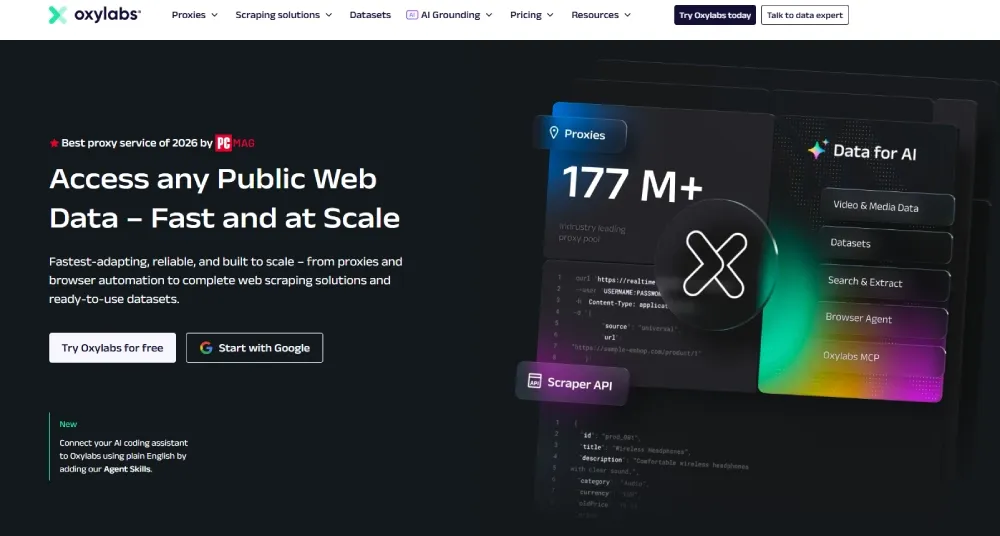
Oxylabs is a proxy-network and web-data provider that buyers often evaluate for residential, ISP, datacenter, mobile, and managed data-collection workflows. This article is not a product review of Oxylabs itself; it explains when another provider may be a closer fit for a specific authorized workload, budget, geography, session requirement, or preferred operating model.
For the baseline product context, pricing considerations, and trade-offs to compare before switching, read this Oxylabs review. A meaningful alternative comparison should match the same proxy type and billing unit rather than comparing a managed API with raw proxy traffic or a static IP plan with a rotating residential pool.
Why Look for an Oxylabs Alternative?
Pricing and Plan Flexibility
Headline price is only one input. The useful metric is:
(proxy or API spend + engineering and retry overhead) / successful, permitted results
Minimum commitments, overage rates, unused-credit rules, bandwidth consumed by retries, and support time can change that result. A cheap residential plan may be expensive for a JavaScript-heavy target if repeated retries consume traffic. A managed API may cost more per request but remove browser rendering, parser maintenance, and proxy rotation work.
Product and Workload Fit
Match the product to the request path before comparing networks:
- Rotating residential proxies change the exit IP frequently and are suited to distributed, short-lived requests.
- Sticky residential proxies keep an IP for a defined session window when a workflow needs continuity.
- Internet Service Provider (ISP) or static residential proxies provide a stable endpoint associated with an ISP, useful for long sessions and controlled access.
- Datacenter proxies are often efficient for high-volume, low-risk endpoints where a datacenter ASN is accepted.
- Managed scraping APIs handle some combination of fetching, rendering, parsing, and retries, but they expose less network-level control.
For a deeper product decision, use this guide to choose a proxy IP type and compare the target’s requirements with the provider’s documented behavior.
Targeting, Setup, and Support Requirements
Check location granularity (country, state, city, ASN), concurrency, authentication, protocol support, session identifiers, DNS behavior, timeout controls, and error reporting. Documentation quality matters during migration: a clear parameter reference can save more money than a small discount. Support response times and escalation paths matter when a target changes its rate limits or returns a new CAPTCHA challenge.
How We Compare Providers
Each provider below is assessed against the same dimensions: product coverage, targeting and session controls, billing unit, documentation and integrations, support model, and limitations. Controlled tests used authorized endpoints and comparable concurrency and traffic conditions. Results are used to describe observed operating trade-offs, not to claim a universal success-rate ranking: a fair benchmark still requires the same target category, geography, request volume, session mode, timeout, and retry policy for every provider. Provider pricing and policies should be rechecked on the date of purchase.
Quick Comparison Table
Provider |
Best for |
Proxy or API products |
Targeting and session controls |
Pricing model |
Public starting price checked August 10, 2026 |
Main limitation |
|---|---|---|---|---|---|---|
Rola IP |
Flexible proxy workloads with direct control |
Dynamic residential, static ISP, datacenter, and mobile |
HTTP/HTTPS/SOCKS5; configurable request, concurrency, and session parameters |
Product-specific traffic or IP plans |
Residential pay-as-you-go: $4/GB; 50 GB package: $2.50/GB for 30 days |
Public comparison data and limits are less standardized than enterprise vendors |
Bright Data |
Enterprise proxy and web-data coverage |
Residential, ISP, datacenter, mobile, and managed web API products |
ASN/city targeting, APIs, team controls, audit logs, and published SLA terms |
Proxy network and Web API products are billed separately |
Residential from $2.50/GB; terms and promotions apply |
Higher procurement threshold and a longer configuration path |
Decodo (formerly Smartproxy) |
Straightforward setup for growing teams |
Residential, datacenter, ISP, mobile, and scraping APIs (confirm current catalog) |
Country/state targeting and configurable sticky sessions; controls vary by product |
Usually traffic or request based |
Residential from $2/GB |
Narrow geographic pools can produce repeated IPs and variable latency |
SOAX |
One subscription across proxy resources and configurable sessions |
Proxy resources available under a unified subscription (confirm current catalog) |
HTTP/HTTPS and SOCKS5 with UDP; ASN targeting, similar-IP rotation, and 1-60 minute sticky sessions |
Unified subscription |
Builder plan from $200/month plus VAT |
Large response bodies and narrow city/ASN filters can reduce effective capacity |
Proxy-Seller |
Modular, task-specific proxy purchases |
Residential, static ISP, datacenter, and mobile |
Username/password or IP-allowlist authentication; controls depend on product |
IP-count, duration, or traffic plans |
IPv4 from $0.49; residential from $3.98/GB for 0.5 GB |
Performance varies substantially among protocol types and network attributes |
IPRoyal |
Flexible pilots with irregular traffic demand |
Residential, ISP, datacenter, and mobile products (confirm current catalog) |
City targeting and sticky sessions vary by product |
Pay-as-you-go traffic and product-specific plans |
Residential from $1.75/GB |
Retried and failed requests still raise effective cost per result |
Scrapingdog |
API-first extraction |
Managed scraping API rather than a general-purpose proxy pool |
API-specific rendering, retry, and response controls |
Per-request or credit-based |
Free: 200 request credits; paid plans from $40/month |
Less control over raw routing, ASN selection, long sessions, and browser configuration |
Proxy traffic, IP leases, and API requests use different billing units. A dollar per gigabyte cannot be compared directly with a dollar per thousand API requests.
7 Best Oxylabs Alternatives
1. Rola IP
Rola IP is a sensible starting point for teams that want to compare several proxy types without changing their entire workflow. At the time of review, its rotating residential, static ISP, datacenter, and mobile product lines were available. The core gateways supported HTTP, HTTPS, and SOCKS5. Request parameters can be configured at the proxy layer to control concurrency and session persistence.
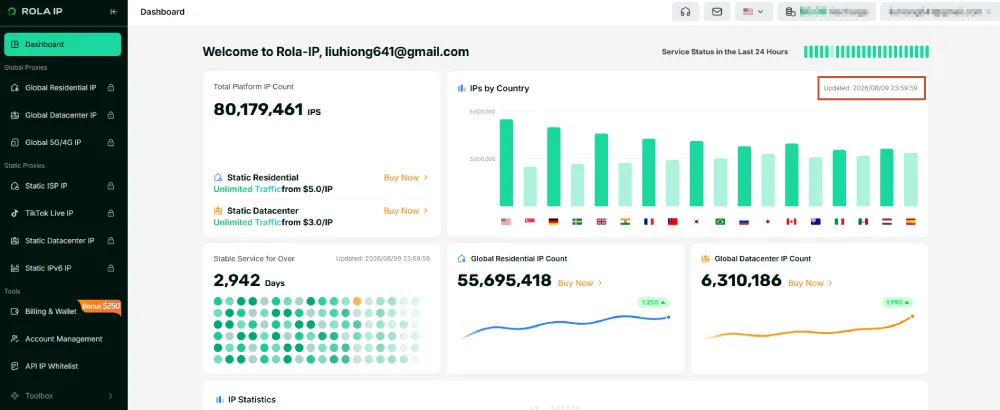
The like-for-like comparison with Oxylabs depends on the product. For a rotating residential workload, compare traffic billing, country selection, rotation triggers, sticky-session duration, authentication, and concurrency. For a stable endpoint, compare Rola’s static residential or ISP offering with Oxylabs’ equivalent rather than with a rotating pool. For a scraper that needs rendering and parsing, compare a managed API separately from raw proxy traffic.
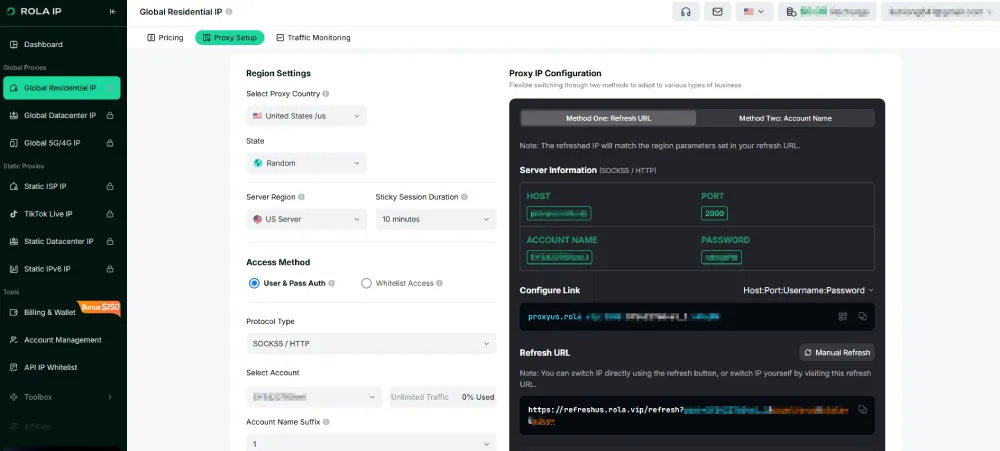
For rotating workloads, Rola IP supports request- or session-based rotation, sticky-session controls, country- and city-level targeting, and up to 3,000 concurrent connections. These controls are relevant when a team needs to choose where an exit IP is located, decide when it rotates, and keep a permitted workflow on the same IP for a defined period.
For operations and migration, Rola IP provides API integration and code examples, username/password authentication, IP allowlisting, and combined authentication options. Teams can also evaluate subaccounts and traffic quotas when they need to separate usage or spending by workflow.
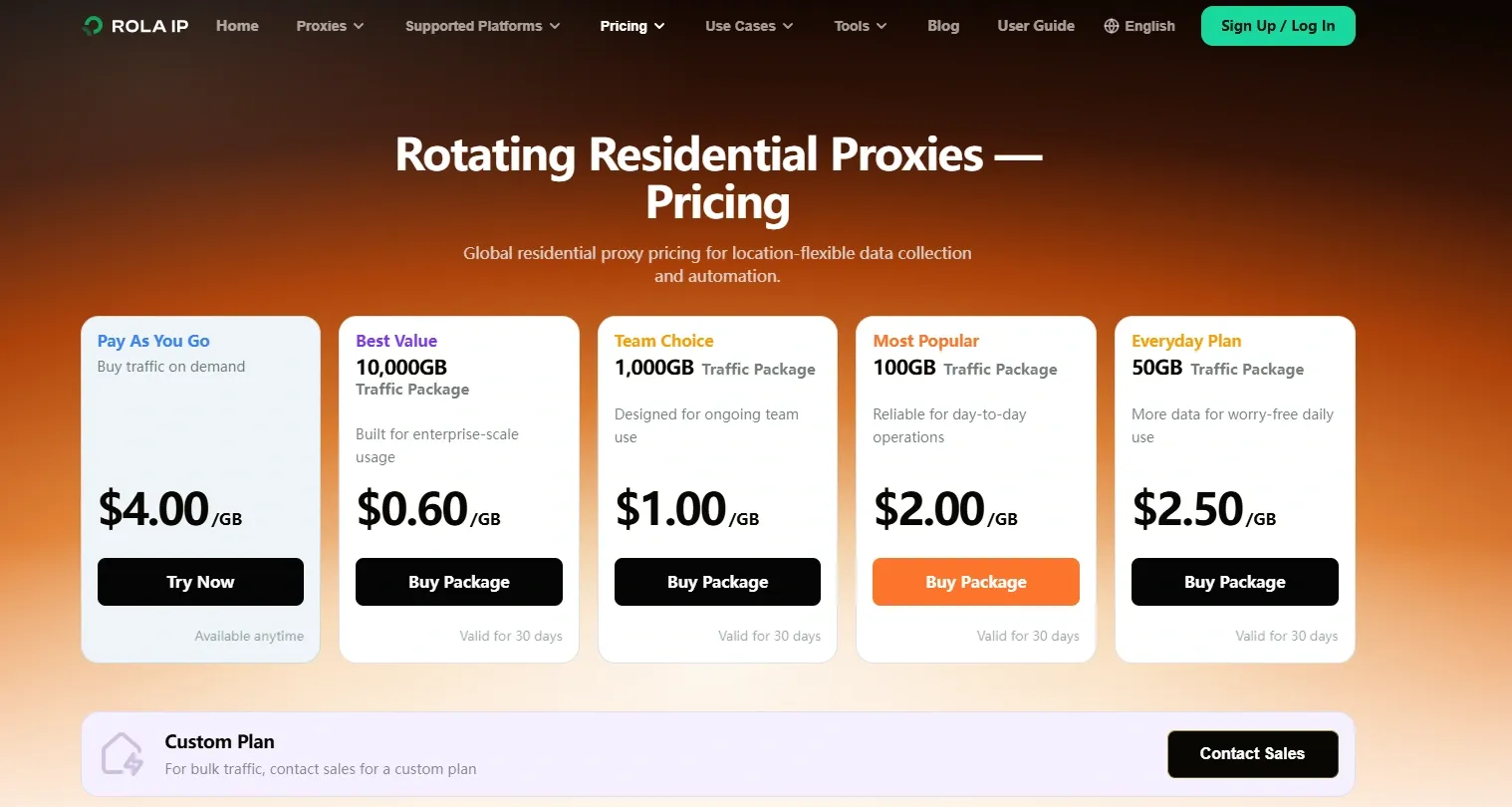
Rola IP can fit a team that values flexible plan selection and direct proxy control. The limitation is that public plan descriptions may not expose every operational limit in one place. A short pilot should still measure successful permitted responses, median and p95 latency, retry traffic, and the frequency of IP restrictions before production migration.
2. Bright Data
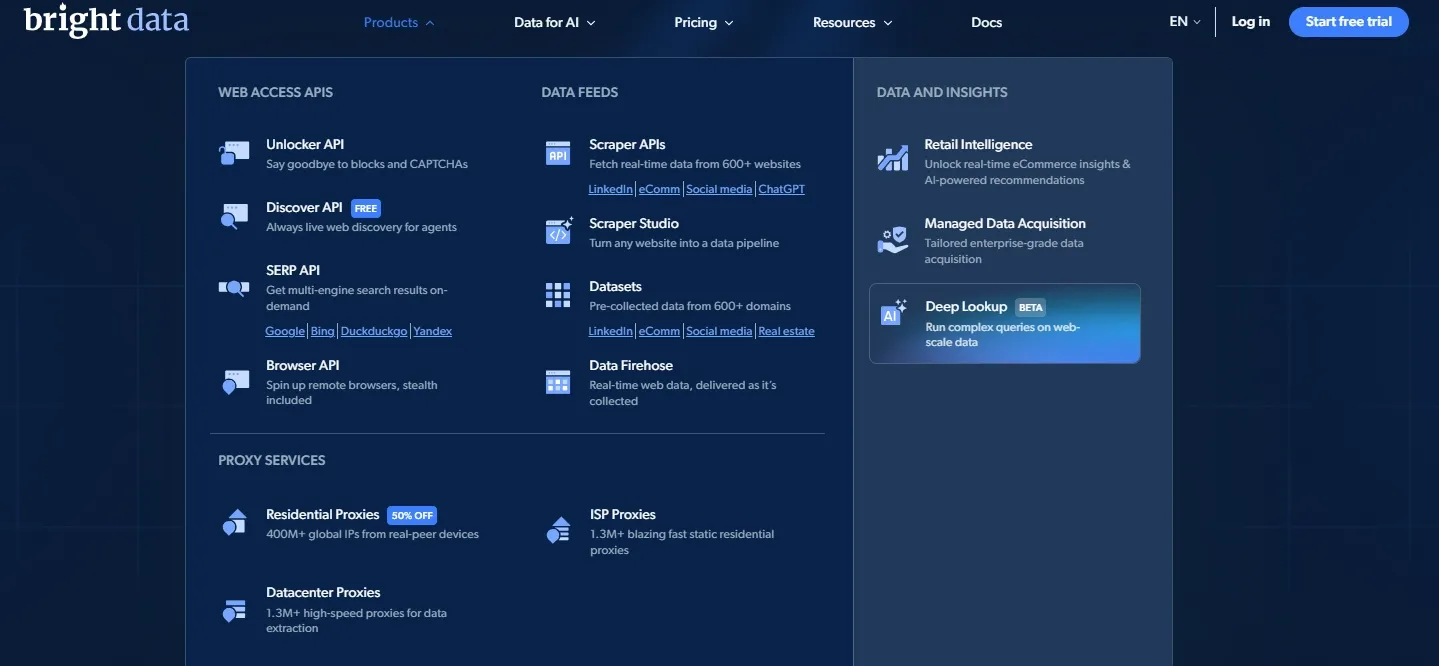
Bright Data offers one of the broadest combinations of residential, ISP, datacenter, mobile, proxy management, and web-data products in this comparison. Its underlying proxy network and Web API products use separate billing models. The platform provides team permissions, request-level audit logs, and city- and ASN-level location controls, and it publishes SLA uptime terms. Buyers should confirm the scope and contractual terms that apply to their plan.
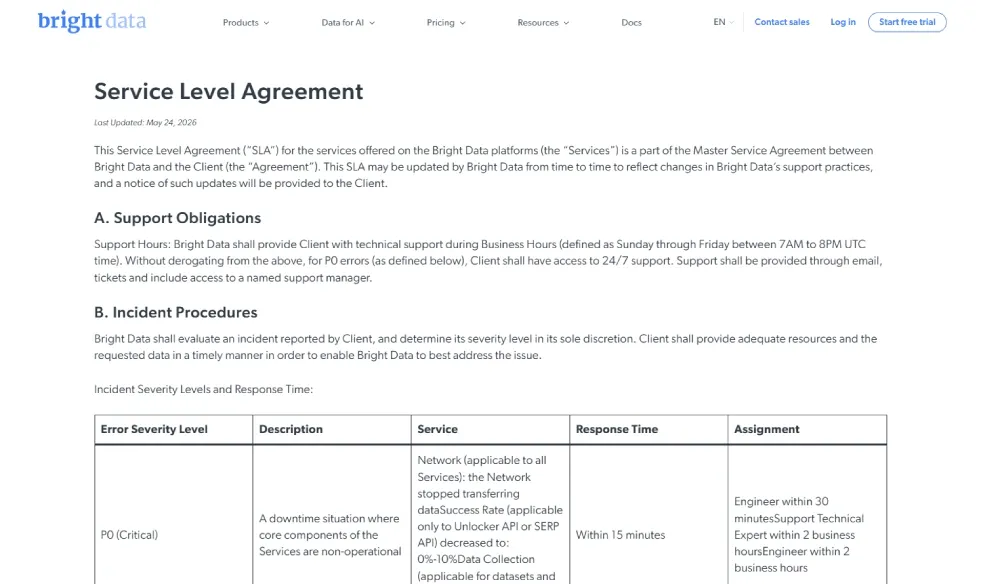
Testing found a longer engineering path from registration and verification to a working customized request. After the architecture was integrated, the cost per valid result was controllable for the tested long-tail workload. Product-specific billing, minimums, add-ons, and configuration choices still make the public starting price a poor estimate of a real workload. Procurement and compliance review may also take longer than with a self-serve provider.
Bright Data is a strong Oxylabs alternative when one vendor must cover both network access and managed data collection, or requires detailed enterprise controls. Those strengths come with a higher purchasing threshold and substantial configuration complexity. It is less compelling when a small team needs only a few stable endpoints and wants a minimal dashboard. Compare the exact endpoint type, not the vendor’s total network claims.
3. Decodo (formerly Smartproxy)
Decodo, formerly Smartproxy, offers an interactive dashboard, proxy endpoints, documentation, and scraping APIs that can reduce setup time for a growing team that has already defined its target list and request volume. The documentation includes request examples for major programming languages.
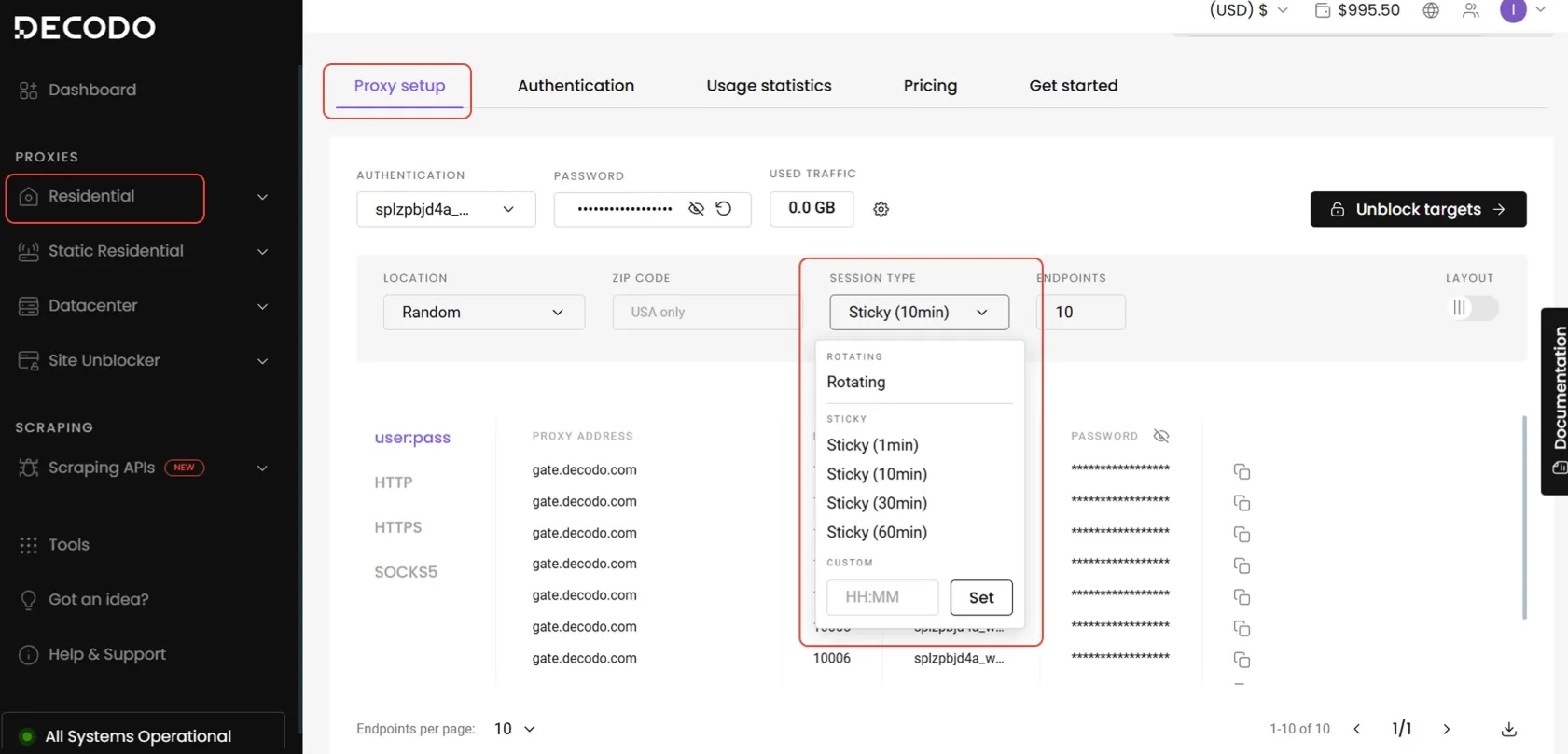
The comparison with Oxylabs turns on control depth. The tested workflow supported country and state targeting and configurable sticky-session duration, while the documentation supplied ready-to-use examples for major languages. Setup and first-request completion were straightforward in testing. Scraping APIs may simplify extraction but can change how response bodies, JavaScript rendering, retries, and spend are managed.
Decodo fits teams that want a straightforward operating model and a short path from test to deployment. For fine-grained geographic work, include the higher retry rate and resulting traffic cost of a narrow pool in the pilot. A team with strict enterprise identity controls, custom routing, or detailed audit requirements should confirm those capabilities before migrating.
4. SOAX
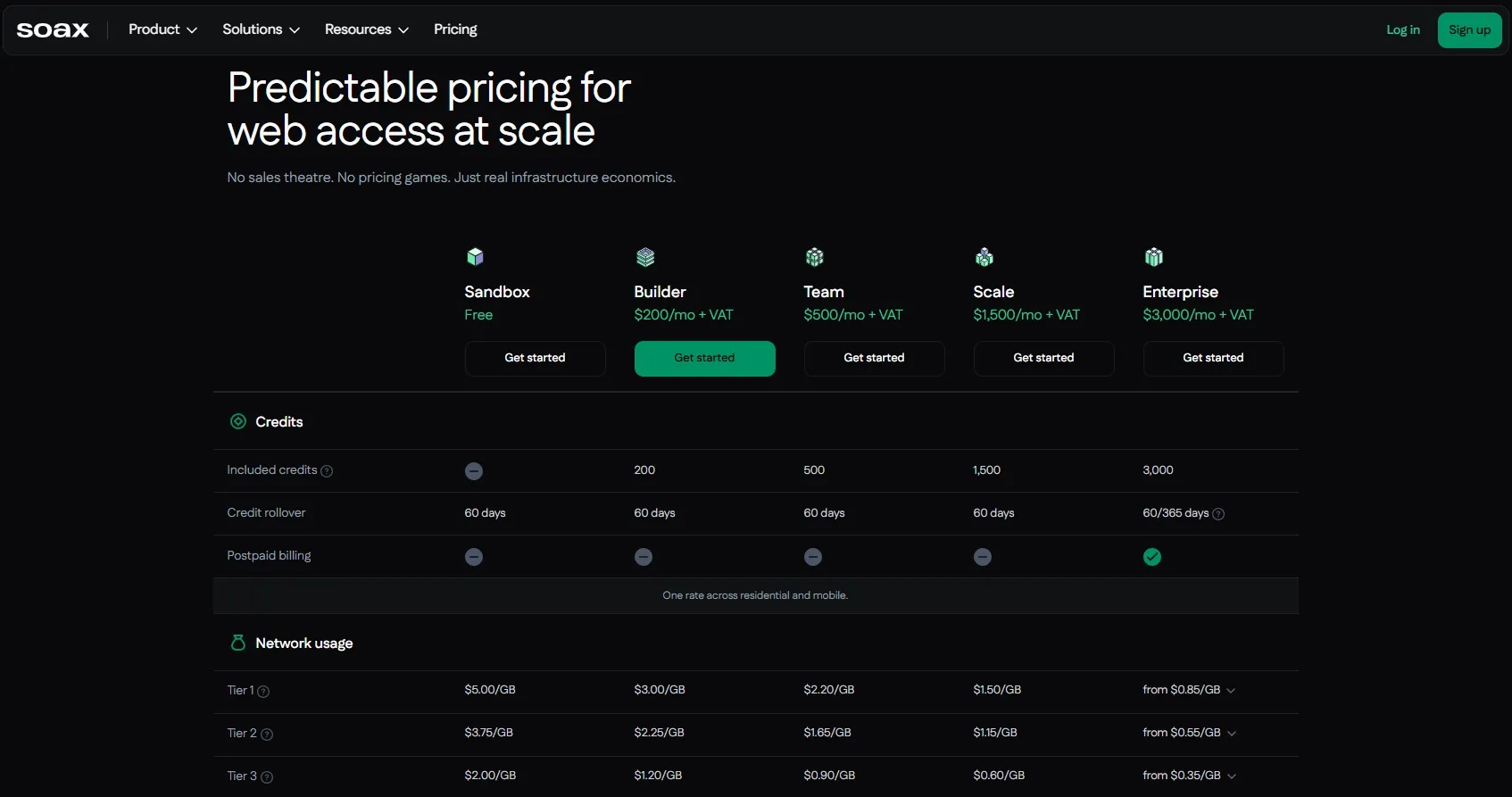
SOAX is a candidate for technical teams that need one subscription across proxy resources, SOCKS5 support, and control over gateway session behavior. Its unified subscription covers the available proxy resources. The tested protocol options included HTTP, HTTPS, and SOCKS5 with UDP; the control panel exposed ASN-level targeting, similar-IP rotation, and configurable sticky sessions from one to 60 minutes.
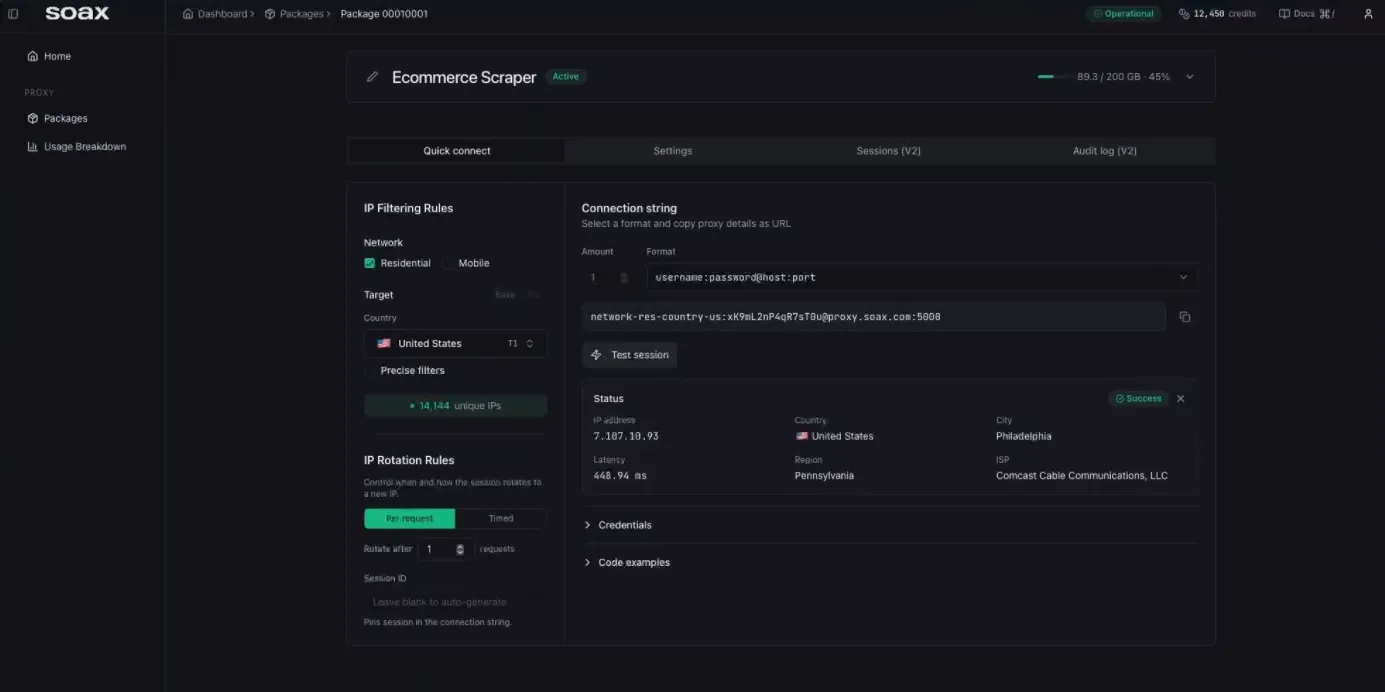
Testing found normal connection establishment in mainstream locations and stable sticky-session behavior. However, larger response bodies faced throughput constraints. Under filters for a less common city or specific ASN, the usable IP pool decreased. Before treating SOAX as an Oxylabs alternative, verify that the required location is available in the selected pool, not merely listed at the network level. Confirm rotation triggers, concurrency, authentication, and the current subscription terms.
SOAX can suit teams that need a single subscription across proxy resources, rely on SOCKS5, and require custom gateway-session logic. It is a weaker fit for large-file or otherwise high-throughput collection. Teams with low total monthly use should also compare the subscription threshold with pay-as-you-go alternatives.
5. Proxy-Seller
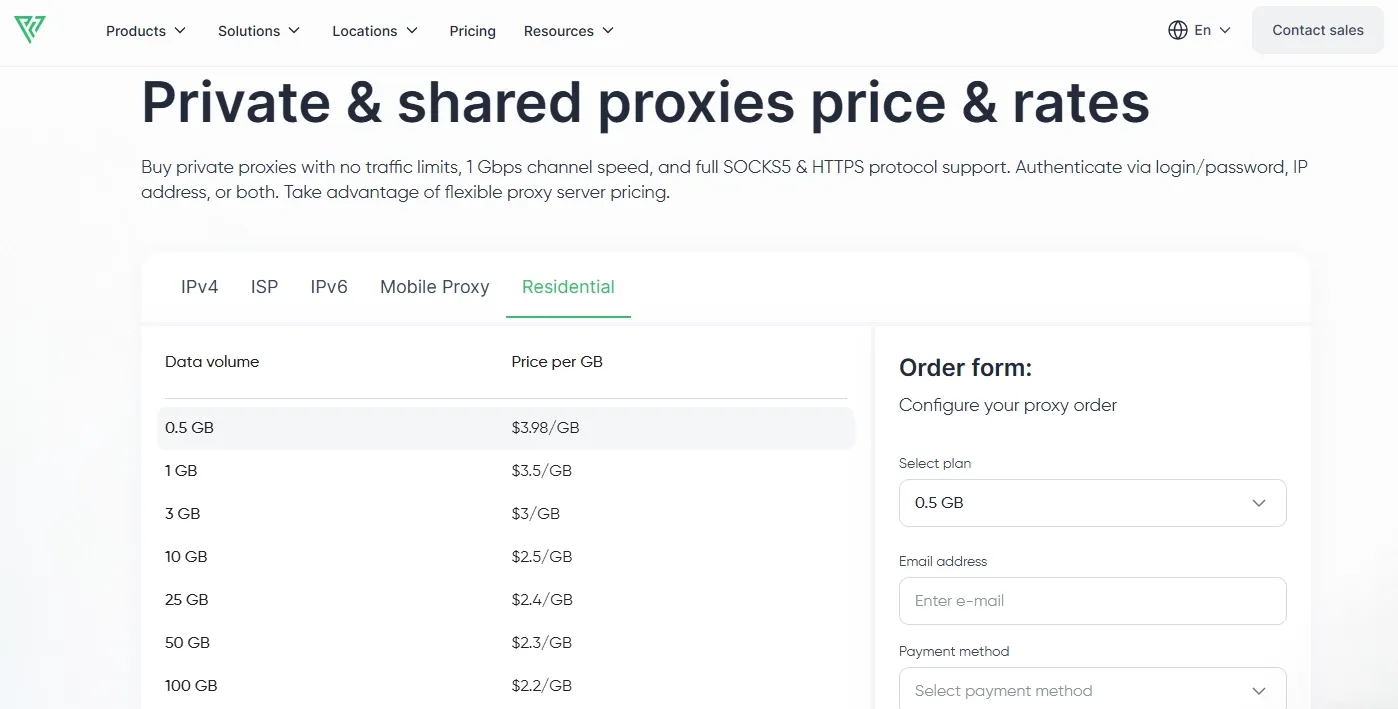
Proxy-Seller is useful when a buyer wants to purchase residential, static ISP, datacenter, and mobile proxies as separate product categories. Its tested products supported username/password and IP-allowlist authentication, and the control panel provided failed-IP replacement and a standard technical-support channel. The relevant questions remain practical: Is the selected country available? How are rotation and session parameters exposed? What happens when an endpoint becomes unavailable?
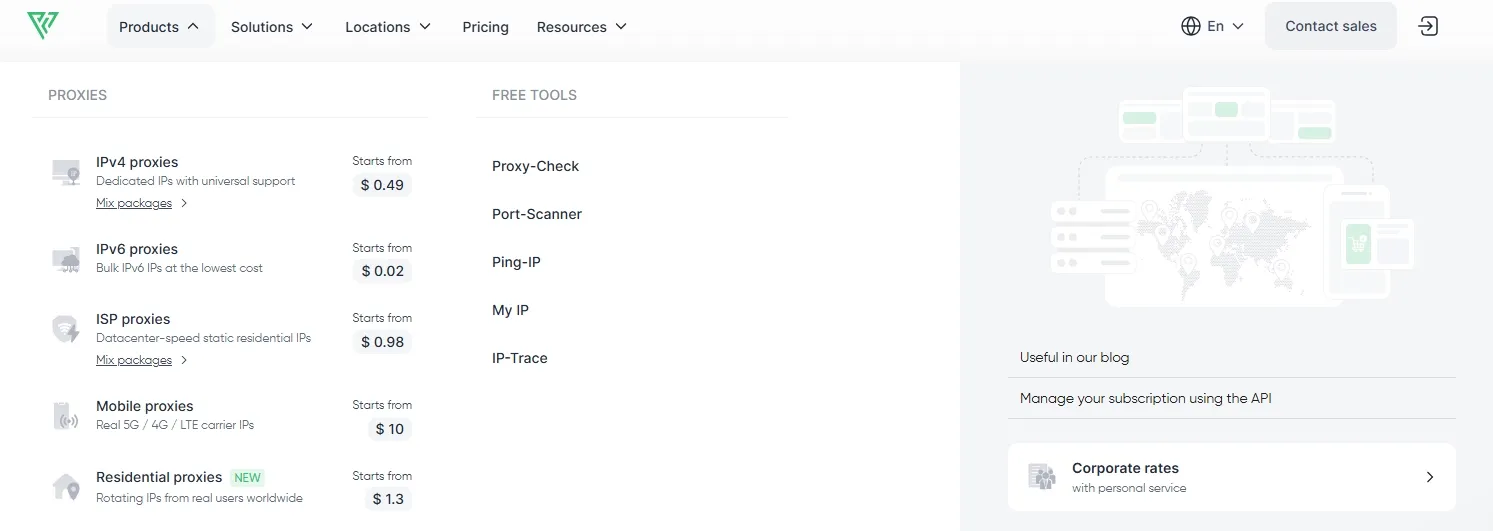
Testing found stable endpoint delivery across product lines and allowed purchases at a fine granularity, including individual IPs or defined time periods. Performance varied materially among products: a low-cost IPv6 node should not be treated as equivalent to a mobile gateway. Its plan model may be based on IP count, duration, traffic, or product-specific subscriptions, so a low monthly figure is not a like-for-like comparison with Oxylabs traffic pricing.
Proxy-Seller can fit a team that prefers modular purchases by proxy category, exact IP count, or short task duration, plus direct endpoint management. It is less suitable when the project needs one unified gateway or API to manage every traffic type, rendering, parsing, and retries.
6. IPRoyal
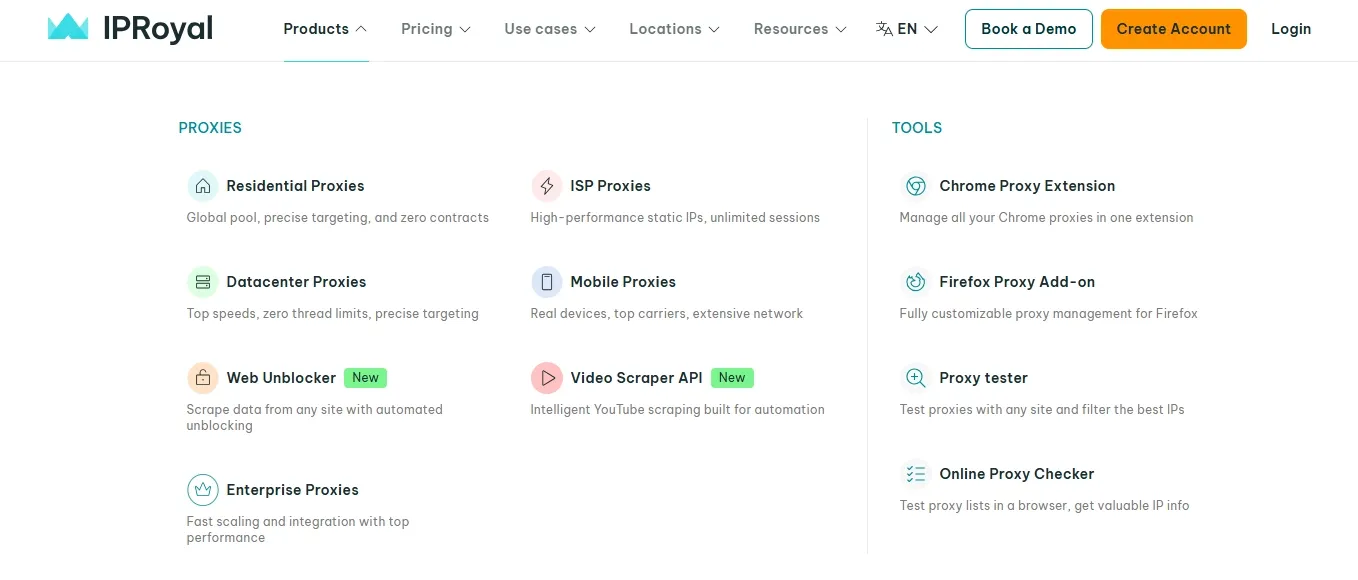
IPRoyal is often considered by teams testing a budget-sensitive workload. Its residential product offered non-expiring traffic and no required monthly subscription at the time of review. The tested controls included city targeting and sticky sessions of up to seven days; confirm the exact product limits on the current plan page before estimating spend.
The important comparison with Oxylabs is effective cost, not the lowest visible entry price. In concurrent automated tests, target-side refusals, retries, and failed connections still consumed prepaid bandwidth and raised the cost per successful valid result. Include those costs, session churn, traffic overages, and the engineering time required to maintain parsers and health checks. A plan with no subscription lock-in can be useful for a pilot; it does not prove that the same plan is economical at production volume.
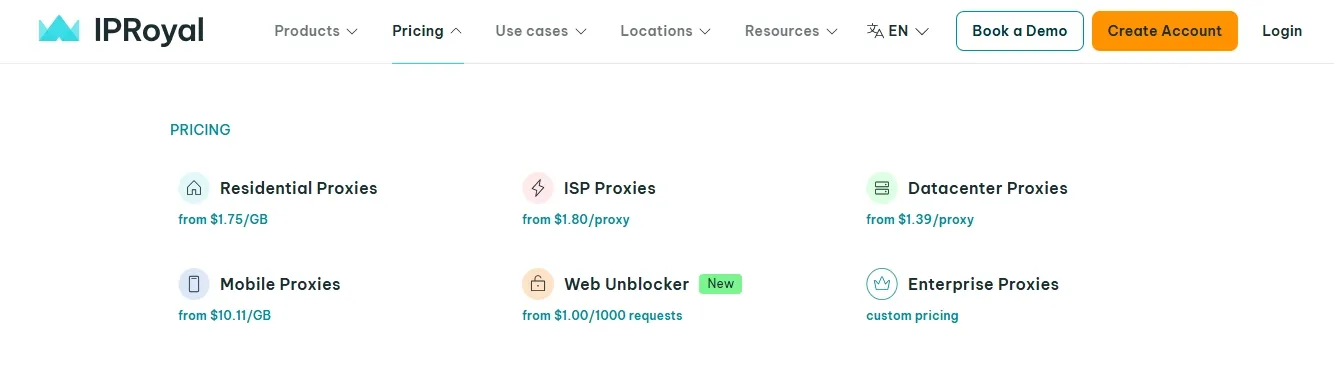
IPRoyal can suit a budget-sensitive pilot with irregular traffic demand: non-expiring traffic avoids wasting a monthly allocation during quiet periods. Teams needing broad enterprise controls, managed data products, or a formal support agreement may prefer a different provider after reviewing the equivalent Oxylabs product.
7. Scrapingdog
Scrapingdog takes an API-first approach: your application sends an extraction request and receives a response without operating a general-purpose proxy pool directly. It uses API credits rather than raw proxy bandwidth billing. In testing on an authorized endpoint, a single endpoint handled JavaScript rendering and timeout retries behind the API, and returned consistent JSON or HTML response formats. That model can reduce work around browser rendering, retries, parser maintenance, and proxy rotation for supported targets.
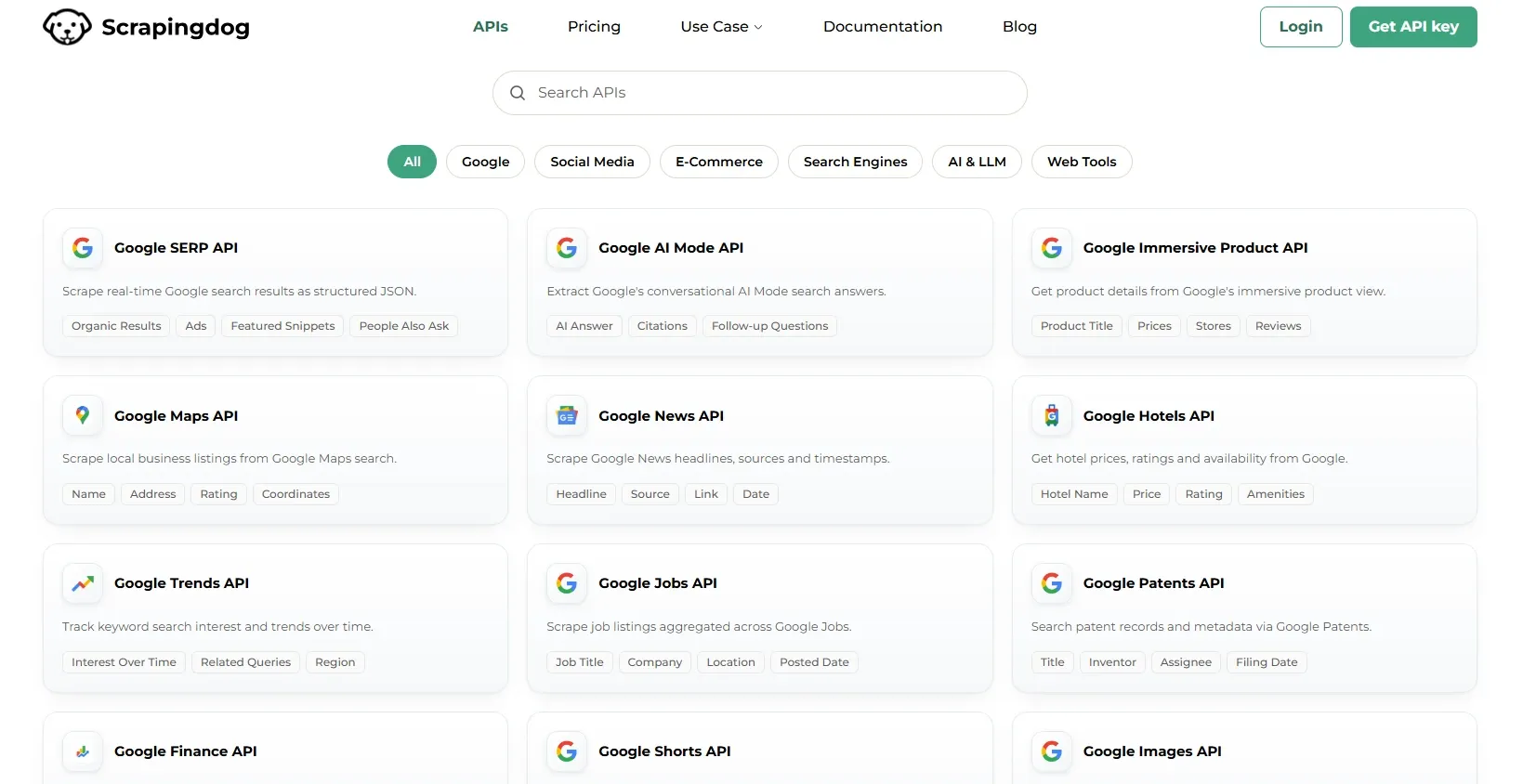
The trade-off is control. The tested API abstraction did not expose the same fine-grained country or ASN selection, long-lived session binding, or native browser-profile configuration as a raw proxy workflow. Compare the API’s supported domains, JavaScript behavior, response formats, request quotas, retry rules, and data-retention terms with the raw proxy workflow you run through Oxylabs. Its credit pricing also cannot be compared directly with traffic-priced residential proxies.
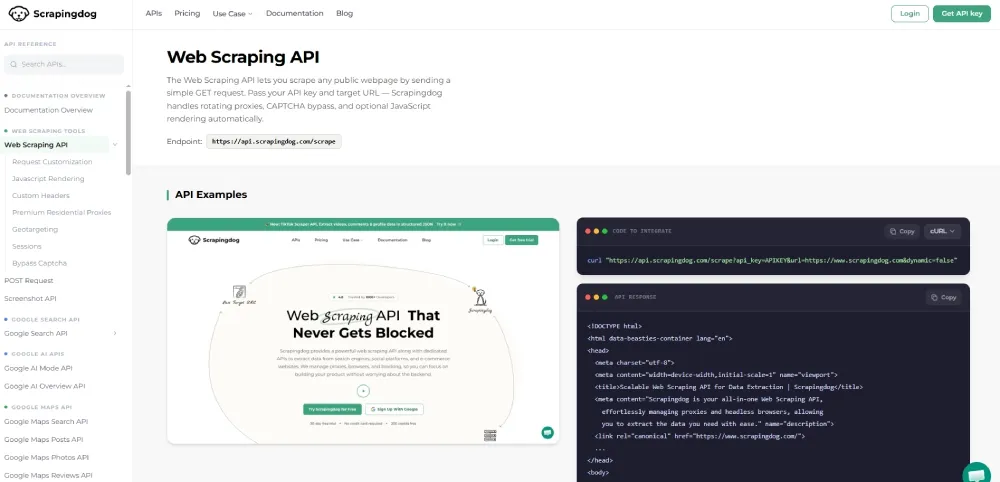
Scrapingdog is a good fit when the primary requirement is structured extraction and the supported target list matches the project, especially when reducing the maintenance burden of gateway rotation, headless-browser pools, and retry queues matters more than network-level controls. Choose a network provider instead when you need browser-level control, custom routing, long-lived sessions, or a proxy that can serve several unrelated applications.
How to Choose the Right Oxylabs Alternative
Match the Product to the Workload
Write down the permitted target domains, proxy type, countries or cities, request volume, JavaScript or rendering needs, session persistence, protocol, and concurrency before comparing plans. A price-monitoring job may need rotating residential proxies; a long-lived account session may need ISP endpoints; a simple public endpoint may work with datacenter IPs. The target’s terms of service and applicable law remain the first constraint.
Compare Effective Cost, Not Only Entry Price
Use the same test window and request mix for each provider. Record:
- successful, permitted responses;
- median and p95 latency;
- HTTP error categories and CAPTCHA frequency;
- traffic or credits consumed, including retries;
- engineering effort for parsing, rotation, and incident handling.
For browser-based collection, also check TLS and browser fingerprints, WebRTC leaks, DNS routing, and whether the provider’s API controls rendering. A proxy changes the network path; it does not make an unauthorized collection lawful or guarantee that a target will accept every request.
Validate Before Migrating
Run a limited parallel test with identical endpoints and retry rules. Confirm country and ASN accuracy using an independent IP lookup check, then compare provider logs with your own HTTP status and latency data. Do not treat a single successful request as evidence of production fit.
Migration Checklist: Moving From Oxylabs
- Document current endpoints, credentials, session settings, allowlists, concurrency, retries, and monitoring rules.
- Map each workflow to a like-for-like product from the new provider.
- Test approved targets in parallel and compare success rate, latency, error categories, consumed traffic or credits, and effective cost.
- Update rotation, sticky-session, timeout, and concurrency settings to the new provider’s documented limits.
- Roll out gradually with a rollback path until production metrics are stable.
For implementation details, consult the selected provider’s current network and integration documentation; it should be the source of truth for current parameters.
Conclusion
The best Oxylabs alternative is workload-specific. Compare equivalent products, verify current prices and policies, and test the provider against an authorized use case before moving production traffic. Rola IP is a reasonable first comparison for flexible proxy workloads; Bright Data, Decodo, SOAX, Proxy-Seller, IPRoyal, and Scrapingdog serve different combinations of control, targeting, API abstraction, and budget. Recheck this page and each official product page before a purchase because pricing, quotas, locations, and acceptable-use rules can change.