
Best Proxies for Scraping: 6 Providers Compared (2026)

Aug 27, 2026 · Use Cases · 16 min read
TL;DR
For difficult public-page scraping that requires country- or city-level targeting, test rotating residential proxies first. For open, high-volume pages, start with datacenter proxies. For workflows that need to preserve login state or maintain multi-step sessions, choose static residential/ISP proxies. Mobile proxies are best reserved for mobile-first targets with strong anti-bot defenses.
This article compares six providers using publicly verifiable product information and uses Rola IP as the detailed hands-on example because its product line includes rotating residential, static residential, mobile, and datacenter proxies, plus rotation, sticky sessions, geo-targeting parameters, API access, and subaccounts. Treat these details as inputs to your own testing—not as a substitute for testing.
Why Web Scraping Needs Proxies
The core role of proxies in web scraping is to distribute requests across multiple controlled exit nodes so that scraping jobs can view public pages from different regions within authorized access boundaries.
Proxies can reduce the chance that one exit IP triggers rate limits, support geo-validation, and isolate the network environments of different projects. What proxies cannot do is grant access to private data, bypass login permissions, or override a website’s terms of service.
- Request distribution: Route queues to different exits by domain, region, and budget instead of sending all traffic through one IP.
- Geographic consistency: Verify the prices, ads, search results, and inventory shown in different countries or cities.
- Session control: Rotating IPs work well for broad crawling; sticky or static IPs are better for stateful workflows.
- Failure isolation: Track connection timeouts, proxy authentication failures, target-site blocks, and parsing failures as separate metrics.
How We Selected These Proxies
We first evaluate technical fit by proxy type, then build a provider shortlist based on capabilities. Rankings are not based on advertising spend, absolute IP-pool size, or the lowest advertised price. Provider-reported success rates are also not treated as cross-platform benchmark results. Each candidate must cover common web scraping scenarios and provide verifiable product pages or technical documentation.
| Evaluation Area | Method Used in This Article | Shortcut We Avoid |
|---|---|---|
| Product coverage | Verify currently sold residential, ISP, mobile, and datacenter proxy products | Assuming more SKUs automatically means a better service |
| Rotation and sessions | Check per-request rotation, sticky sessions, and fixed-IP capabilities | Taking “supports rotation” marketing copy at face value |
| Geo-targeting | Distinguish country, state/province, city, ZIP/postal code, and ASN granularity | Treating country count as a proxy for targeting precision |
| Access and management | Check HTTP/SOCKS5, credentials, allowlisting, API, and subaccounts | Scoring based only on dashboard appearance |
| Reliability | Require valid-data rate, P95 latency, and error distribution on representative URLs | Treating HTTP 200 as success |
| Cost | Compare total cost per 1,000 valid records | Comparing only price per GB or per IP |
| Transparency | Separate official data, public reviews, and standardized evaluation frameworks | Presenting third-party opinions as first-hand test results |
What Makes a Proxy Good for Web Scraping?
A proxy that is genuinely suitable for scraping should consistently return the correct page within a defined time window—not merely return HTTP 200. A 200 response can still be a CAPTCHA, login page, soft-block page, empty template, or the wrong regional version. When choosing the best proxies for scraping, the primary metric should therefore be valid-data rate, with response time and price as secondary considerations.
| Metric | How to Measure It | Why It Matters |
|---|---|---|
| Valid-data rate | After parsing, verify title, key fields, record count, and page type | Filters out CAPTCHAs, soft blocks, and empty pages |
| P50/P95 latency | Record connection time, time to first byte, and full download time | Prevents averages from hiding long-tail slowdowns |
| Geo accuracy | Verify exit IP, country/city, and localized page content | Ensures prices, rankings, and inventory are correct |
| Session retention rate | Fix a session ID, repeat requests, and compare exits | Required for login state, pagination, and multi-step flows |
| Retry amplification | Total requests ÷ valid records | Directly reflects hidden bandwidth and infrastructure cost |
| Cost per valid record | Proxy fees + retry traffic + CAPTCHA/rendering + engineering time | Closer to real ROI than a single unit price |
Quick Comparison: Leading Web Scraping Proxy Providers
If you need a fast shortlist, the table below compares currently offered proxy types, rotation/session support, geo-targeting and management features, best-fit use cases, and the key items to verify before buying.
| Provider | Proxy Types and Controls | Targeting / Management | Best For |
|---|---|---|---|
| 1. Rola IP | Rotating residential, static residential (ISP), mobile, and datacenter proxies; custom rotation & sticky session controls | Country/city-level geo-targeting, full API integration, IP whitelisting, and granular sub-account allocation | Teams scaling diverse proxy tasks, geo-targeted web scraping, and multi-account automation |
| 2. Bright Data | Residential, ISP, mobile, datacenter, plus managed scraping tools | Fine-grained targeting and enterprise controls | Complex enterprise workflows and detailed control requirements |
| 3. Oxylabs | Residential, ISP, mobile, datacenter, plus data products | Enterprise support and scalability | Large projects and enterprise procurement |
| 4. Decodo | Residential, static residential, mobile, datacenter, plus scraping API | Common geo and session features | Small and midsize teams that want fast onboarding |
| 5. Webshare | Datacenter, static residential, and residential proxies | Dashboard and API | Budget-conscious projects targeting open or moderately difficult pages |
| 6. IPRoyal | Residential, ISP, mobile, and datacenter proxies | Standard rotation and geo options | Teams that want a flexible product mix |
Best Proxy Types for Web Scraping
The “best proxy type” and the “best proxy provider” are different questions. The type determines how your traffic appears to the target website; the provider determines IP sourcing, rotation, targeting, authentication, billing, and support. Choosing the type first helps you avoid using expensive proxies for easy targets—or cheap, easily identified exits for difficult, heavily defended tasks.
1. Rotating Residential Proxies: The Default Starting Point for Protected and Geo-Sensitive Pages
Rotating residential proxies use real residential-network exits and can refresh the IP per request or per session. For ecommerce, search results, fares, ad verification, and localized content, residential proxies often resemble ordinary user traffic more closely than datacenter proxies.
- Advantages: Higher network trust, broad country/city coverage, and a strong fit for large-scale crawling across many URLs.
- Trade-offs: Usually billed by bandwidth; images, video, and browser rendering can quickly increase traffic usage; individual IPs in shared pools are not fixed.
- Best practice: Rotate per request on listing pages; use 5–30 minute sticky sessions for detail pages or short workflows.
2. Static Residential / ISP Proxies: Long Sessions and Stable Identity
ISP proxies combine residential-network characteristics with a fixed exit, making them suitable for authorized workflows that need to preserve the same region and IP over time—for example, continuous monitoring, exporting data from your own logged-in account, or multi-step verification.
- Advantages: A stable exit reduces the chance of secondary verification caused by an IP change mid-session.
- Trade-offs: If a fixed IP is restricted by the target site, you cannot spread risk as quickly as with a large rotating pool.
- Best practice: Bind a dedicated IP to each legitimate session and set per-IP rate and concurrency limits.
3. Datacenter Proxies: Open Pages and High-Throughput Tasks
Datacenter proxies originate from hosted infrastructure. They are usually fast, support high concurrency, and have lower unit costs. They fit public APIs, documentation sites, news sites, sitemaps, internal QA, and bulk jobs against lightly defended targets. Because their ASNs and IP ranges are easier to identify, they may trigger more 403s, 429s, or challenge pages on strongly defended targets.
- Advantages: Low latency, high throughput, and predictable cost.
- Trade-offs: Easier to classify as non-human traffic; valid-data rates on popular platforms may trail residential exits.
- Best practice: Run a datacenter baseline first, then upgrade to residential proxies when retries make the cost per valid record too high.
4. Mobile Proxies: Mobile-First or High-Trust Scenarios
Mobile proxies route traffic through carrier cellular networks. They are useful for validating mobile regional content or public pages that render only from mobile networks. Their unit cost and latency are usually higher, so they should not be the default for routine web scraping.
Mobile proxies generally justify their cost only when testing shows residential proxies still cannot return valid data reliably, or when the project explicitly requires a carrier/mobile-network perspective.
5. Free Proxies for Scraping: Useful for Testing, Not Production
Free proxies can help beginners validate proxy parameters in requests, curl, or Scrapy, but public free nodes often expire quickly, run slowly, geolocate inaccurately, have opaque logging policies, or expose traffic to tampering. Never send passwords, cookies, API keys, or customer data through free proxies, and do not use them to estimate production performance.
- Access only test URLs that contain no sensitive information.
- Use short connection/read timeouts and disable unlimited retries.
- Verify the exit IP, HTTPS certificate, and response body.
- Keep free nodes isolated from production credentials.
Residential Proxies vs Datacenter Proxies for Web Scraping
Residential proxies are not better in every scenario. They are a stronger fit when targets care about network reputation, geographic authenticity, or rate-limit behavior. Datacenter proxies fit open, lightly defended, high-throughput pages. The most robust architecture uses tiered routing rather than permanently binding all traffic to one proxy type.
| Comparison | Residential Proxies | Datacenter Proxies | Recommendation |
|---|---|---|---|
| Network source | Residential ISP/end-user networks | Cloud server or datacenter IP ranges | Choose residential when a real regional perspective matters |
| Detectability | Usually harder to identify by ASN | Usually easier to identify | Test residential first for heavily defended targets |
| Speed | Moderate; affected by end-user routing | Usually faster | Choose datacenter when throughput is the priority |
| Billing | Usually bandwidth-based | By bandwidth, IP, or plan | Estimate asset traffic for dynamic pages |
| Rotation | Large IP pools rotate per request/session | Rotation and fixed IPs are both common | Use rotation for broad list crawling |
| Sessions | Sticky sessions or fixed ISP IPs | Fixed IPs are easier to obtain | Prefer ISP/static proxies for long sessions |
| Typical targets | Ecommerce, SERPs, travel, localized content | Docs, news, open APIs, lightly defended sites | Route by domain instead of using one type everywhere |
How to Choose a Proxy Type for Your Project
- Assess the target: Record whether login, JavaScript rendering, or geo-targeting is required, and how often you encounter 403s, 429s, CAPTCHAs, or soft blocks.
- Build a no-proxy baseline: First use slower, compliant requests to confirm page structure and parsing logic so you do not mistake code problems for proxy problems.
- Start with the lowest-cost viable type: Test datacenter proxies on open pages; rotating residential proxies on defended or geo-sensitive targets; ISP proxies for long sessions.
- Fix the test set: Include at least one normal page, paginated page, empty-result page, redirect page, and high-risk page. Keep concurrency, timeouts, headers, and parsers unchanged.
- Record key metrics: Track valid-data rate, P95 latency, retry amplification, and cost per 1,000 valid records.
- Set upgrade/downgrade rules: Upgrade from datacenter to residential when valid-data rate falls below your business threshold. After residential performance remains stable for a period, resample datacenter proxies to see whether you can reduce cost.
Web Scraping Proxy Providers: Full Reviews
1. Rola IP: A Versatile Choice for Web Scraping Proxies
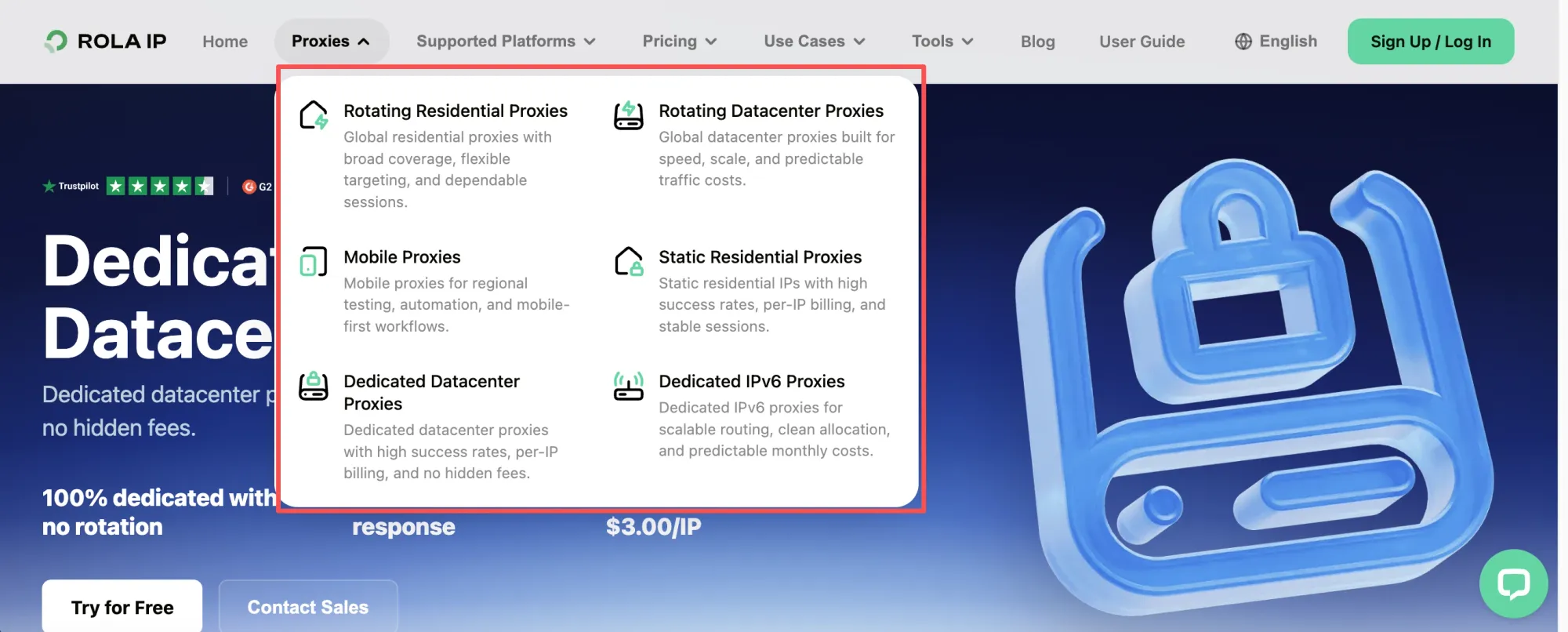
Figure 1: Rola IP — a versatile option for web scraping proxies.
Rola IP lets teams evaluate multiple proxy types within one product ecosystem based on target difficulty. Its official product pages cover rotating residential proxies, static residential / ISP proxies, rotating datacenter proxies, and mobile proxies. Check the current product pages before purchase for available regions, targeting options, rotation or sticky-session settings, authentication methods, API access, subaccounts, traffic quotas, and any published capacity or service commitments. For setup details, use Rola IP’s official proxy quick-start guide.
Why It Fits Scraping Teams
- Broad proxy-type coverage: Rotating datacenter proxies for open pages; rotating residential proxies for defended or geo-sensitive pages; dedicated static residential proxies for long sessions; mobile proxies as a fallback for mobile scenarios.
- Controllable rotation: Rotate per request for broad crawls, use sticky sessions for pagination or short flows, and keep a fixed exit for the validity period of static products.
- Geo-targeting and concurrency: Confirm the currently available country/city targeting and concurrency limits in the relevant Rola IP product documentation before using region-based queue splitting; actual throughput still depends on the target site, response size, and your own connection pool.
- Team management: Subaccounts and traffic quotas make it easier to isolate budgets by project, customer, or environment.
- Authentication and integration: Confirm the available username/password authentication, allowlisting, HTTP/SOCKS5, and API options in the official proxy quick-start guide before connecting scripts, servers, or automated pipelines.
For broader scraping use cases, see Rola IP’s official web scraping proxy use-case page. First-time setup can begin with the official proxy quick-start guide.
How Rola IP Products Map to Scraping Tasks
| Product | Recommended Tasks | Session Strategy | Cost-Control Focus |
|---|---|---|---|
| Rotating residential | Ecommerce, SERPs, prices, inventory, regional content | Per-request rotation or short sticky sessions | Block images/video and limit response size |
| Static residential / ISP | Long-term monitoring, continuous pagination, authorized login sessions | Fixed IP | Rate-limit per IP and keep backup exits |
| Rotating datacenter | Open web pages, news, docs, sitemaps | Per-request rotation | Run a low-cost baseline first |
| Static datacenter | QA against fixed sources, stable open APIs | Fixed IP | Avoid heavily defended targets |
| Mobile | Mobile-region validation, carrier perspective | Keep or rotate by task | Enable only when residential tests are insufficient |
Rola IP: From Purchase to Python Verification
- Define the target: Record the target domain, permitted pages, country/city, expected traffic, concurrency, and whether a fixed session is required.
- Choose the product: Start open pages with rotating datacenter proxies; use rotating residential proxies for geo-sensitive or strongly defended pages; use static residential proxies when a fixed exit is required.
- Create proxy credentials or allowlist authorization: Generate the host, port, username, and password in the dashboard. Do not hard-code credentials into a code repository.
- Install the Python dependency: Run
python -m pip install requestsin your terminal. - Store credentials: Put the four credentials into environment variables, then run the exit-verification code below.
- Verify before scraping: Query an IP-check endpoint first to confirm country/city and session behavior, then send low-concurrency requests to your own test page or an authorized target.
- Log and scale gradually: Record status code, page type, key fields, latency, and bytes. Increase concurrency only after confirming that the returned data is valid.
import os
from urllib.parse import quote
import requests

user = quote(os.environ["ROLA_PROXY_USERNAME"], safe="")
password = quote(os.environ["ROLA_PROXY_PASSWORD"], safe="")
host = os.environ["ROLA_PROXY_HOST"]
port = os.environ["ROLA_PROXY_PORT"]

proxy_url = f"http://{user}:{password}@{host}:{port}"
proxies = {"http": proxy_url, "https": proxy_url}

with requests.Session() as session:
    session.proxies.update(proxies)
    response = session.get("https://httpbin.org/ip", timeout=(10, 30))
    response.raise_for_status()
    print(response.json())
How to Confirm the Code Is Actually Rotating
- Use a per-request rotation configuration, send 10–20 consecutive requests to an IP-check endpoint, and record the exit IP, country, and ASN each time.
- Repeat requests with the same sticky-session parameter and confirm that the exit stays consistent during the session lifetime.
- Change the session ID and request again. The exit may change, but a pool can reassign the same IP, so a different IP is not guaranteed every time.
- If the exit does not change, first check the session/region parameters in the username string, then verify that your connection pool is not reusing an old proxy configuration.
- Finally, test the real target page and validate the response body—do not treat “the IP changed” as equivalent to “the scrape succeeded.”
2. Bright Data: Deep Controls and an Enterprise Toolchain
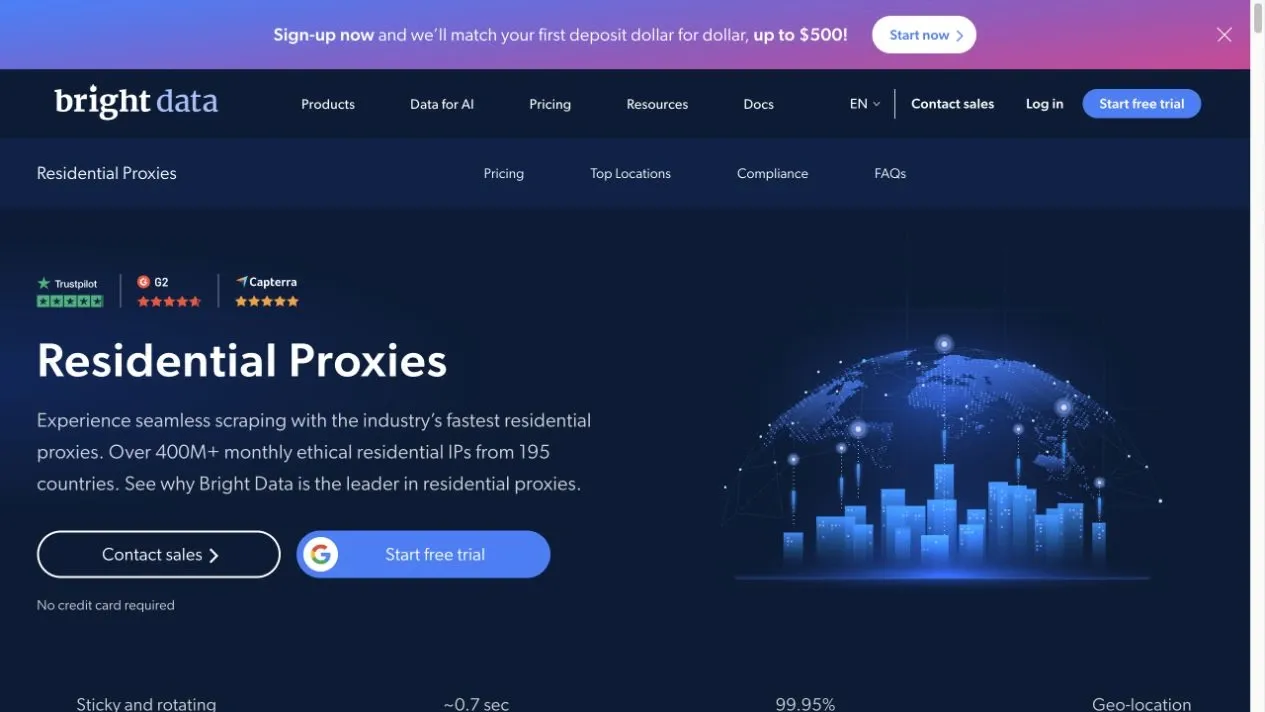
Figure 2: Bright Data residential proxy product page (source: brightdata.com).
Bright Data fits enterprise teams that need residential, ISP, mobile, and datacenter proxies along with unlocking or scraping products. Its strengths generally include fine-grained geographic/ASN controls, product breadth, and enterprise support; the trade-off is greater configuration and billing complexity. During evaluation, price and test core proxy products separately from managed products such as Web Unlocker and Scraping Browser.
Best-Fit Teams
- Full type coverage: Residential, ISP, mobile, and datacenter proxies in one place, reducing multi-vendor procurement complexity.
- Fine-grained targeting: The source article notes that the official site emphasizes granular geographic/ASN targeting, useful for projects with strict traffic-origin requirements.
- Managed toolchain: Beyond basic proxies, products such as Web Unlocker and Scraping Browser can reduce some of the engineering work involved in handling anti-bot systems.
- Enterprise support: Account management and support designed for teams with audit, compliance, and large-scale operational needs.
| Typical Scenario | Evaluation Approach |
|---|---|
| Strongly defended ecommerce/SERP pages | Start with residential or ISP proxies and evaluate whether an unlocker-style tool reduces CAPTCHA-handling cost |
| Large-scale enterprise collection | Plan concurrency and budget around APIs and enterprise support so usage limits do not throttle the project mid-run |
| Collection projects requiring compliance records | Verify target-domain rules, data-sourcing compliance statements, and audit capabilities |
Verify before buying:
- Whether core proxy products and managed products such as Web Unlocker or Scraping Browser are billed separately.
- Whether total cost includes minimum spending commitments and the team’s onboarding/learning-curve cost.
- Whether add-ons such as unlocking and page rendering are billed per request, by bandwidth, or as separate subscriptions.
3. Oxylabs: Enterprise Scale and Data Collection Products
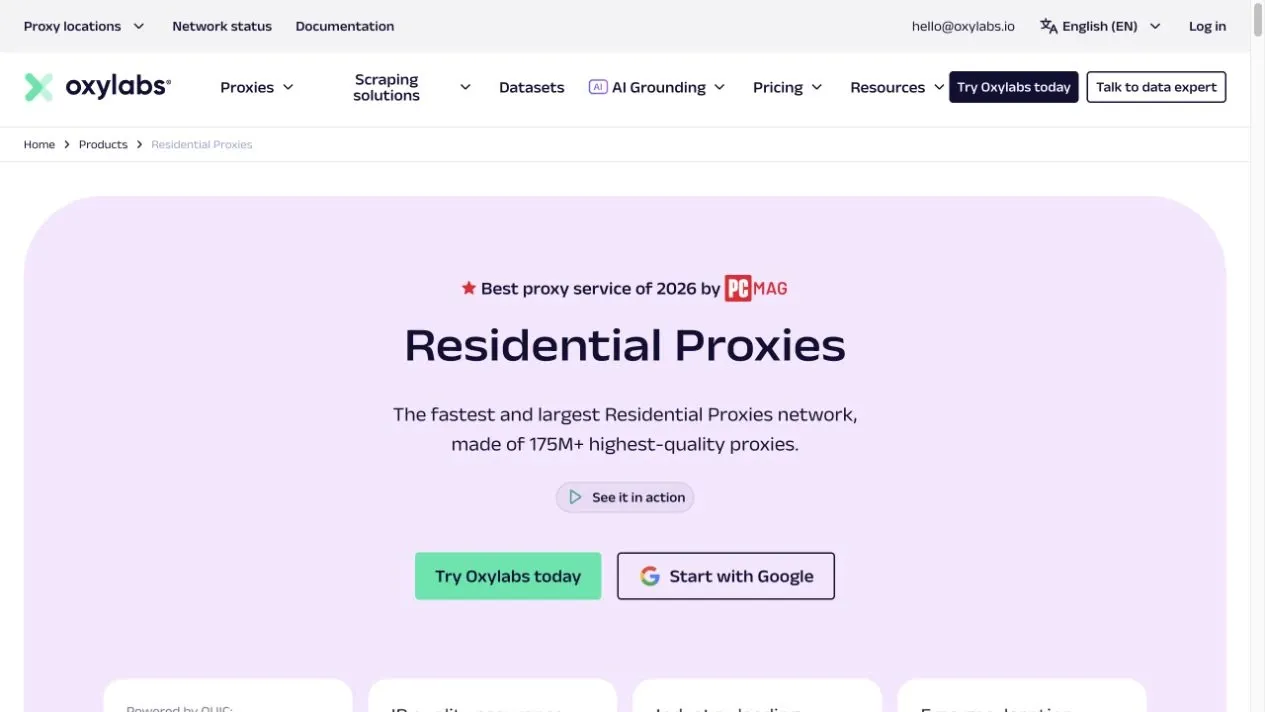
Figure 3: Oxylabs residential proxy product page (source: oxylabs.io).
Oxylabs offers multiple proxy types plus products built for web data collection. It fits teams that need enterprise support, broad network coverage, and managed scraping capabilities. It is usually not the first choice when the main goal is the lowest entry cost. When comparing options, confirm whether you are buying raw proxies, Web Unblocker, or a specific Scraper API because the three differ in control granularity, return format, and billing unit.
Best-Fit Teams
- Complete product line: Residential, ISP, mobile, and datacenter proxies plus dedicated data-collection products for large teams that prefer one-stop procurement.
- Enterprise scalability: The official positioning emphasizes enterprise support and scalability, fitting long-term procurement relationships.
- Multiple integration models: Raw proxies, Web Unblocker, and Scraper APIs can be selected according to project complexity.
- Scale-oriented projects: Better suited to projects with stable budgets and long-running, large-scale collection than one-off small tasks.
| Typical Scenario | Evaluation Approach |
|---|---|
| Multi-domain collection for a large enterprise | Check whether long-term contract minimums match actual expected usage |
| Structured data needed instead of raw pages | Determine whether a Scraper API/data product is more appropriate than parsing raw proxy responses yourself |
| Multiple teams sharing one account | Understand subaccounts, permissions, and billing-unit separation to prevent budget conflicts |
Verify before buying:
- Whether minimum spending requirements match expected usage.
- Whether the billing unit—bandwidth, requests, or subscription plan—fits your cost-accounting model.
4. Decodo: A Balance of Ease of Use and Product Variety
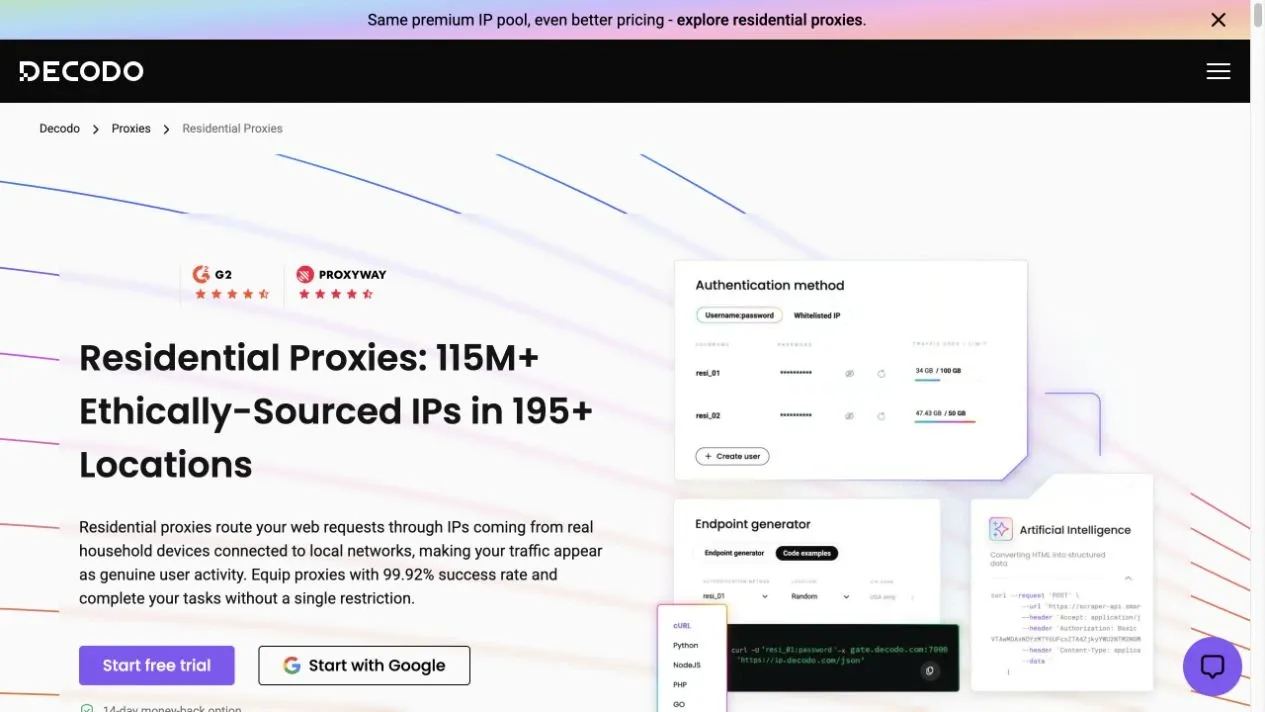
Figure 4: Decodo residential proxy product page (source: decodo.com).
Decodo (formerly Smartproxy) covers residential, static residential, mobile, and datacenter products and also offers a scraping API. It suits small and midsize teams that want fast onboarding plus common rotation and geo-targeting features. A meaningful evaluation should focus on sticky-session duration, location parameters, concurrency limits, whether plan traffic expires, and valid-data rate on your actual target sites.
Best-Fit Teams
- Fast onboarding: Documentation and console design are generally aimed at small and midsize teams without dedicated proxy operations staff.
- Balanced product mix: Residential, static residential, mobile, and datacenter proxies plus a scraping API cover most common scraping scenarios.
- Common rotation/session capabilities: Basic per-request rotation and sticky sessions fit many medium-difficulty targets.
- Relatively manageable cost: Positioned for small and midsize team budgets, making it practical to validate at small scale before expanding.
| Typical Scenario | Evaluation Approach |
|---|---|
| A small/midsize team integrating proxies for the first time | Start with a residential plan and validate valid-data rate with a small amount of traffic before scaling |
| Using a scraping API to simplify development | Check whether the API return format fits your current parsing pipeline and reduces duplicate development |
| Projects sensitive to traffic-expiration rules | Confirm whether traffic resets monthly to avoid end-of-month rushes |
Verify before buying:
- Whether the maximum sticky-session duration supports your multi-step workflow.
- Whether concurrency limits and plan traffic become bottlenecks as the business grows.
5. Webshare: A Choice for Budget-Conscious Projects
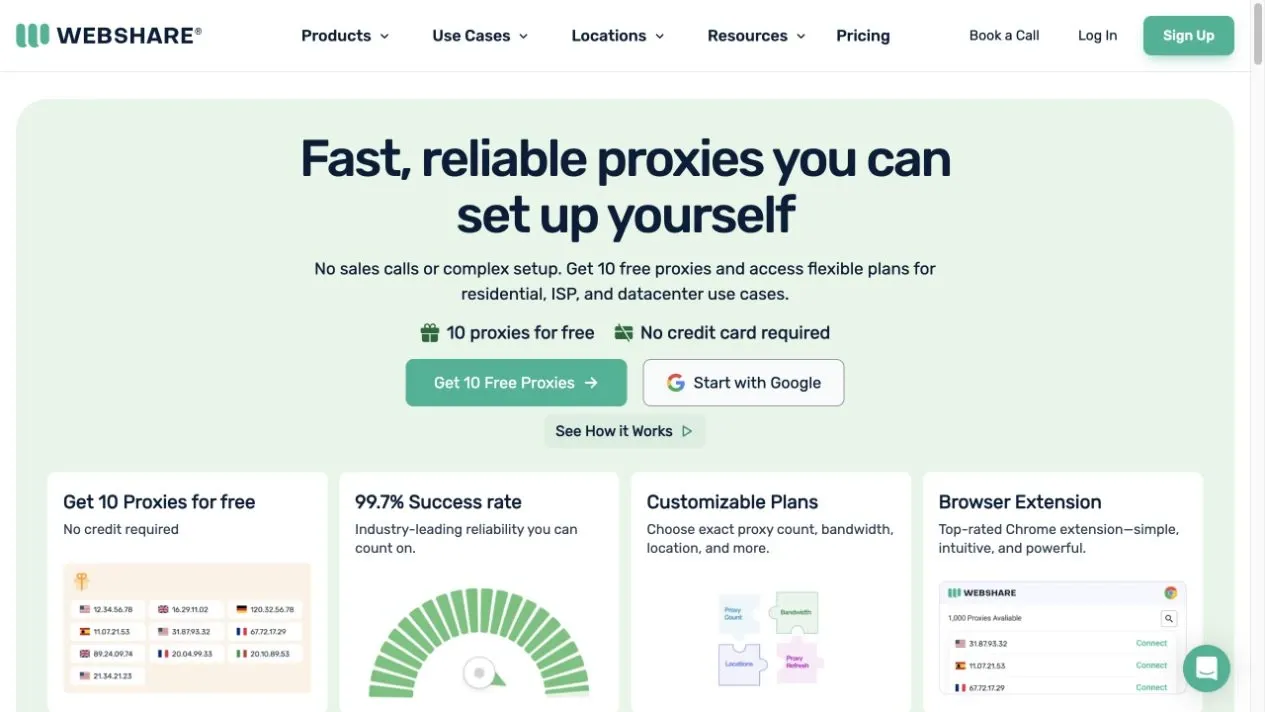
Figure 5: Webshare proxy products and self-service configuration page (source: webshare.io).
Webshare is often shortlisted by budget-conscious developers. It offers datacenter proxy servers, static residential proxies, and residential proxies. It is a good fit for low-cost baseline testing against open or moderately difficult targets. Do not evaluate it only by price per IP or per GB—also verify shared vs dedicated resources, regional inventory, IP rotation rules, and P95 latency under high concurrency.
Best-Fit Teams
- Budget-sensitive projects: Entry pricing and self-service registration are friendly to individual developers and small teams.
- Self-service management: The dashboard and API are designed for self-configuration without requiring a sales-led setup process.
- Baseline testing: Low-cost datacenter proxies are useful as the first step in measuring how strongly a target site is defended.
- Clear upgrade path: Moving from datacenter to static residential and residential proxies allows teams to upgrade based on test results.
| Typical Scenario | Evaluation Approach |
|---|---|
| Bulk scraping of open pages | Run the workflow with datacenter proxies first, observe 403/429 rates, then decide whether to upgrade |
| Personal project / small-team prototype | Use self-service signup and lower-entry plans to validate feasibility quickly |
| High-concurrency stress testing | Confirm whether P95 latency remains stable as concurrency increases in shared pools |
Verify before buying:
- Whether you are buying shared or dedicated resources; performance under high concurrency can differ substantially.
- Whether target-region IP inventory is sufficient for reliable geo-targeting.
- P95 latency and error rates under high concurrency, not only average response time.
6. IPRoyal: A Flexible Multi-Product Candidate
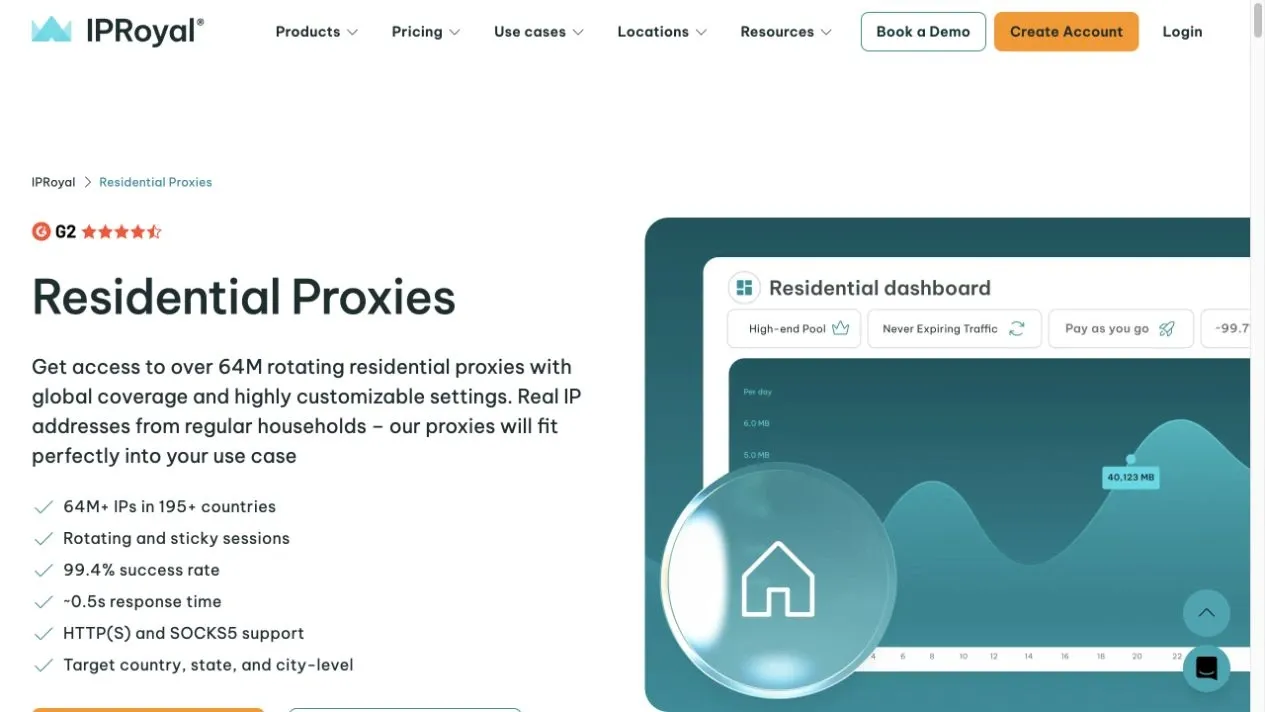
Figure 6: IPRoyal residential proxy product page (source: iproyal.com).
IPRoyal offers residential, ISP, mobile, and datacenter proxies, making it one candidate for multi-type procurement. Whether it belongs among the best proxies for scraping depends on inventory in your target regions, rotation strategy, and cost per valid record. Before signing a long-term contract, test representative URLs with a small plan.
Best-Fit Teams
- Flexible product mix: Residential, ISP, mobile, and datacenter proxies make it easier to switch types as a project evolves without changing providers.
- Standard rotation and geo options: Common per-request/per-session rotation and basic geographic targeting parameters are available.
- Small-scale testing: Granular plans can make it easier to test compatibility with a target site on a small budget.
- Transitional multi-type procurement: Useful for teams still evaluating a long-term provider and wanting to test several proxy types in parallel.
| Typical Scenario | Evaluation Approach |
|---|---|
| Comparing several proxy types at once | Use the broad product line to compare residential, ISP, and datacenter performance under one account |
| Geo-targeted collection in a specific region | Verify target-region IP inventory first to avoid poor targeting hit rates |
| Small-scale validation before a medium/long-term contract | Test representative URLs with a small plan before renewing or scaling |
Verify before buying:
- Whether IP inventory in your target region satisfies geo-targeting requirements.
- Whether rotation granularity—per request or per session—matches your collection workflow.
How to Interpret Common Failure Modes
| Symptom | Possible Cause | Next Step |
|---|---|---|
| 407 Proxy Authentication Required | Credentials, allowlist, or parameters are wrong | Verify authentication and URL encoding; do not retry blindly |
| 403 / Access Denied | IP reputation, request fingerprint, or insufficient permission | Reduce request rate, review compliance, and test residential proxies if appropriate |
| 429 Too Many Requests | Rate is too high for the domain or IP | Back off according to Retry-After, lower concurrency, and queue by domain |
| 200 but no data | CAPTCHA, soft block, or region/template change | Classify the page and validate required fields |
| Connection timeout | Node unavailable, network congestion, or slow target | Separate connect/read timeouts and cap retries |
| Wrong region | Targeting parameters, geo database mismatch, or target-side cache | Verify the exit and page content; clear cookies/cache |
| Session interruption | Sticky parameter expired or connection rebuilt | Fix the session ID and log actual exit changes |
For the standard meaning of HTTP 429, the source article refers to MDN’s documentation for 429 Too Many Requests. Automated clients should respect Retry-After and use capped exponential backoff.
Conclusion
The most reliable process for choosing the best proxies for scraping is to first select the right proxy type based on target difficulty, geography, and session requirements; then shortlist providers that offer the rotation, targeting, authentication, and team-management capabilities you need; and finally run the same test set against every candidate to calculate valid-data rate, P95 latency, and cost per 1,000 valid records.
For teams that need multiple network types, country/city targeting, per-request rotation, sticky sessions, API access, and subaccount management, Rola IP is worth including in the first round of testing. For open pages, it still makes sense to try lower-cost datacenter proxies first. This tiered strategy is more stable and scalable than simply buying the most expensive plan.